AI-powered weather forecasts help small farmers in Telangana save USD 560 each: WB report
Artificial Intelligence-powered weather forecasts in Telangana helped small farmers save up to USD 560 by adjusting their farming practices, according to the World Bank’s World Development Report 2026. The report urges developing nations to adopt low-cost AI tools to boost productivity, improve governance, and enhance social programs.
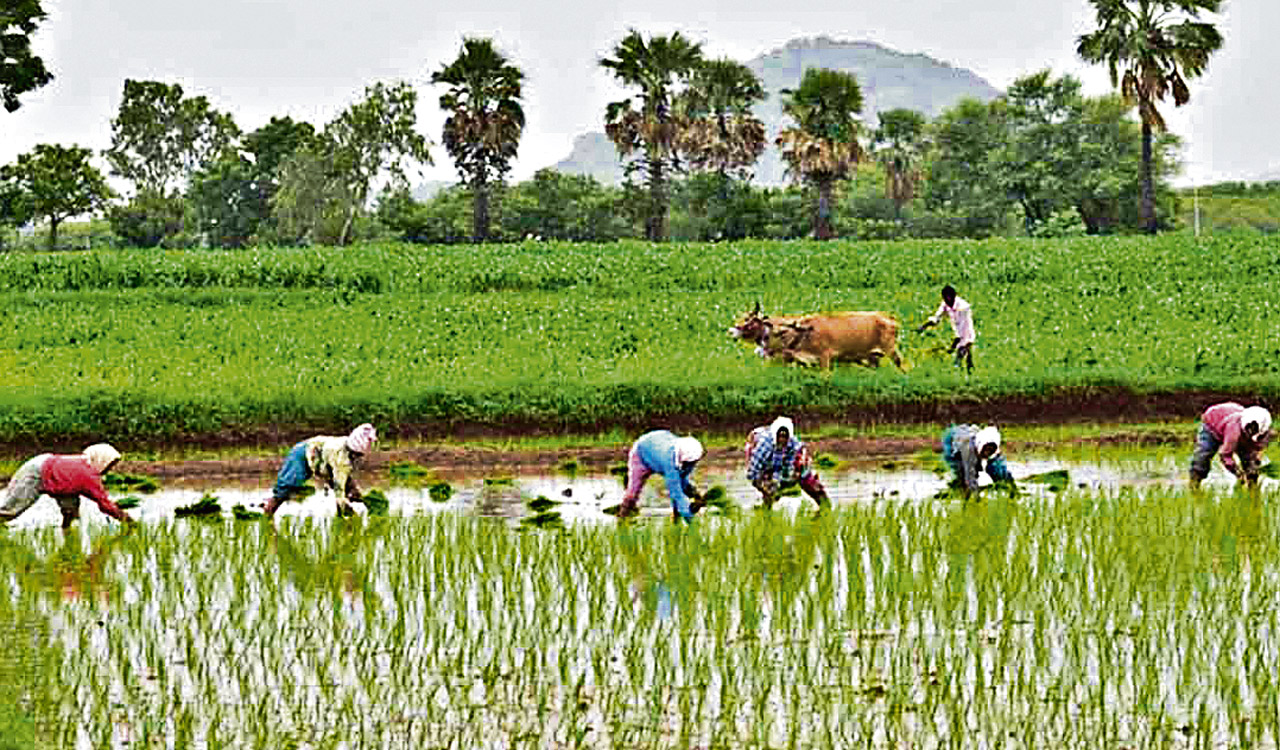


Washington: Artificial Intelligence-powered weather forecasts helped small farmers in Telangana save as much as USD 560 by altering their behaviour in response to specific risks, a World Bank report said.
Citing a Telangana study and other examples, the World Bank urged developing countries to speed up the adoption of small, low-cost artificial intelligence tools to improve the lives of millions.
The “World Development Report 2026: The Promise of Artificial Intelligence”, released on Tuesday, said among economic impacts, AI can help millions of small businesses and farmers become more productive.
“In the Indian state of Telangana, for example, an AI weather forecasting system enabled smallholder farmers to alter their behaviour in response to specific risks, causing some to increase farm expenditures by as much as one-third and others to reap net savings of as much as USD 560 per farmer,” the report said, citing a 2025 study conducted in Medak and Mahbubnagar districts of Telangana.
It said among social impacts, predictive AI analytics and decision support for back-office administrative work in government can have large payoffs.
The report highlighted that AI-generated weather forecasts helped farmers – who relied little on information from the government and extension agents – make better production and investment choices.
The report is the first comprehensive assessment of AI’s implications for developing countries, revealing how businesses and governments in these countries have begun to use AI.
It finds that AI is already helping people, businesses, and governments solve problems, analyse information, improve forecasts, and deliver services at a larger scale.
The report suggests that governments could use AI to improve tax collection, social programs, disaster response, health care, and education.
“Today’s developing economies missed the first Industrial Revolution and spent the next two centuries paying the price. They cannot afford to miss this one,” said Indermit Gill, Senior Vice President and Chief Economist of The World Bank Group.
The report said developing countries should leave it to the rich world to agonise over whether AI will one day doom humanity.
The report recommends an emphasis on small AI applications diffused widely across the economy instead of big investments in large language models concentrated in a few firms.

Related News
-

Nadella calls for AI emergency brake, warns firms against trusting advanced models blindly
-
Menthra hosts ‘Human Advantage’ event to highlight human skills in AI era
-
What Is The New ‘Muse’ Icon On Instagram? Here’s What You Need To Know
-
IIT Hyderabad launches AI innovation lab in collaboration with S&P Global