AI traffic cop VIOLA helps Telangana police detect violations using dashcams
IIIT-Hyderabad researchers have developed VIOLA, an AI-powered traffic monitoring system using low-cost dashcams in police vehicles. Integrated with Telangana Police systems, the technology detects violations, generates challan inputs, and achieves nearly 96 per cent accuracy while improving traffic enforcement.


Hyderabad: Researchers from the International Institute of Information Technology (IIIT)–Hyderabad have developed a virtual traffic cop -VIOLA, an AI-powered traffic violation detection system that uses low-cost dash cams installed in police patrol vehicles.
The technology deployed with the Telangana Police reported that nearly 96 per cent of the violations submitted by the AI are accurate.
Presently, traffic enforcement depends on CCTV cameras and hand-held cameras with traffic police personnel. These cameras are expensive to install and maintain and limited to fixed locations.
Further, drivers know where the cameras are and where they are not. In addition, the Automatic Number Plate Recognition (ANPR) technology currently being used is unable to catch all violations automatically without humans in the loop.
The IIIT-H’s Applied AI Research Centre engineering team collaborated with traffic police to install inexpensive dashcams, costing around Rs 8,000 to Rs 10,000 each, inside existing police four-wheel patrol vehicles. The camera’s daily recording footage was fed into the AI system capable of detecting traffic violations, recognising licence plates and automatically forwarding verified cases to Telangana Police’s e-Challan system.
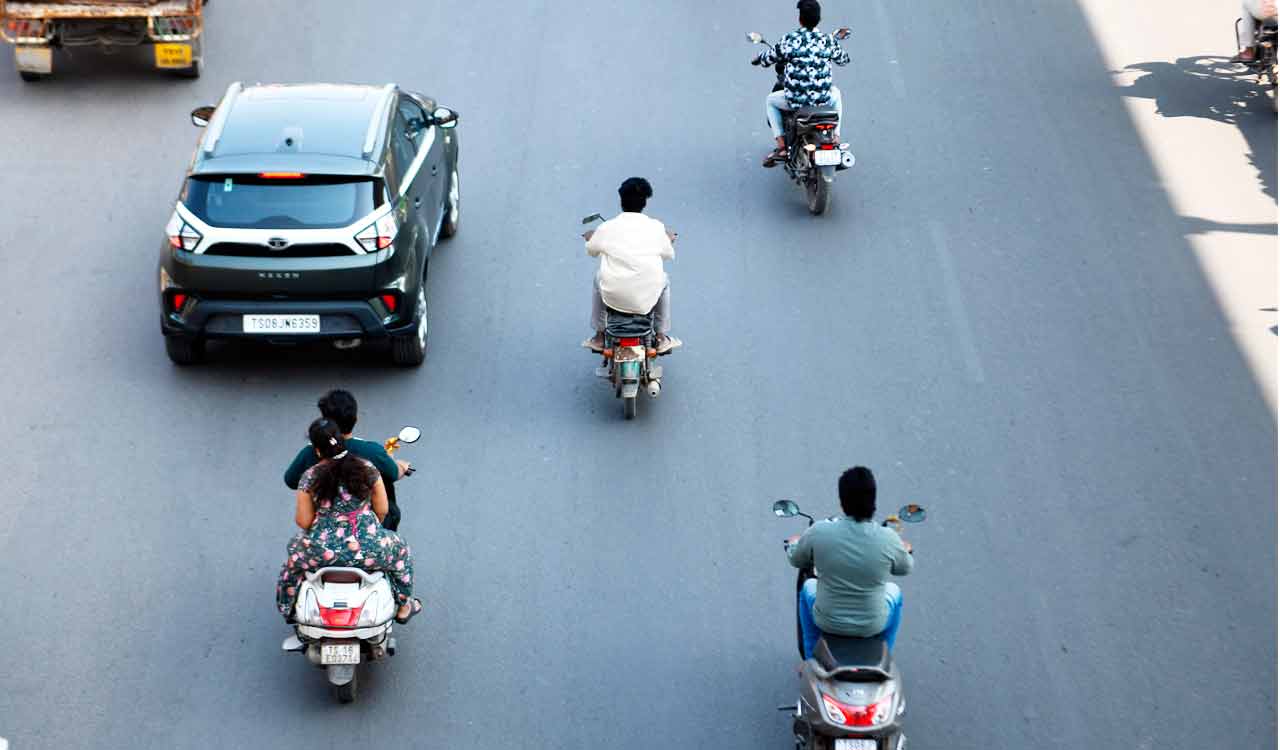
The AI model analysed footage to detect helmet violations, triple riding, wrong-side driving and other offences. It also reads vehicle number plates using ANPR, packages the evidence and submits it to the police’s existing challan generation workflow. Officers in the e-challan generation team verify each violation before issuing a challan
With just four dash cams installed in the patrol vehicles, the system helped generate several traffic challans within a few months.
According to IIIT-Hyderabad INAI operations manager Prithvi Jonnada, the police report that nearly 96 per cent of the violations submitted by the AI are accurate enough to be approved. The system has become one of the largest contributors to challan generation for the Telangana Police.
According to the INAI team, the VIOLA is not trying to reinvent traffic policing but integrates with the police’s existing e-challan infrastructure. The dashcam becomes another source of verified violations alongside handheld devices, CCTV cameras, and manual enforcement.
Further, the researchers are expanding the capabilities of the algorithm to include speed detection and other violations into VIOLA dashcam.
The same dashcam footage that captures traffic violations can also capture road conditions, identifying potholes, damaged roads and missing lane markings, feeding valuable information back to civic authorities, they added.

Related News