Australia to return three Indian antiquities as India repatriates first nations ancestor
Australia will voluntarily return three Indian antiquities, including Nandi, Bhadrakali's trident and a six-headed Karttikeya idol, while India will repatriate an Australian First Nations ancestor. The move strengthens cultural cooperation and people-to-people ties between the two countries
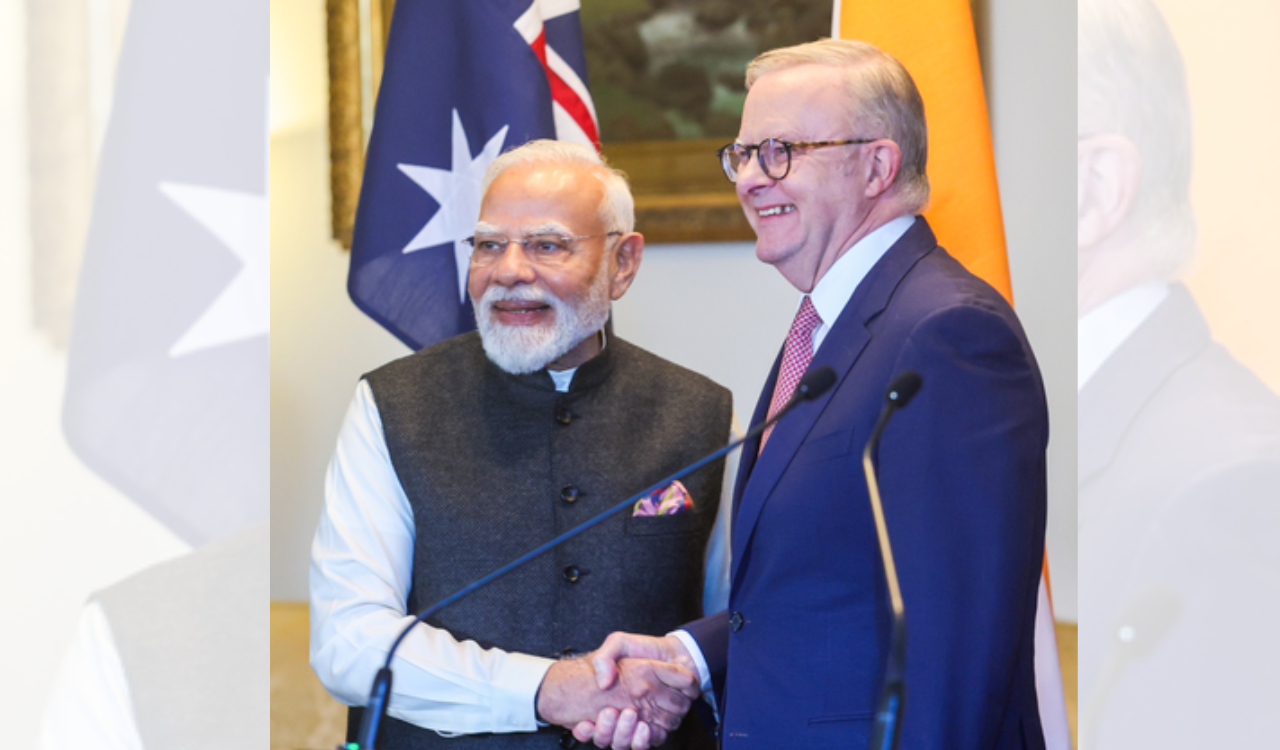


Melbourne: Thursday’s decision to repatriate Indian artifacts from Australia will see three Indian antiquities returning home soon. Standing alongside Prime Minister Narendra Modi, Australian PM Anthony Albanese announced that items of cultural significance to India, currently displayed in museums across the Oceania nation, will be returned, while hailing the progress made in repatriating an Australian First Nations ancestor from the Government Museum of Chennai.
The decision, he said, deepens Australia’s cultural cooperation with India, building on the strong bilateral relationship and expanding people-to-people ties between the two nations.
“I welcome progress to repatriate the remains of an Australian First Nations ancestor held in the Government Museum of Chennai. The ancestor will be voluntarily and unconditionally repatriated by India to their traditional custodians,” said Albanese while addressing the media.
“In the spirit of friendship, Australia will voluntarily return several items of cultural significance to India, previously held in the collections of the National Gallery of Australia and the Art Gallery of New South Wales,” he added.
The three Indian antiquities being repatriated include The sacred bull Nandi, vehicle of Shiva [Description: Tamil Nadu, India, 11th to 12th century Granite]; Trident with Auspicious Kali [Bhadrakali] [Description: Tamil Nadu, India, 11th century bronze]; and, the six-headed Skanda (Karttikeya) [Description: Tamil Nadu, India, 12th century basalt].
The metal trident with image of Goddess Bhadrakali is [Bhadrakali] ceremonial trishula (trident) surmounted by an image of Goddess Bhadrakali, [Bhadrakali] fierce form of Shakti. It represents protection, the destruction of evil, and divine power in Shaiva-Shakti traditions. Crafted in the South Indian temple ritual metalwork tradition for religious worship. It originates from Sri Kasiviswanathaswamy Temple, Kollumangudi, Tamil Nadu which was built between the 13th-16th centuries CE during the late Chola to Vijayanagara/Nayak period.
The stone idol of Nandi (Sri Kasiviswanathaswamy Temple, Kollumangudi, Tamil Nadu) depicts Nandi, the sacred bull and vahana (mount) of Lord Shiva. Sculpted in the Tamil Shaiva temple tradition, it features compact proportions and ornamental detailing. Traditionally placed facing the sanctum (garbhagriha) as [Bhadrakali] symbol of devotion, strength, and dharma, it usually depicts in recumbent posture with ornamental bells and garlands. The idol originates from Sri Kasiviswanathaswamy Temple, Kollumangudi Village, Thiruvarur District, Tamil Nadu dating to the 13th-16th centuries CE.
The stone idol of six-headed Karttikeya (Shanmukha) represents Karttikeya (Murugan/Shanmukha) with six heads, symbolising wisdom, valour, and divine protection. Typically depicted with 12 arms, carrying weapons such as the vel (spear) and often accompanied by [Bhadrakali] peacock. Carved in the Chola-period sculptural tradition, known for refined proportions and intricate ornamentation, it originates from the Naganathsamy Temple, Manambadi Village, Thanjavur District, Tamil Nadu. The temple was built during the early 11th century CE under Rajendra Chola I.
Expressing gratitude to PM Modi and the Indian delegation for their warm engagement, Albanese stressed, “While we are separated by an ocean, we are indeed the closest of friends. Today marks the next year in our partnership, as we are reminded that we need to continue our ongoing work.”
Welcoming the decision, Australian Minister for the Arts Tony Burke said, “The repatriation of ancestors and the voluntary return of items of cultural significance are both examples of the values shared between Australia and India.”

Related News