Bhagavad Gita lessons on values, character and conduct
The Bhagavad Gita teaches that knowledge becomes meaningful only when practised in daily life. Schools and colleges can help students develop positive values, character and discipline through spiritual practices, Krishna consciousness and lessons that encourage selfless service, health and harmony.



The Bhagavad Gita introduces a crucial distinction between knowing and doing. Many people have theoretical knowledge, but it remains skin-deep, useful only for exams and degrees. The Gita recommends that theoretical knowledge (Jnana) should produce changes in behaviour and character, becoming a person’s “value” system that does not change under any circumstances.
This transformation is called cultivation of knowledge. A farmer’s seeds are not enough to produce food by themselves; he must sow them in proper soil, cultivate them regularly, and ensure the crop grows to finally yield results. Similarly, theoretical knowledge is like a seed planted in the heart. It must be practised every day until it becomes internalised, generates positive emotions, and brings changes in behaviour and character.
Srila Prabhupada explains the difference: Jñānaṁvijñāna-sahitam. Jnana, this knowledge, is not sentiment, it is science. Just as scientific knowledge must be known both theoretically and practically, knowing that oxygen and hydrogen produce water is theoretical, but actually making water by mixing them is practical. So too, surrender to Krishna (Bg 18.66) must be practised, not merely read about.
“I have read Bhagavad-gita, so I have become a devotee” is not enough; one must practically demonstrate devotion in life. This is vijñāna-sahitam. By learning this science, one becomes liberated from the inauspicious condition of life (aśubha).
Srila Prabhupada has provided a proper environment for everyone, regardless of caste, religion, or place, to practise Krishna consciousness in HKM/ISKCON temples. Reading the Gita and cultivating that knowledge with HKM’s help brings freedom from unwanted habits and an inauspicious life, developing attraction to Krishna’s selfless service that moves one from a petty, selfish nature to the broad-minded life of a Mahatma.
The goal of ISKCON is to make everyone a mahatma in behaviour and character, a gentleman.
The following daily practices elevate anyone to that platform:
• Chant the Holy Name of Krishna—Hare Krishna Hare Krishna KrishnaKrishna Hare Hare / Hare Rama Hare Rama RamaRama Hare Hare—108 times daily as Japa: pronounced aloud (not mentally) and heard attentively. This takes about 10 minutes and constitutes the highest meditation, satisfying Lord Krishna. Lord Chaitanya Mahaprabhu inaugurated this Sankirtana process, later spread worldwide by Srila Prabhupada, cleansing our minds and revealing auspiciousness in life.
• Take Sri Krishna Prasadam daily—preparing and offering Naivedya to Krishna purifies the stomach, tongue, and brain.
• Perform a small daily arati and worship of Tulasi to purify the mind and consciousness.
• Visit HKM/ISKCON temples to learn these simple practices.
Through these practices, anyone, married or unmarried, can purify mind and life, becoming a happy Mahatma free of negative influences. Introduced in schools, colleges, and universities, they would free students from mental maladies, improve health, remove bad habits, and cultivate higher spiritual, Krishna-conscious values free from envy and hatred.
Hare Krishna!
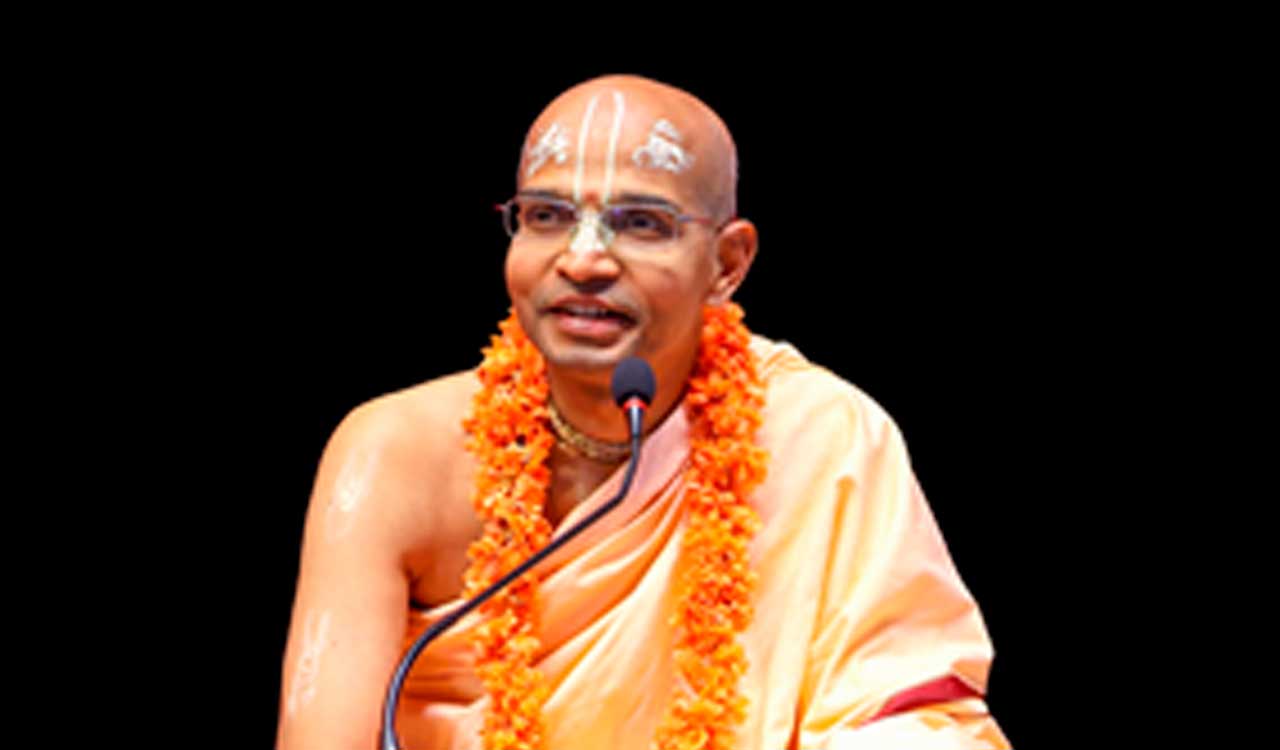
Sriman Satya Gaura Chandra Dasa Prabhuji,
President, Hare Krishna Movement, Hyderabad.

Related News