BITS Hyderabad researchers turn food waste into protein-rich animal feed
BITS Pilani Hyderabad researchers have developed a low-cost system using black soldier fly larvae to convert food waste into protein-rich biomass. The Rs 2,500 enclosed unit could support faster organic waste processing while producing potential animal feed and soil amendment.


Hyderabad: Birla Institute of Technology and Science (BITS) Pilani Hyderabad campus researchers have developed a low-cost system that uses black soldier fly larvae to convert food waste into protein-rich animal feed. The new system offers an innovative approach to resource-efficient waste management.
Developed by Prof. Sankar Ganesh Palani, Assistant Professor, Department of Biological Sciences, along with his research graduate, Dr Atun Roy Choudhury, the system uses the natural waste-consuming ability of the black soldier fly.
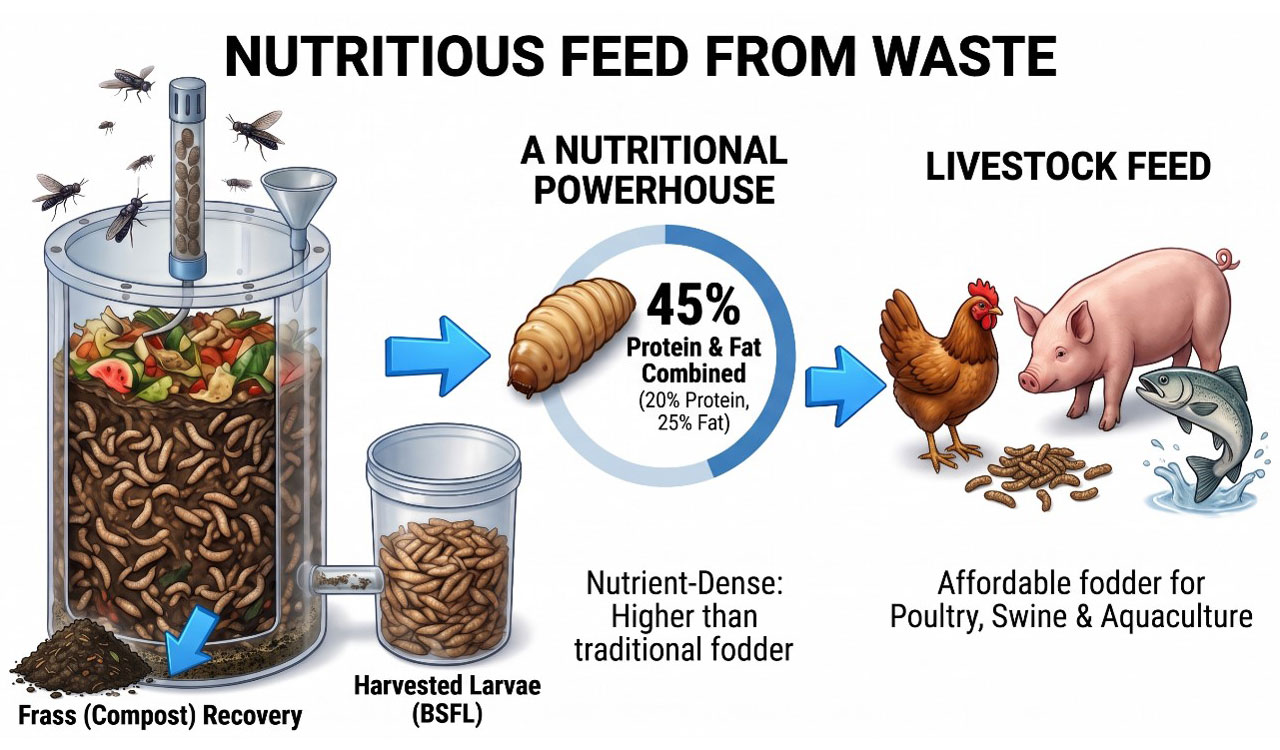
According to researchers, larvae feed on vegetable, fruit and cooked food waste, converting the organic material into nutrient-rich biomass during a feeding cycle of approximately two weeks, as against composting process, which takes weeks or months.
Designed using easily available materials from hardware shops, the system consists of an egg-laying and hatching vessel paired with a harvesting bucket. About 7 cm to 8 cm layer of coconut coir and sand acts as a filter for leachate. The filtered liquid is recirculated to maintain moisture levels of 50–60 per cent and facilitate the movement of mature larvae into the harvesting bucket, thereby reducing manual handling.
Based on the initial trials, the researchers recorded a yield of approximately 2 kg of larvae per day over a 20-day period.
Developed at a unit cost of Rs 2,500, the researchers said the system is affordable and space-efficient. Its enclosed design also addresses the challenge of unpleasant odour, one of the major concerns associated with on-site organic waste processing.
Dr Choudhury said the black soldier fly is a harmless insect whose larvae feed on vegetable and fruit waste, cooked food and manure. “They do most of their eating in a two-week larval stage, converting waste into body mass far more efficiently than warm-blooded animals,” he said.
The system also recovers economically useful products from organic waste. Black soldier fly larvae contain approximately 20 per cent protein and 25 per cent fat, making them a potential alternative feed ingredient for the poultry, pig and aquaculture sectors. The residual organic material, known as frass, can also potentially be used as a soil amendment.

Related News