
Ceilings as an Afterthought: Why It’s Time to Put Them at the Centre of Design
VOX India’s Director Varun Poddar highlights the evolving role of false ceilings in interior design. No longer just functional coverings, ceilings are now seen as integral spatial systems that influence light, acoustics, proportions, and overall ambience. VOX’s Infratop and Welo ranges combine wood aesthetics with advanced polymer durability, offering easy installation, acoustic comfort, and long-term performance.


Spokesperson – Varun Poddar, Director at VOX India
For a long time, ceilings have been seen as little more than a functional necessity, something to be dealt with towards the end of the design process. Interiors have traditionally been approached as a collection of separate elements: floors, walls, ceilings, furniture and finishes, each considered on its own. The result is that false ceiling design often gets reduced to a finishing exercise, one that conceals services and completes a room, resolved reactively rather than with real intent.
From Surface to Spatial System
Today, the line between where a wall ends and a ceiling begins is blurring. Rather than treating spaces as boxes made up of disconnected surfaces, architects and designers are starting to see them as integrated systems in which walls, ceilings and other architectural elements work together to create one cohesive spatial experience.
Seen this way, false ceilings become far more than an overhead plane. They influence how light is distributed, shape acoustic comfort, define spatial proportions and play a real part in how a space feels and performs. Whether a room feels expansive or intimate, calm or dynamic, often depends as much on the surfaces above us as on those around us.
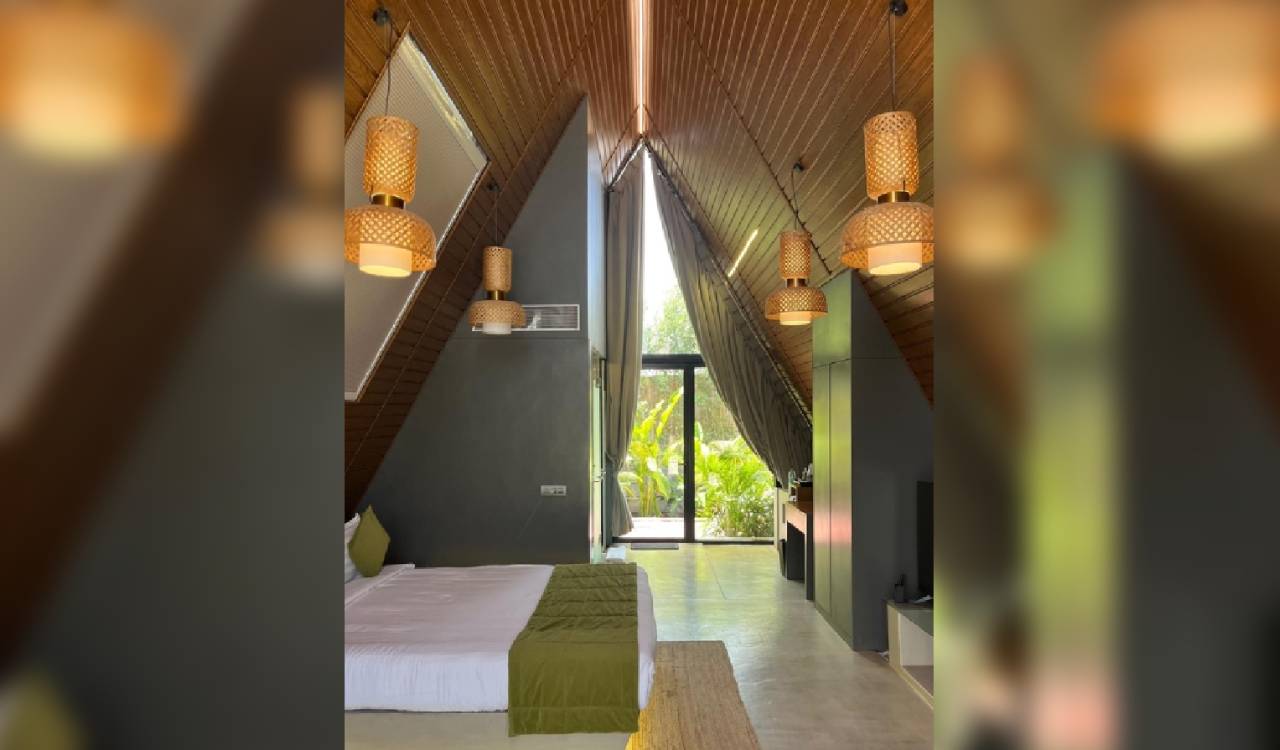
Think about a bedroom. A well-considered false ceiling for the bedroom isn’t just decoration overhead. It can soften echo, make the room feel cosier and change how restful the space feels. People don’t always consciously notice it, but they feel the difference the moment they walk in. The Infratop Four Lamella SV26 ceiling panel achieves precisely this. Its four-groove lamella geometry diffuses light from above while increasing the surface area available for natural sound absorption, creating a ceiling that actively shapes the quality of a room rather than simply covering it.
Beyond Aesthetics: Shaping Spaces With More Than What We See
What is particularly encouraging is the industry’s shift towards a more performance-led approach to design.
Architects and designers are increasingly evaluating materials not only for their visual appeal but for how they hold up overtime: their responsiveness to environmental conditions, their acoustic behavior, their durability and the comfort they offer the people who live with them. False ceiling panels should be engineered to meet all of these demands at once, bringing together the warmth of wood with the structural reliability and low maintenance of advanced polymer engineering.
This is exactly the thinking behind our Infratop range. We wanted false ceiling panels that give you the look and warmth of wood without the maintenance worries: no warping after a monsoon, no termite treatments, no repainting every few years. The Infratop system installs through a click-lock mechanism that reduces on-site labour time by up to 50%, which means far less disruption at the project site. It is available in the Nature Collection, with wood-look finishes including Walnut, Golden Oak, Basalt Oak and Burma Teak, and the Unicolour Collection, with clean solid finishes in White, Graphite, Black and more. These ceiling panels are built for interior ceilings as well as semi-outdoor applications such as roofs, balconies, terraces and soffits, and are backed by a 20-year product warranty.
For spaces that demand greater acoustic control, such as open-plan offices or living areas with high footfall, the Welo offers a modular ceiling panel solution engineered specifically for indoor use. Its lightweight construction and click-install system make it contractor-friendly, while its wood-look finishes, including Polar Oak, Walnut, Oak Winchester and Buttercream, ensure the ceiling contributes to a room’s design character rather than disappearing into it.
Where ceiling continuity matters, the Infratop Connex system provides a seamless answer. Panels join directly, without visible joints or additional connectors, and a patent has been applied for the joining mechanism.
Welo wall panels by VOX are designed with the same philosophy: all surfaces working together as one system rather than as isolated decisions made in silos. When ceiling and wall surfaces share a design language, the spatial result is coherent, deliberate and long-lasting.
Putting Ceilings at the Centre of Design
Ceiling designs deserve a place in the conversation from the very beginning of the design process. When considered early, false ceiling panels become active elements that contribute to the functionality, identity and longevity of a space. A false ceiling design for the living room, for instance, is no longer just about covering a slab. It becomes an opportunity to shape how light falls across the room, how sound behaves within it, and how inviting the space feels at any hour of the day.
As expectations for built environments continue to evolve, design can no longer be defined by individual elements working independently. It is shaped by integrated systems that work together seamlessly, with ceilings treated as a critical design element from the very inception of a project.

