Congress government pushes TDR for land acquisition in Hyderabad
The Congress government is offering Transferable Development Rights (TDR) instead of cash compensation for land acquisition in Hyderabad projects, including the Musi Riverfront. Many landowners remain reluctant, with nearly 3,000 acres worth of TDR bonds unsold, delaying infrastructure works
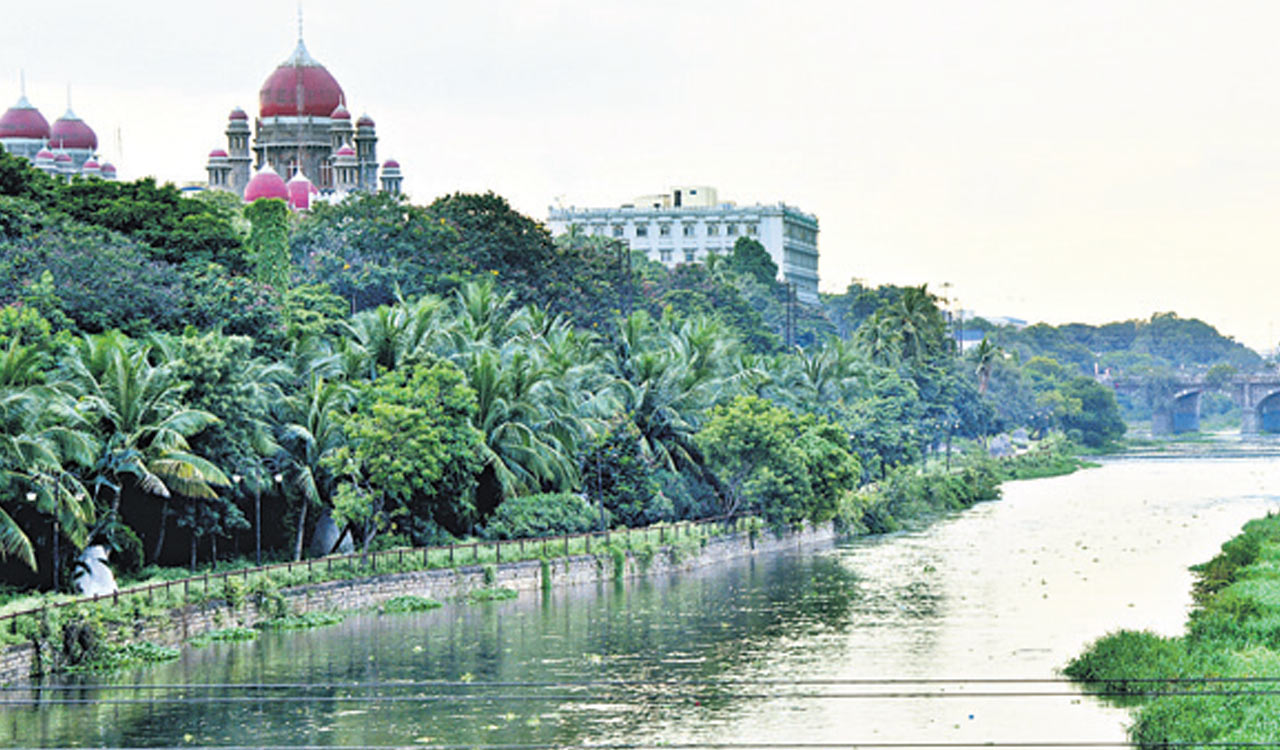


Hyderabad: The cash-strapped Congress government is increasingly considering Transferable Development Rights (TDR) as compensation for land and property owners who are set to lose their assets for road widening and other infrastructure projects.
From road expansion works linked to flyovers and underpasses to the proposed Musi Riverfront Development and Gandhi Sarovar project, the government is offering TDR as an alternative to direct cash compensation.
A fortnight ago, the Musi Riverfront Development Corporation Limited (MRDCL) issued a notification asking affected property owners to approach either the corporation or the Greater Hyderabad Municipal Corporation (GHMC) and indicate their willingness to accept TDR in exchange for surrendering properties located within the Maximum Flood Level (MFL) or buffer zones of the river.
The MRDCL plans to develop the Musi Riverfront over a 55-kilometre stretch from Gandipet to Gowrelly, covering 46 villages across 14 mandals in Rangareddy, Hyderabad and Medchal-Malkajgiri districts. The proposal includes comprehensive development within a 50-metre buffer on either side of the river.
According to the notification, landowners in survey numbers falling under Dargha Kaliskhan, Kismatpur, Hyderguda, Bandlaguda Jagir, Budvel and Upparpally have been invited to opt for TDR for the 9.2-km stretch from Himayathsagar to Gandhi Sarovar (Bapu Ghat) under Phase IA.
Similarly, landowners in Gandipet, Narsingi, Manchirevula, Ibrahimbagh, Quilla Mohd Nagar, Gandhamguda, Hydershahkote, Hyderguda and Bandlaguda have been asked to seek TDR for the 11.8-km stretch from Osman Sagar to Gandhi Sarovar under Phase IB.
However, beyond these projects, several affected landowners have expressed reluctance to accept TDR, insisting instead on cash compensation at prevailing market rates. In recent years, there have been multiple protests and objections from land and property owners over various State government projects, citing different concerns.
TDR certificates operate on a demand-supply mechanism. Until recently, they were primarily used by builders to secure permission for constructing additional floors or for settling Occupancy Certificate-related penalties by purchasing TDR bonds. Demand, however, has remained limited.
Transactions involving TDR bonds are private arrangements between sellers and buyers, typically builders. Unlike government-paid cash compensation, TDR holders must wait for suitable buyers and agreeable prices before monetising their bonds, which can be a time-consuming process.
In some instances, builders are alleged to have formed cartels to negotiate lower TDR prices, resulting in losses to bond holders.
Currently, nearly 3,000 acres worth of TDR bonds remain unsold in the market, affecting land acquisition for infrastructure projects. The GHMC has proposed flyovers, underpasses and other works estimated at Rs 7,000 crore, many of which are yet to commence due to land acquisition hurdles.
Why is the government focusing on TDR?
Whenever road widening or flyover construction is undertaken, compensation must be paid to affected landowners, usually through immediate cash disbursement. Over the past decade, land and property values have risen sharply, making land acquisition a major cost component of infrastructure projects.
Amid financial constraints, the government is emphasising TDR issuance to ease the burden of upfront payments. Once TDR is granted, landowners relinquish ownership rights, enabling project execution without delay.
What is a TDR certificate?
A TDR is a development right issued by urban local bodies or urban development authorities, allowing additional built-up area either in a new building or by adding floors to an existing structure. The certificate is regulated under building bye-laws.
It is granted in lieu of land or property surrendered to the government, enabling the holder to transfer or sell the additional development rights for monetary consideration.

Related News