CSIR-IICT hands over green effluent treatment plant to Pochampally Ikat village
CSIR-IICT has handed over a 500 KLD decentralised effluent treatment plant to Siripuram village, bringing eco-friendly wastewater management to the Pochampally Ikat handloom cluster. The initiative aims to protect water resources, support artisans and promote sustainable textile production.
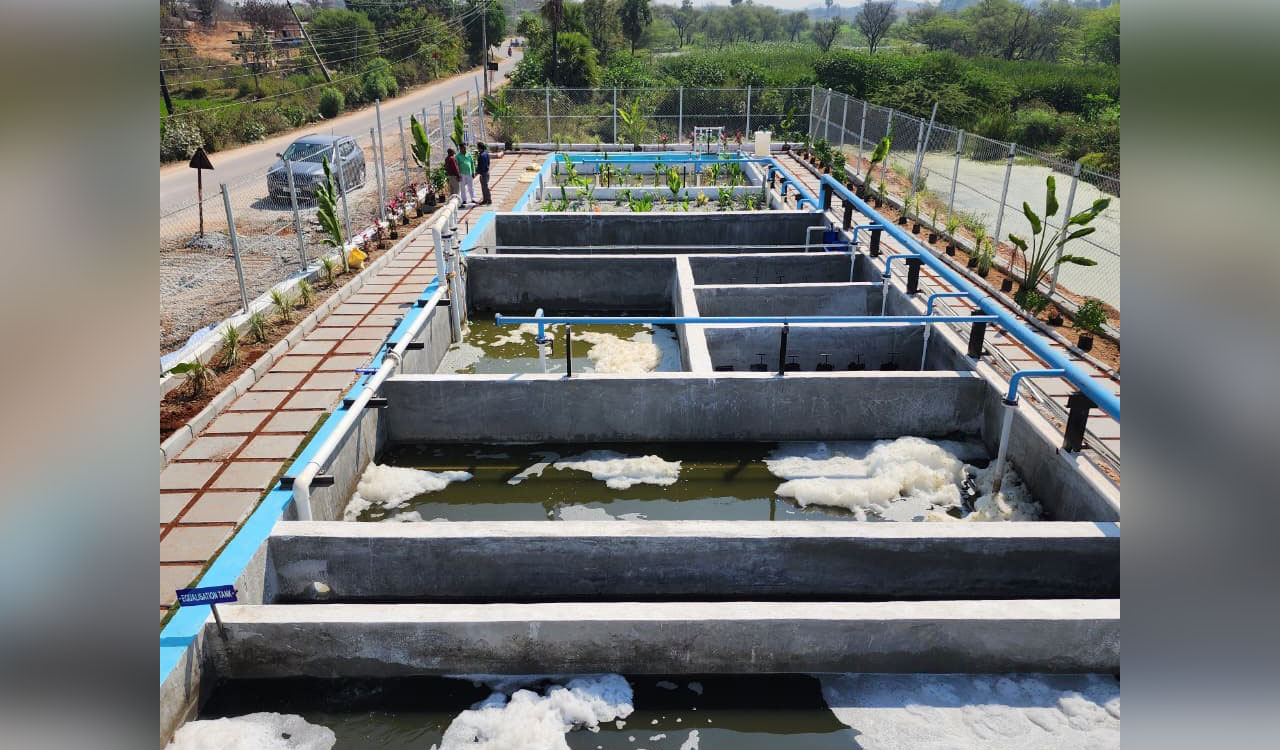


Hyderabad: For generations, the colourful threads woven by the weavers of the Pochampally Ikat handloom cluster in Siripuram village have chronicled the rich Indian heritage. However, the traditional art of textile dyeing also left behind coloured wastewater that threatened local drains, soil, and water resources.
However, this practice is changing. In a milestone for rural Telangana, especially for those involved in handloom work, the Hyderabad-based Indian Institute of Chemical Technology (CSIR-IICT) has officially handed over a new 500 KLD Model Decentralised Combined Effluent Treatment Plant to the Siripuram Gram Panchayat.
For the roughly 7,000 residents of Siripuram, the change is transformative, as local leaders and senior artisans pointed out that the plant not only protects vital water sources and public health, but it also enhances the visibility of their art to the world.
Funded by the Department of Science and Technology (DST), the project stands as the first facility of its kind in the region. Rather than relying on complex, chemical-heavy industrial systems, the plant uses a unique, chemical-free, and gravity-assisted green technology.
It blends biological treatments with advanced processes to naturally purify both textile dyeing runoff and household wastewater. Designed for low energy use and easy community operation, it represents a true ‘Lab to Loom’ triumph, IICT Director Dr Srinivas Reddy said.
The local artisans, leaders and other stakeholders, including IICT researchers, hope that the pioneering initiative at Siripuram will attract eco-conscious markets, which will go a long way in preserving the legacy of Pochampally Ikat.

Related News