First total lunar eclipse of 2022 to grace the skies on May 15
New Delhi: Skywatchers in the Northern Hemisphere are in for a treat as the first total lunar eclipse of 2022, also known as “supermoon”, “Blood Moon” or “Flower Moon” will shine bright on Saturday night. According to NASA, the eclipse will take place on the night of May 15, and will stretch into the early hours […]
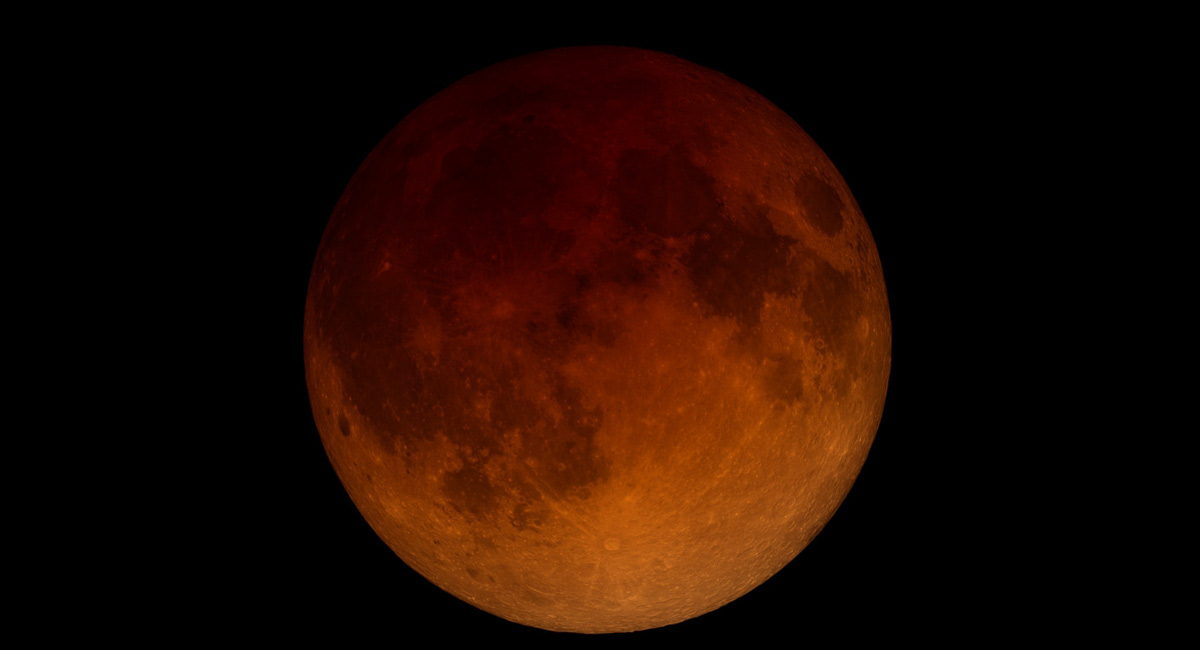


New Delhi: Skywatchers in the Northern Hemisphere are in for a treat as the first total lunar eclipse of 2022, also known as “supermoon”, “Blood Moon” or “Flower Moon” will shine bright on Saturday night.
According to NASA, the eclipse will take place on the night of May 15, and will stretch into the early hours of May 16.
The partial eclipse phase will begin over North America at 9.28 p.m. Central Daylight Time on May 15. Totality will begin at 10:29 p.m. CDT, concluding about midnight. After totality, the partial phase will end at 12:56 a.m. CDT on May 16.
While it will not be visible in India, parts of South America, Europe, and middle-east nations will see a glimpse of the Moon turning blood red over the weekend.
Unlike a total solar eclipse – in which ideal viewing is limited to a roughly 100-mile-wide “path of totality” as the shadow of Earth’s Moon sweeps across the land relative to the position of the Sun – a lunar eclipse has no such limits.
Importantly, unlike the precautions one takes to observe a total solar eclipse, it’s completely safe to watch a lunar eclipse unfold with the unaided eye.
“The whole half of Earth in darkness during those hours will be able to see it. You don’t have to work too hard to find a good vantage point. Just go outside!” said Alphonse Sterling, astronomer at NASA’s Marshall Space Flight Center in Alabama, US, in a statement.
A lunar eclipse occurs when the Sun, Earth, and Moon align so that the Moon passes into Earth’s shadow. In a total lunar eclipse, the entire Moon falls within the darkest part of Earth’s shadow, called the umbra.
When the Moon is within the umbra, it will turn a reddish hue. Lunar eclipses are sometimes called aceBlood Moons” because of this phenomenon.
There may be multiple partial lunar eclipses each year, but total eclipses are a bit rarer. The phenomenon takes place every 1.5 years.
Early Native American tribes also called the full moon as the Flower Moon because this was the time of year when spring flowers appeared in abundance.
The total lunar eclipse also occurs close to the Moon’s perigee – the point in space when it’s closest to the Earth during its monthly orbit – which will make the Moon appear about 7 per cent larger than average, making it the super moon.
The May 15-16 event will be the first of two total lunar eclipses in 2022. The second will occur on November 7-8.
The length of totality for each of these eclipses is almost identical: 1 hour 24 minutes 50 seconds in May, and 1 hour 24 minutes 54 seconds in November. In the 430-year period from 1661 until 2091, there is no other year that contains two total lunar eclipses of such equal length.
This will be the most balanced pair of total lunar eclipses within the same calendar year in over four centuries, according to Timeanddate.com.

Related News
-

Incredible to watch capability ISRO is developing in science missions: Indian-American NASA senior official
-
Astronauts remove faulty ISS antenna during spacewalk; out of time to install spare
-
NASA invites ISRO to join Moon Base programme for lunar South Pole outpost
-
NASA astronauts Anil Menon, Jessica Meir undertake spacewalk to upgrade space station