Flight of hope: Rehabilitated vulture soars over 1,600 km in 8 weeks after release in Maharashtra
A rehabilitated Indian vulture named J132 has flown over 1,600 km across Maharashtra and Gujarat in 56 days after release, demonstrating strong survival and adaptation skills. BNHS researchers said the bird successfully integrated with wild vultures, marking a conservation milestone
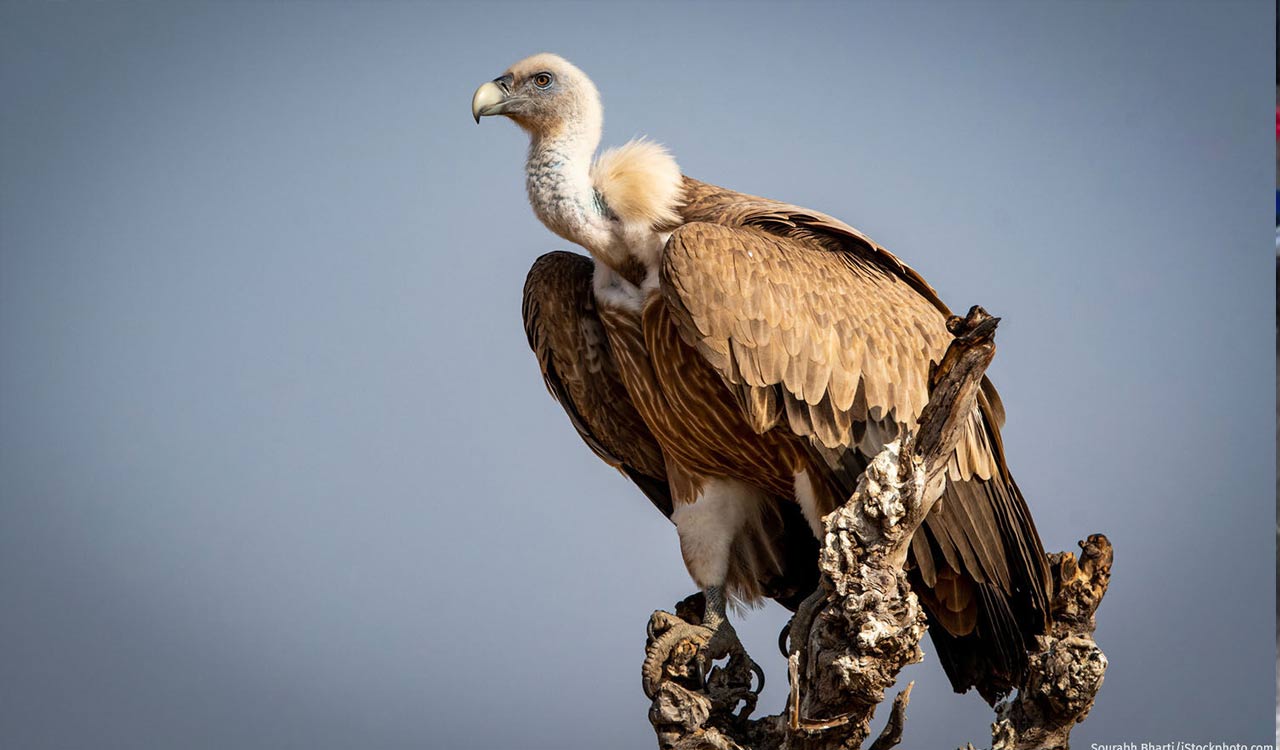


Mumbai: A rehabilitated Indian vulture has travelled more than 1,600 km over 56 days after its release into the wild in Maharashtra, showing strong survival skills and marking a major success in the conservation programme, wildlife experts said on Sunday.
The vulture covered its longest single‑day journey of 168 km on June 17, researchers at the Bombay Natural History Society (BNHS) said.
The bird, tagged J132, was released in Nashik on June 7 after two earlier release attempts ended with its recapture to improve its physical condition and chances of survival.
The vulture has travelled more than 1,618 km over the past eight weeks, showing strong flying ability, survival skills and adaptation to the wild, the BNHS said in a statement.
“Crucially, field monitoring teams observed J132 successfully associating with multiple wild vultures in the Dol Ohol and Deodongra areas of Nashik,” BNHS Director Kishor Rithe said.
“Even during periods of very heavy rainfall, teams visually confirmed the tagged bird independently locating and feeding on cattle carcasses alongside the wild flock, proving his complete behavioural adaptation,” he added.
Satellite tracking over the past eight weeks showed the bird has maintained a steady average daily flight distance, with its longest single-day flight measuring 168 km on June 17. It has been moving across northern Nashik, an important habitat for vultures, and has also flown along the Maharashtra-Gujarat border, including parts of Valsad district, according to the statement.
The bird was first released at the Pench Tiger Reserve on December 11, 2025, as part of the second batch of captive-bred Indian vultures. It flew more than 750 km to Nashik within 20 days before researchers recaptured it to improve its fitness.
A second release earlier this year was also followed by recapture before the bird was released for the third time on June 7 in Nashik, and it has completed 56 continuous days in the wild, demonstrating exceptional navigational ability, site fidelity and survival instincts, the BNHS said.
Rithe said the bird has now fully adapted to life in the wild.
“Even during heavy monsoon rains, the bird was seen independently locating cattle carcasses and feeding alongside wild vultures, showing natural behaviour and successful integration into the wild population,” he said.
BNHS researcher Manansingh Mahadev, who is monitoring the bird, said J132’s continued presence in northern Nashik highlights the importance of the region for the conservation of critically endangered Gyps vultures.
“The rugged cliffs and favourable habitat make northern Nashik an important refuge for vultures. Tracking J132 will help us identify future release sites and strengthen conservation planning,” he said.
Researchers also said the bird remained safely perched during periods of heavy rain in late July, demonstrating natural behaviour in coping with harsh weather.
The successful rehabilitation of J132 is an encouraging step in efforts to restore India’s critically endangered vulture population, the BNHS said.

Related News