From 600 Euros in Sweden to building an electric mobility venture: Abhiram Thuraga’s entrepreneurial journey
From developing artificial intelligence-driven automotive technologies to designing electric two-wheelers and exploring electric aviation, Abhiram Thuraga is attempting to build an integrated mobility technology enterprise that combines Swedish engineering expertise with India's manufacturing capabilities.
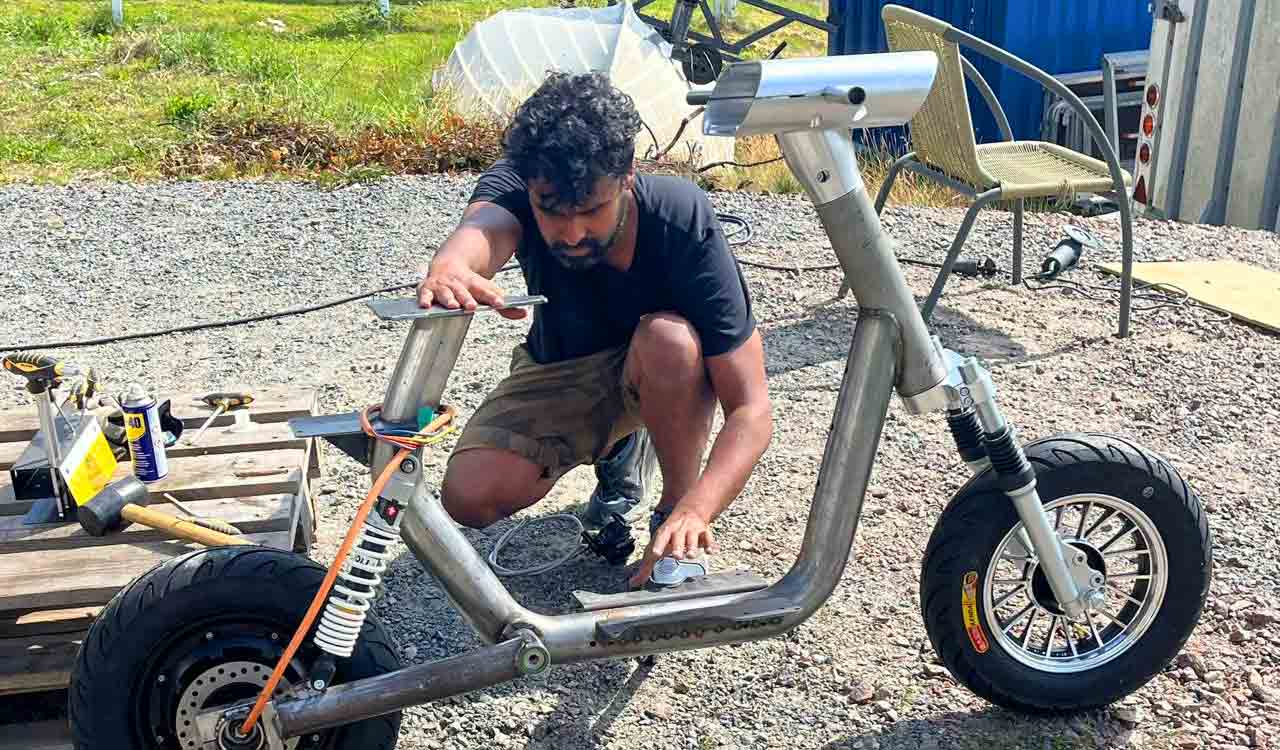


Hyderabad: Arriving in Sweden with just 600 Euros (approximately Rs 35,000 at the time), Abhiram Thuraga had little financial security but a clear ambition to build a career in engineering. More than a decade later, after working with global companies and developing his own mobility venture, the engineer-turned-entrepreneur is pursuing an ambitious vision in electric transportation.
Thuraga, who has more than 18 years of professional experience, has worked with prominent organisations, including Volvo, Qualcomm and Capgemini. He subsequently established Thuraga Motors AB in Sweden and its Indian counterpart, Thuraga Motors Private Limited, with a focus on developing electric mobility technologies.
From developing artificial intelligence-driven automotive technologies to designing electric two-wheelers and exploring electric aviation, Abhiram Thuraga is attempting to build an integrated mobility technology enterprise that combines Swedish engineering expertise with India’s manufacturing capabilities.
Through Turaga Motors AB in Sweden and its Indian subsidiary, the entrepreneur has developed a portfolio of technology assets spanning AI and software innovations, vehicle hardware, patents, trademarks, industrial designs and proprietary technologies. His reported portfolio includes 64 assets, reflecting an approach that places engineering development and intellectual property at the centre of the business.
The company’s product development initiatives include WBR Utility and BWR Urban, electric two-wheeler platforms, and Flyga, an electric aircraft concept. Its technology ambitions extend beyond vehicle design to intelligent control systems, lightweight structural engineering and digital technologies intended to understand individual riding behaviour.
With experience spanning more than 18 years at organisations including Volvo, Qualcomm and Capgemini, Thuraga brings an automotive engineering background to his entrepreneurial venture. A recent association with India’s Bondada Group could provide an opportunity to connect the company’s technology development capabilities with a wider manufacturing and business network.
To sustain his household and finance his venture, he continued working as a consultant for Volvo Cars during the day while developing vehicle concepts in a small workshop at home during the night.
“I worked one shift during the day and two shifts at night, like the movie hero Batman,” he says.
With limited resources to employ specialists, Thuraga took responsibility for several aspects of product development. He taught himself computer-aided design (CAD), circuit board development, programming, mobile application development and artificial intelligence coding.
His business approach also differed from the conventional electric vehicle manufacturing model. Rather than investing heavily in large-scale manufacturing infrastructure, he adopted what he describes as an ‘anti-gigafactory’ approach, combining Swedish engineering and design principles with India’s manufacturing capabilities.
The company’s development portfolio includes electric two-wheelers such as WBR Utility and BWR Urban, featuring a lightweight frame, intelligent control systems and technology designed to understand individual riding patterns. Another ambitious project is Flyga, an electric aircraft concept that extends the company’s mobility ambitions beyond conventional road transportation.
Thuraga says he has independently developed 64 technology assets spanning software, artificial intelligence, vehicle hardware, trademarks, designs and proprietary technologies. However, the individual categories listed in the company’s portfolio require further clarification to reconcile the stated total.
From managing financial hardship as a student in Sweden to developing technology for electric mobility, Thuraga’s journey illustrates the personal and professional challenges involved in building an engineering-led enterprise with limited resources.