From covers to tents, Japan’s cricket team prepares for India
Japan Cricket Association COO Alan Curr said his small team has been working late nights and early mornings to prepare Sano International Cricket Ground for Tuesday’s historic one-off T20I against India, with temporary stands raising capacity from 500 to 2,000
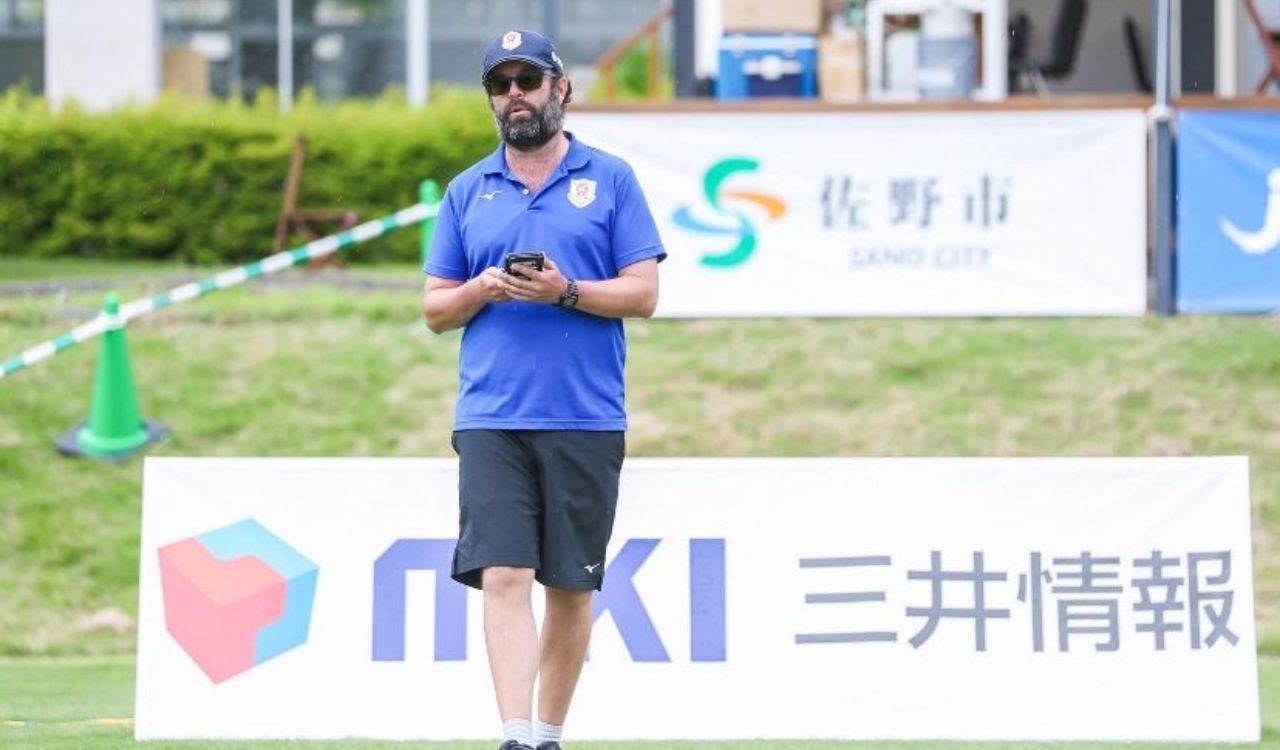


New Delhi: Pulling the covers, putting up tents and keeping scores are not usually part of a chief operating officer’s job, but Japan Cricket Association (JCA) COO Alan Curr has been doing all of it as his small team gets the Sano International Cricket Ground ready for Tuesday’s historic one-off men’s T20I against India.
“It’s been a big learning curve, and we’re a small team. We don’t have a lot of staff here at the JCA. I’m COO, but this morning I was pulling the covers. I’ve also been putting up tents, scoring and doing sort of everything. So we’re all doing a lot of different things that we don’t normally do.
“It’s asking a lot from our staff. It’s been a lot of late nights and early starts, but hopefully it’s all worth it when we get a whole load of people into the ground and get them so excited and seeing their heroes play,” Curr told IANS in a select virtual interaction organised by FanCode, the official broadcaster of the match.
Over the past week, Sano hosted a three-match series between Japan’s women and Malaysia, after which the hosts left for their Asian Games matches in Nagoya, while Hong Kong’s men’s team were here for games against Japan.
Such was the impact of this one-off game against India, billed as the Suzuki Cup, that all tickets were sold out soon after going on sale, with the ground’s capacity increasing from 500 to 2,000 through temporary stands.
“Well, it’s certainly a big undertaking. We’ve never really done anything quite on this scale before. At the ground, we have permanent seating probably for around 500 people. So we’ve put in a lot of temporary seating. We’re putting in a whole load of extra areas for VIPs and there’s even a VVIP area. We’ve got ticket gates, for example, as we don’t normally have ticketing at our events.
“We’ve had a separate section put together for where the players will come in. We always have a PMOA, but a PMOA here is usually just through some cones and barriers, which basically anyone could step over if they wanted to. But now we’ve got it set up properly so that we understand the security measures that need to be taken around India coming,” added Curr.
With India’s visit bringing a different level of scrutiny, the JCA has hired outside help too.
“We’ve actually brought out a consultant from England who arrived yesterday and has worked on World Cups, The Hundred and has been around events where India have participated before.
“He’s got a good understanding from a cricketing point of view of what security measures we need to take. So we are taking all of this stuff very seriously, and it’s really important for us to show that we have the capacity to handle something like this,” added Curr.
All that effort could still be undone by the weather. Curr revealed that a large typhoon was sitting south of Japan and that there was no reserve day if the match was abandoned.
Japan will also play its first Asian Games men’s T20 match in Nagoya, around 500 km away, and the squad is due to board a bus for the long journey straight after playing against India.
With India also heading to Nagoya soon after and already facing a packed calendar, Curr said there was no scope for a reserve day and that he was trying not to think about a washout.
The JCA had been planning to relay its turf square in Sano for about 18 months, and a groundsman sent by Sri Lanka Cricket (SLC) under a partnership arrived in December 2024 to look for suitable clay.
It was eventually sourced within Japan and used for the Asian Games square in Nagoya. The JCA then laid the same clay in Sano and pitched the ground to full-member nations as a training base, with the idea coming from the last Asian Games in Hangzhou, China, where the top-ranked full members waited a week or more to play their first knockout match with little access to proper cricket facilities.
A proposal went out around June, and talks with the BCCI began at the ICC conference in Edinburgh in July. Curr said the BCCI moved quickly and all things fell into place, with the players excited to see the ground change shape over the past few days.
At the same time, the players are under no illusion about the gulf in class against an India side they have never faced before at this level.
For the JCA, success would be measured by how Japan conduct themselves as much as by the result. Curr said he wanted the team to play hard, but also show that cricket was friendly, accessible and fun, and to earn respect.
Having handled the JCA’s social media accounts, Curr admitted to being taken aback by comments from people surprised that Japan has a cricket team.
The game in Sano comes at a time when Japanese cricket is busier than it has ever been, with the men’s side beating Kuwait, Bahrain and PNG earlier this year.
“In terms of what’s led to the improvement, we’re a bit better resourced now than we have been previously, particularly with it being an Olympic sport. By being part of the Japan Olympic Committee, we do get a lot more funding.
“That funding isn’t hard cash. We don’t get money from the Olympic Association, but they do help us with human resources. So, for example, we’ve been able to hire a strength and conditioning coach. We’ve been able to bring in a part-time analyst and these are kind of things that we didn’t have before.
“We’ve got more people on the coaching staff going out and coaching our junior teams. So those have been important. Becoming members of the Asian Cricket Council in 2024, and the opportunities to play there after joining have been significant. The ACC does an amazing job of putting on events and tournaments that we’ve now been able to play in.
“When I first got into the high-performance side of things, we went from 2014 to 2017 without a men’s tournament. It was just complete blanks. We had to start arranging our own cricket games because there was just literally nothing to play for, and nothing to play in,” explained Curr.
The quiet months that once gave the JCA breathing space, he said, are gone.
“Whereas now, that’s completely the opposite. I mentioned the other day how probably the single biggest change from a performance perspective since I’ve been here is that the Japan Cricket Association used to have a very definite on-season and off-season. We’d have a quiet time where you could relax a little bit and plan more in advance for the following summer.
“But now, we’re a 12-month-a-year organisation. There always seems to be a team away playing somewhere. So there’s a lot happening, and just the sheer amount of cricket, the depth that we’ve been able to create through having Under-19, even Under-16 national teams now, is really helping drive the standards. As we’re becoming more well-known, we can’t shy away from it,” added Curr.
The numbers back up that claim. Japan has 8,800 registered cricketers in its latest census, roughly three times the figure of about 3,000 when Curr arrived in 2014.
The nationwide Japan Cup T20 competition has grown from 11 or 12 teams to more than 80, while the Tokyo-based 40-over Japan Cricket League now runs four divisions with around 37 or 38 teams.
The JCA also introduced the game to about 12,000 children last year through schools, community programmes and festivals.
Part of the growth at the top end has come from players of Japanese heritage raised in established cricket nations, in turn leading to growth in the number of people watching games, especially with the International Cricket Council (ICC) providing Japanese commentary feeds for matches under its umbrella.
“We have a lot of players of Japanese heritage who live overseas. A lot of our players might have been born in Japan but then at some stage moved back to Australia, England, New Zealand, cricket-playing nations.
“They’ve grown up learning the game in a strong environment, which, as much as we’re trying our best here in Japan, it can’t compare to an environment that you’re going to get playing in Australia or New Zealand or England or any other full member in terms of the number of facilities you’ve got, the accessibility of those facilities, the accessibility to coaches.
“We’re finding players at a younger age who want to come and be part of Japan cricket. For me, it’s been fantastic to see so many people who are mixed race — one parent is Japanese, one parent is from somewhere else. They might have moved overseas, but they are reconnecting with their Japanese heritage through cricket,” he added.
Curr called this the most satisfying part of his work, especially with cricket in Japan growing despite the overwhelming popularity of baseball, football, rugby and martial arts.
“For me, that’s been one of the most rewarding parts of my job. Some of them are great cricketers and they make our national teams and some of them just enjoy playing and they come back to Japan and just make friends in the cricket community and they do that once a year.
“But it’s been a brilliant way for people to reconnect with who they are, particularly post-Covid-19. All that stuff really took off after 2020 when we qualified for the Under-19 World Cup for the first time. That gave us a profile and nowadays, people contact us pretty regularly, sometimes it’s about themselves, or their sons or daughters who have Japanese heritage and who want to come and play.
“Those players are helping to lift the standards because they come from a different, more entrenched cricketing culture. So we have our players who are based in Japan who bring sort of that knowledge of what the Japan way is and how things are done in Japan and the discipline and everything that goes around the culture there. Then we’ve got the players from overseas who just have the training nous and what a training schedule looks like. So that’s been really helpful in terms of lifting the standards,” he elaborated.
Home-grown talent faces a structural hurdle, according to Curr. Japan’s school club system, known as bukatsu, usually has children pick a single sport at around 12 and play it year-round until they leave school, and only a handful of schools offer cricket.
Those schools have historically produced most of the national team players.
A government-level working group is looking at how cricket could fit into the school curriculum, though Curr said such processes take time.
The lack of people with cricket expertise in Japan has meant the JCA has leaned heavily on volunteers and backers who saw the sport’s potential, citing sportswear brand Mizuno’s sponsorship of the men’s team as a significant boost.
Cricket’s place in the Asian Games, an event Japanese audiences regard as being of immense importance, like the Olympics, has also given the sport a legitimacy it lacked before.
“As for what’s next, we will have an East Asia Pacific regional final for the men, who will try to qualify for the global qualifier for the next T20 World Cup. So we’re not sure exactly when that’s going to be yet.
“It’s going to be four teams and we will be playing that probably in the second half of next year with a view to making the global qualifier, which I believe will be early 2027. That’s not confirmed and then, the goal is to make a World Cup. We’ve not shied away from that at all.
“I mean, the qualification pathway was actually changed last year. It seems to be changing every cycle. But if the qualification cycle for the last World Cup had been the same as the cycle before, we would have been at the last World Cup,” said Curr.
He also admitted to Japan feeling short-changed by the revamped qualifying structure.
“We were the highest-placed team in the East Asia Pacific region at the Asia EAP final. They’ve never had a combined qualifying structure between Asia and East Asia Pacific before. So, we kind of felt we got a bit hard done by in that reshuffle.
“But we are hopeful that the World Cup will continue to be a tournament that represents the world. I think different nations being on the global stage bring different colour, different vibrancy and flavour to a World Cup. That’s what everyone sees in the Football World Cup, for example, even in the Rugby World Cup.
“So I hope cricket can continue to grow, there can be more teams and the tournament can get bigger. But for us, reaching a World Cup is certainly the next goal and there’s work to do, for sure. But we’re ambitious and we want to keep striving for the heights that we believe we can get to,” he concluded.

Related News