My Space: From Jhalmuri to Maach: Two global days, one connected reality
Plastic pollution, overfishing, industrial waste, climate change, and shipping activity are weakening marine systems. And what happens in oceans does not remain there. It returns to human systems through food, climate, and economy


By Chada Rekha Rao
Every year in June, two important global observances come one after another on the calendar — World Food Security Day on June 7, with its 2026 theme ” From burden to solution — safe food everywhere” and World Ocean Day on June 8 with its theme 2026, “Reimagine: beyond the world we know a new relationship with our ocean”.
Both these days are marked with symposiums, conferences, expert talks, seminars, panel and group discussions, debates…
Once again, as year after year policies are discussed, analysis taken, in other words, the world introspects how much impact these have left on planet Earth and the lives on the planet.
Both these days speak about the same reality — survival.
One speaks about food. The other speaks about the system that silently sustains food.
World Food Safety Day is linked to Sustainable Development Goal 2 — Zero Hunger.
World Ocean Day is linked to Sustainable Development Goal 14 — Life Below Water. The two sides of the same coin.
On paper, they look separate. In reality, they are deeply connected.
Food today is not just agriculture anymore. It is politics, climate, trade, oceans, pollution, behaviour, and global systems all together.
And in India, food is never just food.
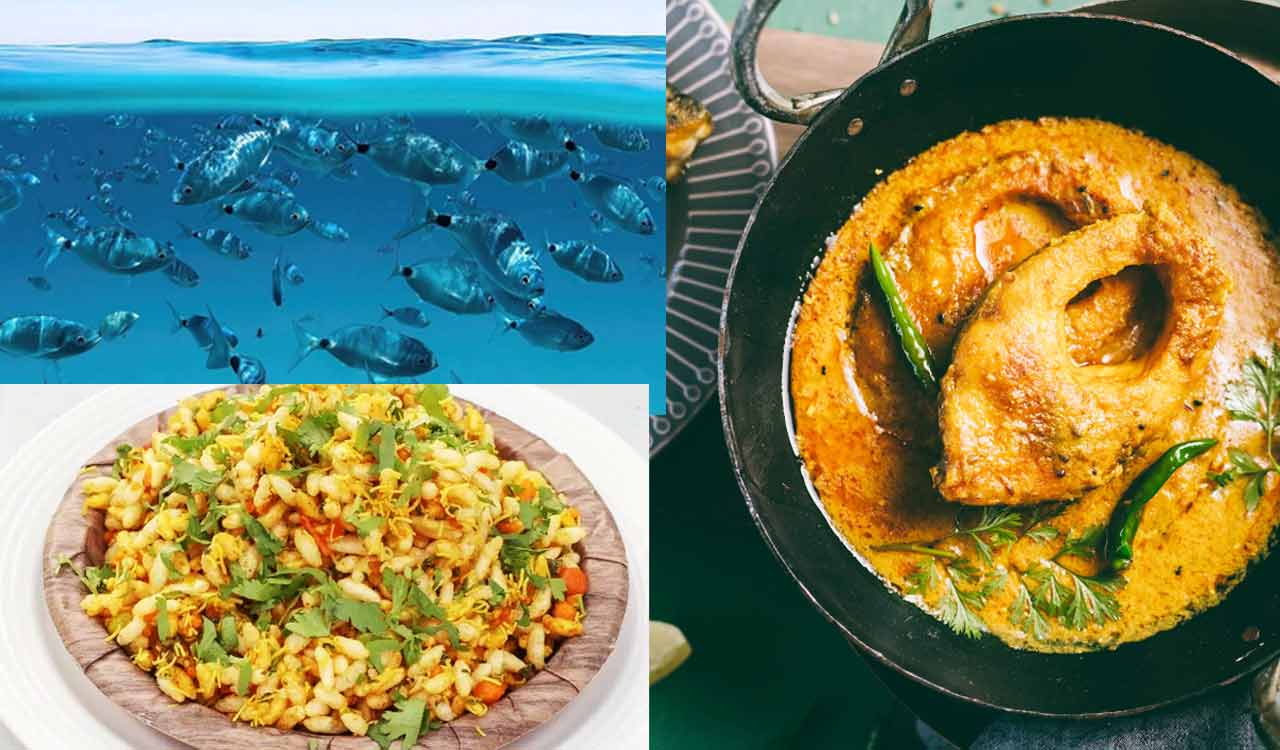
From jhalmuri on Bengal streets to maach on everyday plates, food is identity, livelihood, memory, and politics.
Food and Politics: India’s Familiar Pattern
Food has always been part of political life in India.
During elections across States, food becomes a visible symbol. Biryani is served in large quantities at campaign meetings. Pakodas are fried in public gatherings by the ambitious would-be netas. Jalebis and laddus appear during celebrations and victories. How can we forget the traditional halwa before the presentation of the Union Budget? Tea stalls turn into discussion points for political debates.
Food works differently from speeches. It creates an instant emotional connection.
Because hunger is not abstract. It is immediate.
An empty stomach influences public mood faster than ideology.
That is why food security is no longer just an agricultural or welfare issue. It is linked to governance, economics, and political stability.
A World that Produces Enough, but Still Remains Hungry
The biggest contradiction today is simple.
The world produces enough food, yet millions remain hungry.
The issue is not only production. It is access, inequality, waste, conflict, inflation, and disruption.
One part of the world wastes food. Another part struggles for one morsel.
The ocean shapes agriculture, prices, monsoons, and food supply. The distance is only geographical — not economic or environmental. Even plastic waste generated in cities eventually reaches rivers and oceans
Global hunger is now linked to poverty, migration, unemployment, climate change, and instability.
Food insecurity has become one of the biggest global challenges of this century.
Even developed economies worry about food inflation because rising prices affect social stability directly.
History is clear — when food systems weaken, societies become unstable.
SDG 2: Zero Hunger and the Real Meaning
Sustainable Development Goal 2 — Zero Hunger — is not only about food availability.
It is about dignity, stability, and equality.
Food insecurity quickly becomes social and political instability if not addressed.
That is why food is now part of national security thinking, not just welfare policy.
Telangana and the Illusion of Distance from Oceans
Telangana has no coastline. No fishing harbours. No direct marine economy.
But it is deeply connected to oceans in invisible ways.
Fish sold in Hyderabad comes from coastal waters. Cooking oil moves through global shipping routes. Fertilisers depend on maritime trade. Even rainfall patterns are influenced by ocean temperatures.
The ocean shapes agriculture, prices, monsoons, and food supply.
The distance is only geographical — not economic or environmental.
Even plastic waste generated in cities eventually reaches rivers and oceans.
Nothing truly disappears.
World Ocean Day and SDG 14: Life Below Water
World Ocean Day is linked to Sustainable Development Goal 14 — Life Below Water, focused on protecting marine ecosystems and ensuring sustainable use of ocean resources.
But oceans today are under serious pressure.
Plastic pollution, overfishing, industrial waste, climate change, and shipping activity are weakening marine systems.
And what happens in oceans does not remain there. It returns to human systems through food, climate, and economy.
Plastic Pollution: The Return of Waste into Food
Plastic is now one of the biggest silent threats.
It breaks down into microplastics over time. These enter rivers and oceans, then marine life, and eventually human food systems.
Fish consume them. Sea salt contains them. Water systems carry them.
Human beings are now consuming traces of their own waste.
This is where food safety and ocean health directly meet.
Food safety is no longer only about kitchens. It begins in the environment itself.
Food Safety is a Long Chain, not a Single Step
Earlier, food safety meant clean cooking and hygiene.
Today it starts much earlier: soil quality, water safety, pesticide use, storage systems, transport, industrial exposure, packaging, and environmental conditions.
Food travels a long industrial chain before reaching the plate.
Science exists to monitor this. Systems exist. Standards exist.
But implementation is uneven.
The gap is not knowledge. The gap is discipline and behaviour.
Convenience has Replaced Caution
Urban food habits have changed.
Online delivery, packaged food, instant meals, and disposable culture dominate daily life.
Very few consumers ask basic questions: Where did this food come from?
How was it stored?
What entered the process?
How safe is it really?
Convenience has become stronger than awareness.
And systems respond to what consumers demand.
World Conflicts and Global Food Pressure
Recent global food pressure is also shaped by various conflicts like Israel–Gaza–the USA.
The conflict has created severe humanitarian stress, especially in densely populated areas where food supply chains, agriculture, and basic infrastructure have been heavily disrupted. Dependence on external aid has increased significantly for civilian survival.
At the same time, the involvement of the United States in supporting Israel politically, strategically, and militarily has kept the conflict globally sensitive. This has influenced diplomatic positions, trade decisions, and international responses across regions.
The impact goes beyond the conflict zone. It affects: stability of shipping routes in surrounding waters, global fuel and commodity prices, humanitarian supply chains, and overall food security pressures in vulnerable regions.
Modern conflict no longer remains local. It enters global systems — and eventually food systems.
Climate, Oceans and Agriculture
Oceans regulate global climate systems.
Monsoons depend on ocean temperatures. Agriculture depends on monsoons. Food systems depend on agriculture.
But climate patterns are becoming unstable.
Heatwaves, cyclones, floods, and droughts are increasing in frequency and intensity.
Farmers are facing uncertainty like never before.
When agriculture becomes unstable, food security becomes fragile.
Food systems are now global systems.
Food is no longer local.
It is a global network of production, trade, transport, climate, and politics.
Even inland States like Telangana are part of this system through consumption, supply chains, and environmental links.
Telangana’s Progress and the Next Question
Telangana has made strong progress in agriculture through irrigation and farmer support systems.
But the next stage is different.
Not just production — but safety, sustainability, and responsibility.
Is the food safe?
Is water protected?
Is waste managed?
Is consumption responsible?
Because growth without sustainability is incomplete progress.
The Real Challenge: Behaviour
The world does not suffer from a lack of knowledge.
People already know pollution is harmful.
People already know plastic is dangerous.
People already know waste is a problem.
Yet behaviour does not change fast enough.
Modern civilisation suffers not from ignorance, but from inconsistency.
A Shared Responsibility
Food safety and ocean protection are not separate responsibilities.
Governments regulate.
Industries produce.
Science studies.
But consumers complete the system.
Small actions matter — reducing waste, avoiding unnecessary plastic, and becoming aware of consumption patterns.
Because small behaviour changes multiply when millions follow them.
Let’s Introspect and Revisit the Lacoonas
World Food Safety Day and World Ocean Day are not separate observances.
They are two sides of the same global reality.
From jhalmuri on Bengal streets to maach on plates, from election-time food symbolism to global supply chains, from plastic waste to polluted oceans, everything is connected.
The ocean may feel far away from daily life.
But it is already inside the system that brings food to the plate.
And if these connections are ignored, the next crisis will not begin suddenly.
It will arrive quietly — through what the world eats every single day.

(The author is academician)

Related News