
Historian identifies 11th-century Kalyani Chalukya inscription in Ranga Reddy
A research team has identified an 11th-century inscription at Siddheshwara Temple in Nandivanaparti, Ranga Reddy district. The Kannada-language inscription, dated April 7, 1077 CE, records a donation and mentions Kalyani Chalukya emperor Tribhuvanamalla Vikramaditya VI and his capital, Kalyana
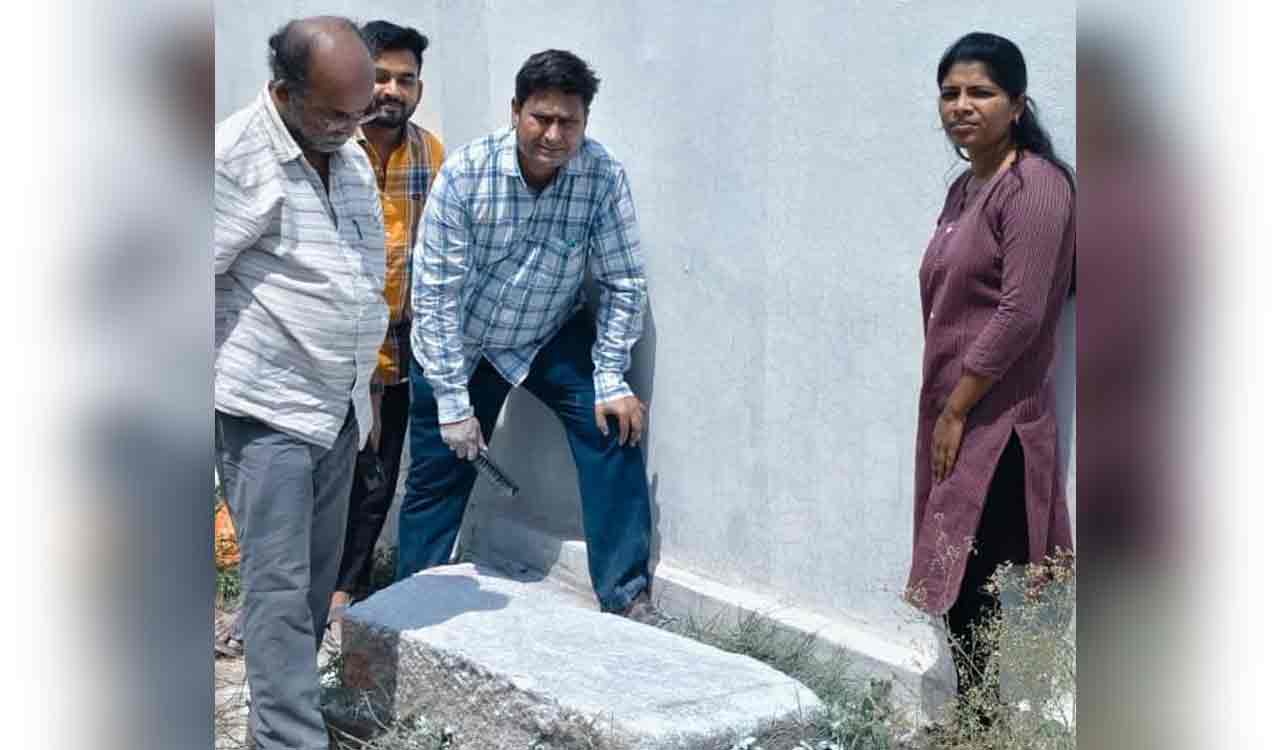


Hyderabad: Dr C.V. Pavan Kumar, a research member of the Kotha Telangana Charitra Brundam and a professor at Government Degree College, Ibrahimpatnam, has identified an inscription lying on the premises of the Siddheshwara Temple at Nandivanaparti in Ranga Reddy district. Sri Sriramoju Haragopal, president of the History Group, assisted Dr Pavan Kumar in taking an estampage and deciphering the inscription.
The inscription slab was visible only on one side. When the inscription pillar was turned over, the beginning portion of the inscription on the other side was discovered. At the top of the inscription are half-sculptures of the Moon, the Sun, Nandi, a Shiva Linga, a sword beneath a cow, and elephants. The inscription is written in 11th-century Telugu-Kannada script and in the Kannada language.
The first side of the inscription contains the prasasti (eulogy) of Kalyani Chalukya emperor Tribhuvanamalla Vikramaditya VI, along with a mention of his capital, Kalyana. The lower portion of the inscription pillar is broken on one side.
The second side of the inscription contains 20 lines. This portion records a donation made in Shaka year 998, on Chaitra Shuddha 12, a Friday (i.e., April 7, 1077 CE), by Tribhuvanamalla’s Mahamandaleshvara, “Mogata Rasara”, to “Iinjakeshvara”.
Students of Government Degree College, Ibrahimpatnam, G. Shivakumar and K. Shivarani, along with Nandivanaparti residents Shiva and Jagan, extended their cooperation in excavating the inscription and preparing the estampage.

