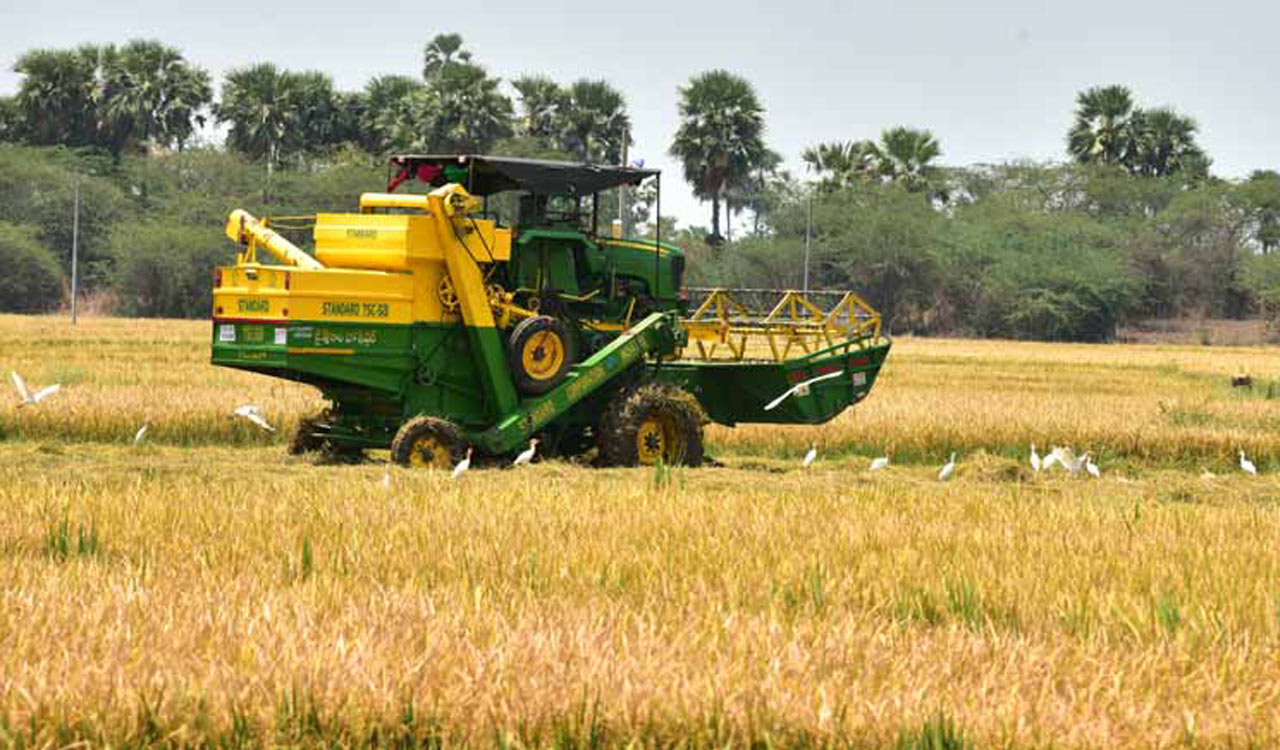
Hyderabad air quality at risk as stubble burning rises in Telangana
The Professor Jayashankar Telangana Agricultural University’s Remote Sensing and Geographic Information Systems Laboratory analysis found that crop residues were burnt in around 17 lakh acres during the recent Yasangi season. This analysis was based on the satellite imagery that was captured during months of April, May and June.
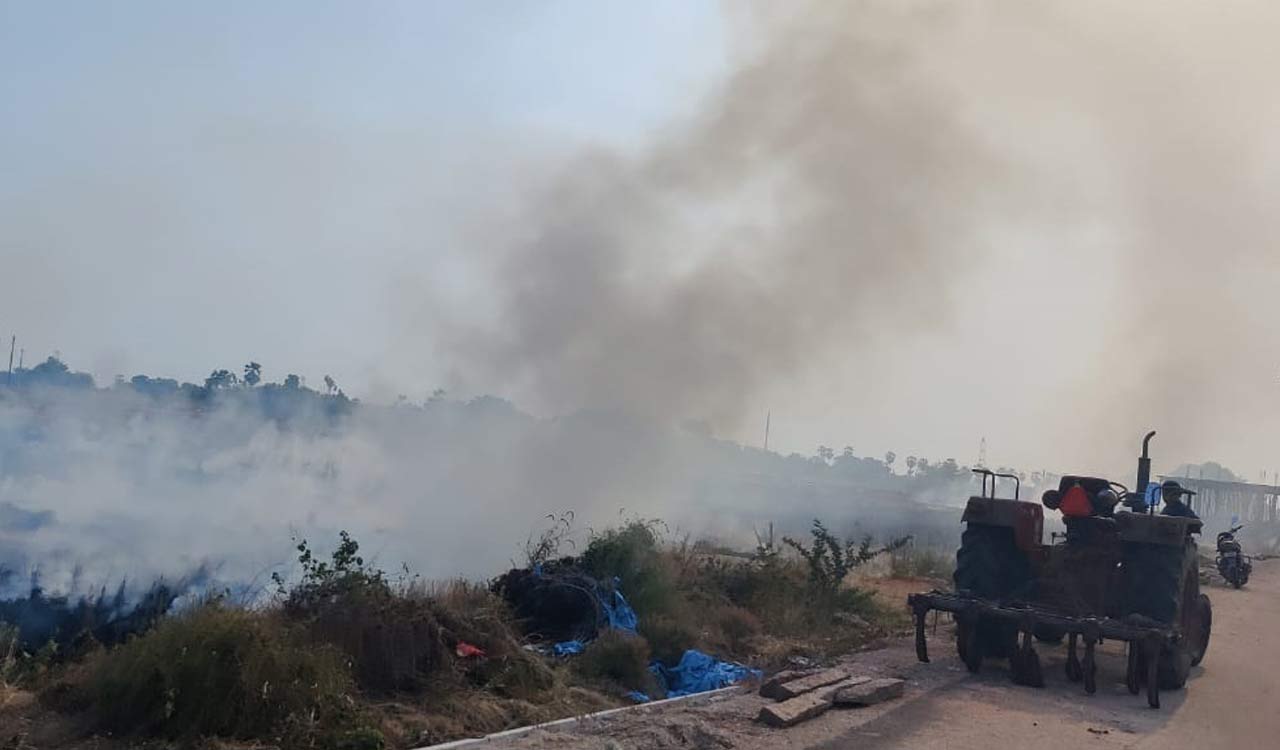


Hyderabad: The Professor Jayashankar Telangana Agricultural University’s (PJTAU) satellite data on crop residue burning has revealed a silent environmental crisis which is unfolding in the State.
The University’s Remote Sensing and Geographic Information Systems Laboratory analysis found that crop residues were burnt in around 17 lakh acres during the recent Yasangi season. This analysis was based on satellite imagery captured during the months of April, May and June.
Of the total 17 lakh acres, around nine lakh acres had paddy stubble and straw, and eight lakh acres had maize and sorghum crop residues. Among 33 districts, Nizamabad, Karimnagar, Khammam, Kamareddy and Peddapalli accounted for 34 percent of the total burnt area, while Rangareddy, Vikarabad and Mahabubnagar had minimal incidence of crop residue burning.
The university agricultural scientists warned that the burning practice will have a severe impact on soil health as it kills bacteria and fungal microorganisms that play a vital role in maintaining soil fertility and crop growth.
Burning one tonne of paddy straw and stubble, according to scientists, is expected to result in the loss of around 5.5 kg of nitrogen, 2.3 kg of phosphorus and 25 kgs of potash in the soil. Given the practice in the recent months, the 17 lakhs acres might have lost around 23.63 lakh kgs of nitrogen, 11.90 lakh kg of phosphorus and 1,062 lakh kg of potash.
In addition to soil health, the agricultural scientists said that crop residue burning would adversely affect the environment as one tonne of residue will release around 60 kgs of carbon monoxide, 1,460 of carbon dioxide and 200 kgs of ash particles.
Further, greenhouse gases, including methane and nitrogen oxides, which contribute to global warming, are released into the atmosphere.
If the crop residue burning goes unchecked, Hyderabad, which has a relatively safe Air Quality Index (AQI), might face pollution levels like Delhi within the next decade, said Prof. Aldas Janaiah, Vice Chancellor PJTAU.
He advised farmers to allow the crop residue to decompose naturally in the soil. This will improve the soil fertility and reduce environmental pollution.
Related News