Hyderabad rowdy sheeters build ‘bhai’ image on social media
Hyderabad’s rowdy sheeters are increasingly using social media to project images of power and influence through flashy photographs, expensive cars and edited reels. Social workers warn that such content can glamorise crime and influence youngsters, prompting calls for closer online monitoring.
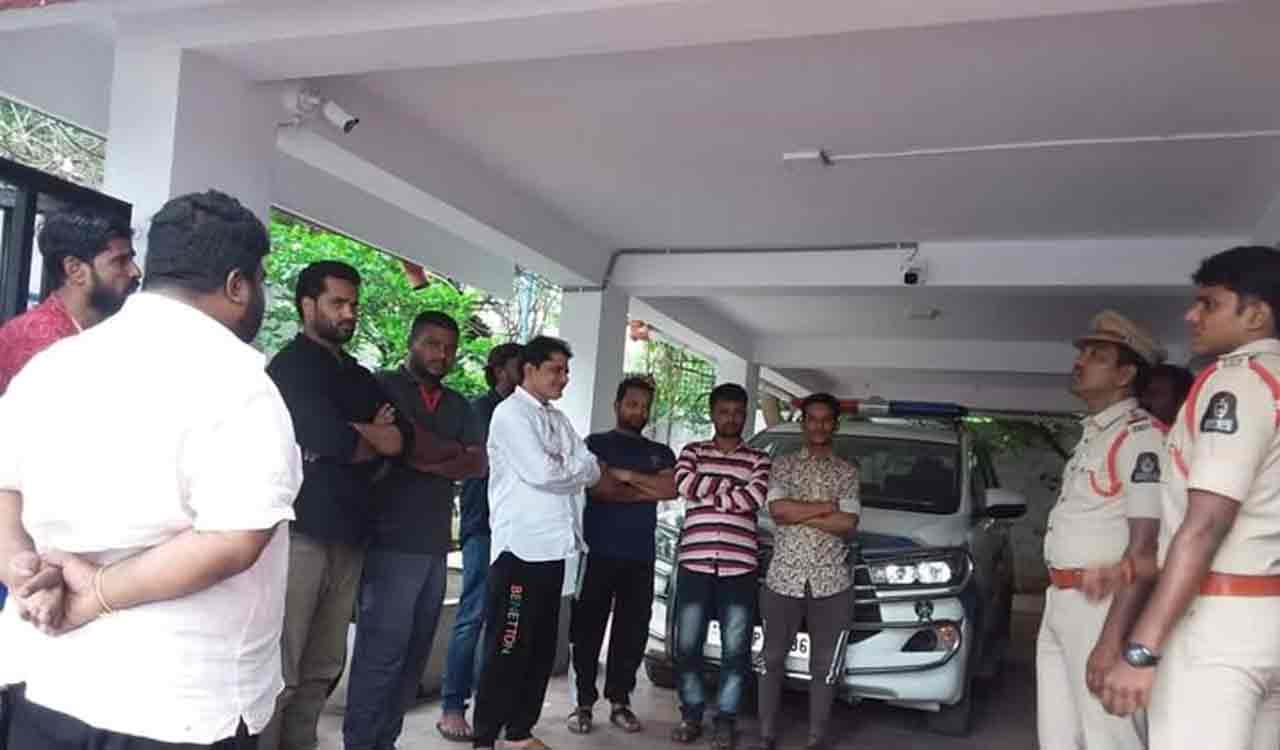


Hyderabad: Expensive clothes, dark sunglasses, flashy cars, a group of friends around them and a dramatic background song — the setting could easily pass off as a scene from a gangster movie. But these are not movie characters. They are some of the city’s notorious rowdy sheeters, now carefully building a “bhai” image on social media.
Some of these men have long criminal histories and were even detained under the Preventive Detention Act for repeatedly getting involved in murders, extortion and other offences. Yet, on social media, their past often disappears behind stylish photographs, slow-motion videos and carefully edited reels.
They are now regular guests at marriages, receptions, shop and hotel inaugurations and other public functions. Moving in groups, they pose for cameras and make videos that are later edited by a couple of youngsters who appear to work exclusively for them. Songs from underworld, faction and violent movies are added as background music before the reels are uploaded on Instagram, YouTube and other platforms.
The videos frequently show them in branded clothes, expensive cars and surrounded by youngsters, creating an impression of power, money and influence. A man known to police for his criminal activities can on a mobile screen appear like a local celebrity.
For youngsters watching such content repeatedly, the line between crime and glamour can become blurred. “It is sending the wrong message to people that rowdyism and crime make one powerful and influential in society. Youngsters may try to imitate such people without understanding the consequences,” said social worker Muneera Khatoon.
Social worker Syed Abbas of Mallepally said the transformation was largely about perception. “They are trying to erase their criminal image and replace it with that of a celebrity or a powerful person. Social media gives them a platform to reach hundreds of youngsters directly,” he said.
Community elder Mohd Maqsood of Golconda said the influence should not be ignored. “When violence is repeatedly shown as a symbol of power, some youngsters begin to see it as a shortcut to gaining respect. The rise in murder and other violent incidents has to be viewed in this changing social media environment too,” he said.
Social workers urged the police IT and social media monitoring cells to keep a close watch on such accounts and act against content that glorifies violence and criminal activity. They said simply removing a rowdy sheeter from the streets may not be enough if his online persona continues to attract and influence youngsters.

Related News