India to ease rules for semiconductor, auto component manufacturers: Piyush Goyal
Commerce Minister Piyush Goyal said India will amend regulations within two months to address concerns of semiconductor and auto component manufacturers. He also highlighted Semicon 2.0, investment opportunities, simplified BIS rules and stronger India-Japan cooperation in semiconductors, AI and technology
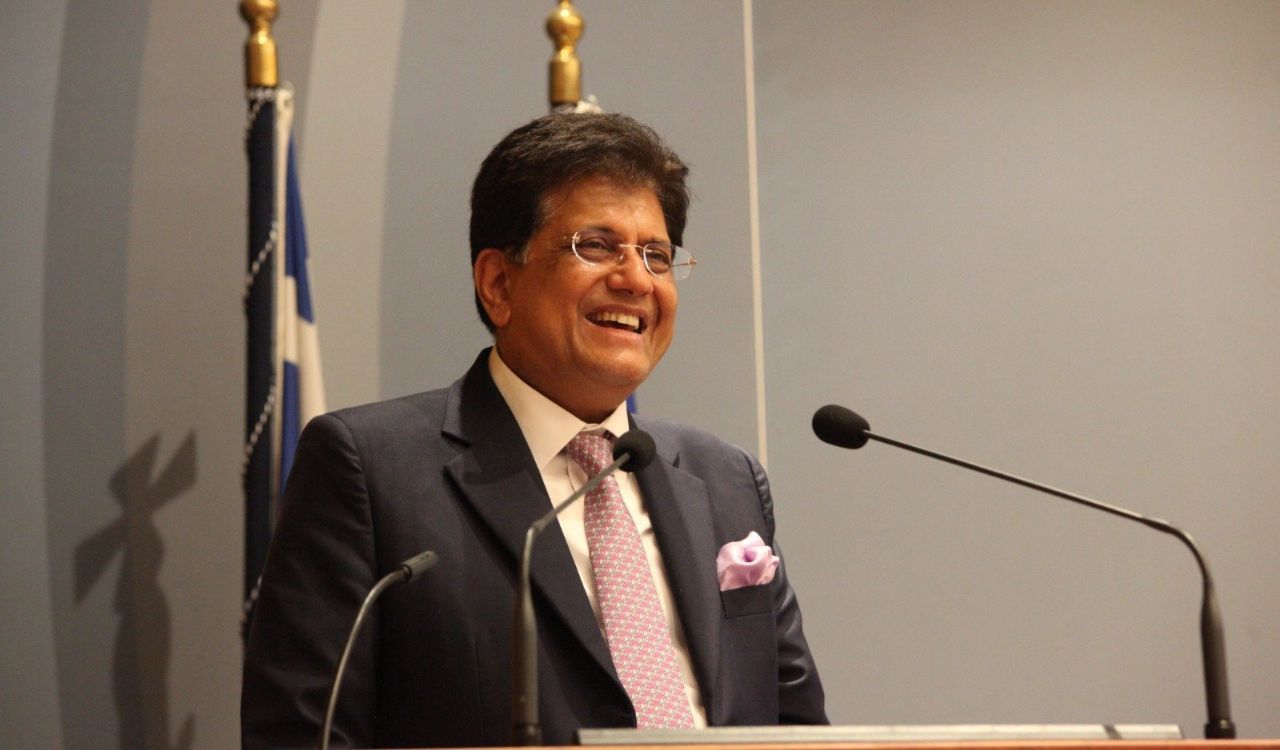


Tokyo: Commerce and Industry Minister Piyush Goyal on Monday said India will amend its regulations and introduce new rules within the next two months to address concerns raised by semiconductor and auto component manufacturers here. In a fireside chat with Nikkei Asia here, he said two large corporations — one seeking to manufacture semiconductor equipment in India and another in the automotive components sector — had raised certain concerns.
“I have assured them that within the next two months, India will amend its regulations, bring in new rules to accommodate their request and ensure that they will have absolutely no problem as they bring manufacturing into India,” he said. The minister said the government has significantly simplified the Bureau of Indian Standards (BIS) framework and is working to ease the approval process, including for suppliers that may not be covered under the revised regulations.
“There would be occasions where the demand may be only about importing goods from another country …which is not conducive for fair trading practices and which is often known to supply goods at predatory prices. “In those situations, obviously it is very difficult to meet the demands of certain sectors of industry, and I am not apologetic about it; I am very upfront and frank about this when they meet me,” he added.
He added that the Union Cabinet has approved the Semicon 2.0 for the development of India’s semiconductor design and manufacturing ecosystem, with a total budget outlay of Rs 1,27,500 crore. “together with the private sector, we are looking to seed about USD 50 billion of semiconductor and associated industry in the next year and a half. Once that is done, we will come out with semiconductors 3.0 because for us this is a journey,” he added.
He said the government has significantly simplified the Bureau of Indian Standards (BIS) framework… and looks at making it more easier, including for suppliers that may not yet be covered under the changed regulations.
Further, he pitched India as an independent investment destination, rather than an alternative to China. “One can clearly see that for an economy like Japan, which has very good technologies, but not enough people, which has excellent business practices, but not enough market, India can be an excellent partner, which provides economies of scale with a large domestic market, and India, which has opened its doors to international engagement with several free trade agreements,” Goyal said.
“India is not a plus-one country; India stands on its own merits, on its own feet, as a trusted partner. We don’t steal anybody’s technology; we don’t copy intellectual property products and bring them into the market,” he added. On artificial intelligence (AI), he said Japan and India have both been in an active dialogue in this field. He emphasised the need to work together as trusted partners, “particularly to ensure that if AI is sought to be weaponised or AI is sought to be monopolised”.
He said the two countries are working on a full-stack approach, covering everything from large language models and AI applications to equipment, semiconductors, computing infrastructure, data centres and energy requirements.

Related News