Indian Haj pilgrims struggle for regional desi food in Makkah
Indian Haj pilgrims in Makkah are struggling to access food that matches their regional preferences due to a ban on self-cooking, scattered eateries, and limited options near accommodations. Social workers are helping by listing ethnic restaurants, with Hyderabadi cuisine seeing the highest demand.


By Our State Bureau
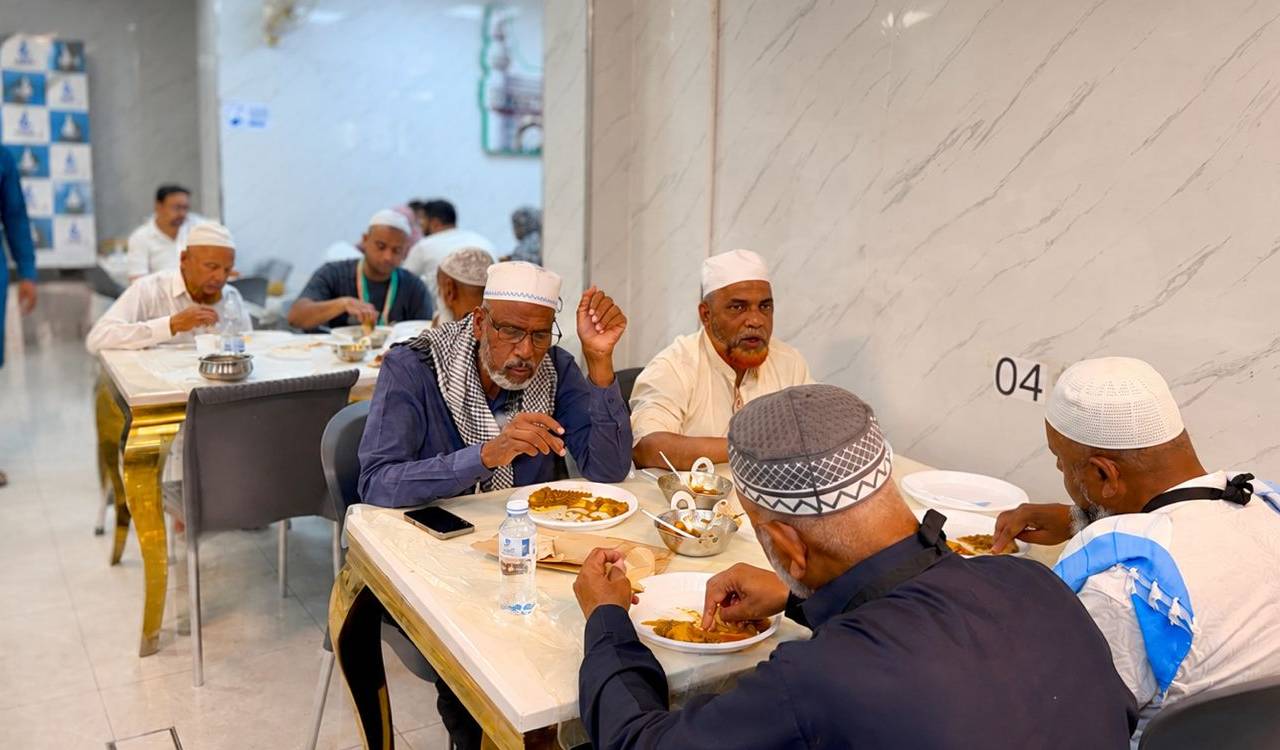
Jeddah: The Indian Haj pilgrims are facing a herculean task to find out availability of their choice of food in the holy city Makkah. The diversified cuisine with multiethnic culture and food habits of different parts is cherished yet it is proving to be a complex and pressing issue to cater to the demand of desi food to different Indians.
The various sections of Indian pilgrims are experiencing food habit challenges due to significant differences in staple ingredients, flavour profiles, and cooking methods. Previously, Indian pilgrims preferred to cook their own meals according to their choice, however, with the ban on cooking, they need to find out for themselves from this year.
Finding Indian sub-continent eateries is not an ordinary challenge for pilgrims, as they are scattered in different distant areas this year, thus compounding difficulties further. Even if pilgrims are lucky enough to spot any restaurant it is not easy to choose the food.
To address this issue, Indian social workers like Bushra Gulzar and Fazlullah swung into action and are providing a comprehensive list of ethnic food restaurants in the holy city.
The majority of Indian pilgrims hailing from Northern states prefer wheat-based food while Southern and Eastern states require staple rice. However, pilgrims from South India are numerically lower compared to other regions, but yet they are very vocal in complaining about availability of their choice of food.
The Hyderabadi cuisine is renowned for its bold, vibrant flavours with liberal use of spices and tamarind, which is most sought after whether at home or abroad. The Hyderabadi cuisine restaurants operating in the holy cities of Makkah and Madinah witnessed significantly increased footfall in this year’s
Haj season.
“We are struggling to cope with the increasing number of customers at our restaurant,” said Amin of Charminar Restaurant, a popular restaurant in the Aziziah area of Makkah. Aziziah locality is where most Indian pilgrims stay during the Haj season.
He said that many pilgrims come from far areas for their choice of food.
From this year, Saudi authorities are enforcing the prohibition of self-cooking and unlicensed food storage at pilgrims’ accommodations, with a warning of jail terms and hefty fines to ensure healthy food for pilgrims and safety measures at their accommodations.
The food issue is limited only to the lion’s share of Indian pilgrims who come through the Indian Government’s Haj committee. However, pilgrims who came through private Haj operators are being provided with food.
It’s noteworthy to mention that over 70 percent of pilgrims come through the Government’s Haj committee while 30 percent avail the services of private Haj operators. The total quota for India is 1,75,025 for the 2026 Haj pilgrimage.
This year, buildings were selected from various locations in Makkah as far as Jamarat and Batha Quresh where limited food options are available for Indian pilgrims. In some areas there are not even supermarkets in the vicinity of accommodation, let alone restaurants, said sources.

Related News