ISRO chief says India overcame Cryogenic technology denial, eyes moon landing by 2040
ISRO Chairman V Narayanan said India has mastered cryogenic engine technology once denied to it and is preparing for the first uncrewed Gaganyaan mission. He also outlined plans for Chandrayaan-4, Chandrayaan-5, an Indian space station by 2035 and a Moon landing by 2040
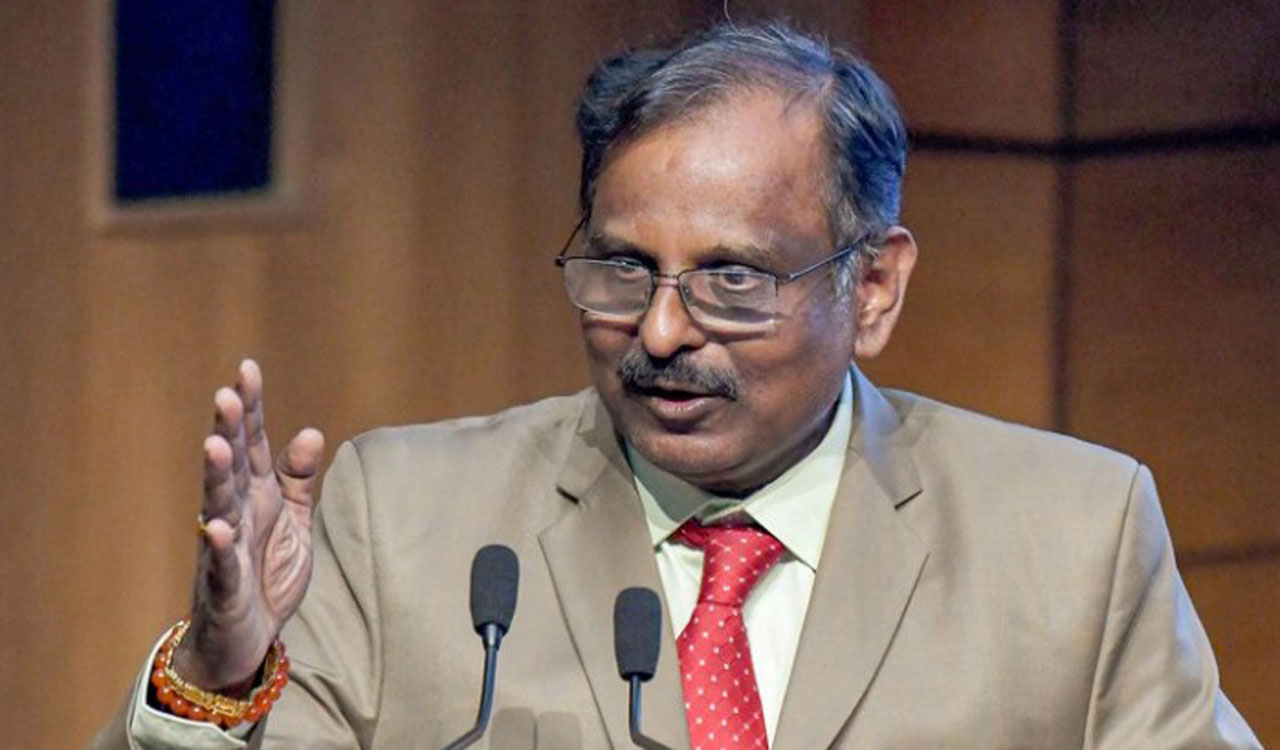


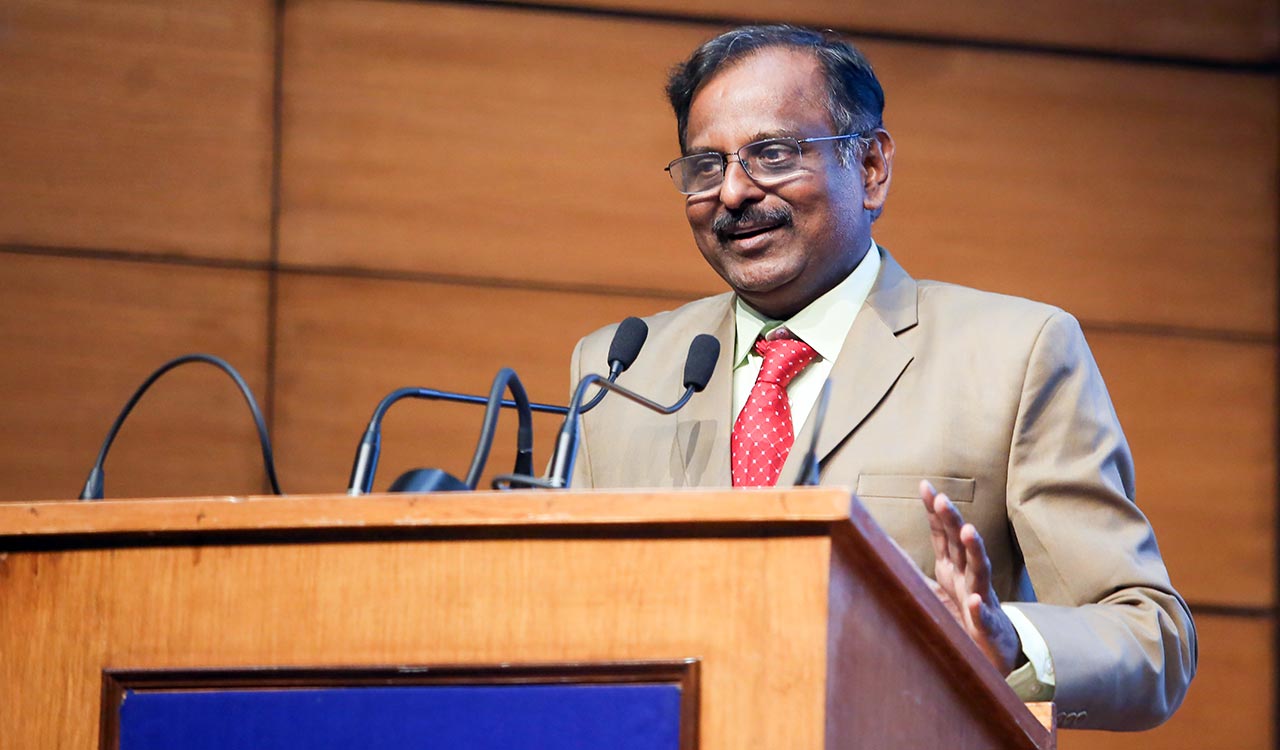
Bengaluru: India has mastered the cryogenic engine technology once denied to it, ISRO Chairman V Narayanan said on Saturday. He said the country is preparing for the first uncrewed Gaganyaan mission, advancing Chandrayaan-4, a lunar sample return mission, and Chandrayaan-5, a joint long-duration mission with Japan involving a heavier rover.
Delivering the 17th Air Chief Marshal L M Katre Memorial Lecture at the HAL Management Academy under the aegis of the Air Force Association, Karnataka Branch, Narayanan outlined India’s progress in space technology and its roadmap towards establishing an Indian space station by 2035 and landing an Indian astronaut on the Moon by 2040.
“We have developed a cryogenic rocket engine, the technology which was denied to India,” Narayanan said. He explained that India had transformed technology denial into technological leadership by developing three cryogenic propulsion systems and setting multiple world records in the process.
Narayanan said the first uncrewed Gaganyaan mission was the immediate focus before India proceeds with crewed spaceflight. “We are now working on the first uncrewed mission this year. Then once we review the result, we’ll come back to the crewed mission,” he said during the lecture.
He said Chandrayaan-4 would be India’s first lunar sample return mission, while Chandrayaan-5, to be undertaken jointly with Japan, would deploy a 350-kg rover capable of operating for nearly 100 days, compared with the 25-kg rover and 14-day operational life of Chandrayaan-3.
Highlighting India’s rise in space technology, Narayanan said the country had evolved from launching a gifted seven-kg sounding rocket in 1963 to building some of the world’s most advanced launch vehicles and spacecraft.
Recalling India’s cryogenic engine programme, he said technology denial had ultimately strengthened indigenous capabilities. “Today, I thank the countries that denied the technology. Today we have developed three cryogenic propulsion systems,” he said.
Referring to the country’s long-term vision, Narayanan said India was working towards establishing its own space station by 2035 and sending an Indian to the Moon by 2040.
“By 2040 Indian will land on the Moon using an Indian launcher with our national flag,” he said. He said Chandrayaan-2 had placed the highest-resolution camera in lunar orbit, while Chandrayaan-3 had made India the first country to achieve a successful soft landing near the Moon’s south pole.
The ISRO Chairman credited the Indian Air Force and Hindustan Aeronautics Limited (HAL) for their critical contributions to programmes such as the reusable launch vehicle and Gaganyaan, saying India’s launch vehicle and satellite programmes could not have reached their present stature without HAL’s support.
He also highlighted ISRO’s role in national security, saying all Indian satellites had performed flawlessly during Operation Sindoor and contributed to national requirements.
Tracing the growth of the Indian space programme, Narayanan said ISRO had completed more than 105 launch vehicle missions and 135 satellite missions, while launching 434 satellites belonging to 34 countries.
He added that the organisation was supported by around 450 industries, more than 400 start-ups and about 130 academic institutions.
Stressing the need for precision in space missions, he said, “We have to be perfect, 100 out of 100.” Speaking to reporters after the lecture, Narayanan said ISRO had achieved a significant milestone in the development of its 200-tonne semi-cryogenic engine.
“We have taken to close to 90 per cent of the thrust level. Because we are going step by step, it was a major achievement and milestone, and now we are getting ready for the engine test,” he said while explaining the recently conducted powerhead test.
On the resumption of launch missions following recent setbacks, Narayanan said the satellites were ready, and launch schedules would be announced shortly. “The satellites are ready, we are working on that, so we’ll come back with an exact date,” he said.
Responding to a question on the PSLV programme, he said, “We have understood the reasons, and we are in the process of recovering back.” On Gaganyaan, Narayanan said all major human-rating work had been completed, and the programme had entered the flight validation phase.
“The total human rating of the vehicle is completed, and then the safety system development is completed. Now, before sending the actual human being, we have to do three uncrewed missions. We are working toward the first uncrewed mission, so you will come to know about the dates very shortly,” he said.

Related News
-

Editorial: Diluting institutional autonomy may boomerang
-
Incredible to watch capability ISRO is developing in science missions: Indian-American NASA senior official
-
India, France step up space cooperation with new private-sector deals
-
ISRO remains a government organisation, says Chairman V Narayanan