
Ladakh launches project to revive shrinking Tso Kar Lake with glacier water
Ladakh Lieutenant Governor Vinai Kumar Saxena launched a project to revive shrinking Tso Kar Lake by channelising up to 320 million litres of glacier water daily. The initiative will create freshwater wetlands, restore grazing land and support local Pashmina herders
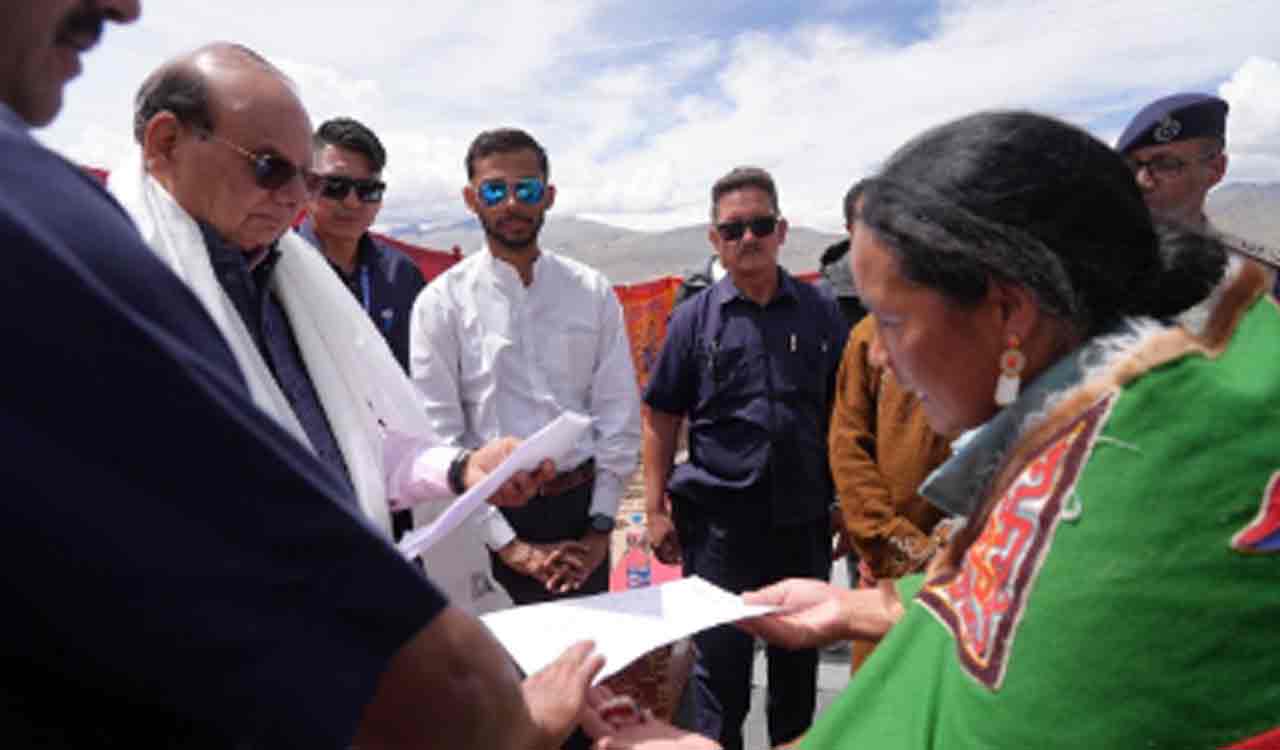


Leh: Ladakh Lieutenant Governor Vinai Kumar Saxena on Sunday launched a mega project to revive the rapidly drying Tso Kar Lake by channelising 320 million litres of water per day from a glacier-fed stream at an altitude of 18,000 feet into the water body, which has lost nearly 70 per cent of its water over the past decade.
The initiative comes after the successful channelisation of 90 million litres of water from the Stok Glacier into canals serving Igoo-Phey and Chuchot villages, helping irrigate parched agricultural land in the vicinity of Leh.
The project focuses on recharging Tso Kar by channelising untapped glacier meltwater from the Rupsho Kharnak stream, located nearly 11 km from the lake. The peak discharge from the stream during summers is estimated at around 132 cusecs, or 320 million litres per day, a Lok Bhavan spokesperson said.
He said the project would serve as a vital blueprint for high-altitude ecological restoration.
“By transforming untapped glacier water into permanent lifelines, Ladakh is taking decisive steps toward agricultural prosperity, revitalised rural economies, and long-term climate resilience. This will ensure that iconic landscapes like Tso Kar and the life they sustain are preserved for generations to come,” Saxena said.
During his visit to Tso Kar on August 10, the lieutenant governor was informed by local villagers and the ‘nambardar’ (village head) that the lake was once a massive, thriving body of glacial water that sustained centuries of local salt trading and a delicate ecological balance. Subsequently, Saxena conceived the initiative.
However, in recent years, Tso Kar has receded, leading to a decline in bird populations and the loss of grazing land. Vast dry patches can now be seen around the lake, where deep waters once stood. Accordingly, the lieutenant governor directed the Public Health Engineering Department to conduct a detailed survey of the area.
Following 15 days of intensive groundwork and survey, the department submitted its report to the lieutenant governor on August 30, suggesting the construction of an 11-km RCC channel. However, considering ecological concerns, Saxena suggested avoiding the construction of any new RCC water channel in the area and bringing water to the first depression through a simple earthen channel, the spokesperson said.
Keeping in view the approaching winter, when the water freezes, work began on a war footing on September 2 to bring water from the Rupsho Kharnak stream to the first large pond.
The revival of Tso Kar is expected to benefit local communities, the official said, adding that most villagers near the lake are Pashmina goat herders. With the lake shrinking, grazing grounds for the goats have also vanished, forcing Pashmina herders to move 50 to 75 km away from their homes in search of grazing land.
The revival of the lake will create grasslands and livelihood opportunities for locals and bring herders back to their homes, the spokesperson said.
He said Tso Kar, one of the most iconic glacial lakes in Ladakh, originally spread over nearly 11,000 acres but has now reduced to just 3,200 acres. Consequently, the lake, once a thriving habitat for migratory birds and the famed black-necked crane, is also rapidly vanishing, with only a small number of birds arriving at the site now.
By fully utilising the available water, the lake is expected to be restored to its original glory within a year, the spokesperson said. He added that the plan utilises three natural depressions along the stream’s downward flow from the glacier towards the lake.
Glacial runoff from the Rupsho Kharnak stream is being channelised into the first depression, spread over 270 acres, before being transferred to the second depression, spread over 24 acres, and subsequently to the third, spread over 10 acres.
At each of the three depressions, a check dam with three RCC pipes will be constructed at the outlet to augment the water level and control the flow downstream.
Finally, water from the third depression will be regulated to flow directly into Tso Kar Lake, located just 400 metres from the third depression.
The water will be diverted using gravity flow through simple, low-cost earthworks, without constructing any concrete channels, the official said.
Starting September 9, 20 cusecs of water from the Rupsho Kharnak glacier stream has been successfully diverted to the first depression, which has already started filling rapidly. The water is being channelised from the glacier through the earthen channel as well as a concrete canal that has remained defunct at the site since 1995, the spokesperson said.
In four days, around 20 per cent of the first depression had already filled, he said, adding that the cascading system would offer dual ecological benefits.
Before the water reaches Tso Kar, the filling of the three natural depressions will create three new freshwater wetlands and transfer only pure water into the lake, as sediments will settle in the three newly created water bodies.
These newly created water bodies, measuring 270 acres, 24 acres and 10 acres respectively, will hold nearly 1,230 million litres of water, the spokesperson said.
He added that the new water bodies, visible from the adjoining Leh-Manali Highway, would strengthen the region’s ecological character while simultaneously recharging the main lake.

