LeT restructures leadership, elevates Talha Saeed amid organisational overhaul: Report
According to the report, Lashkar-e-Taiba has elevated Talha Saeed to operational leadership while Hafiz Saeed remains its ideological mentor. The outfit is also said to be restructuring into three regional commands in Pakistan while retaining a unified command for India-focused operations
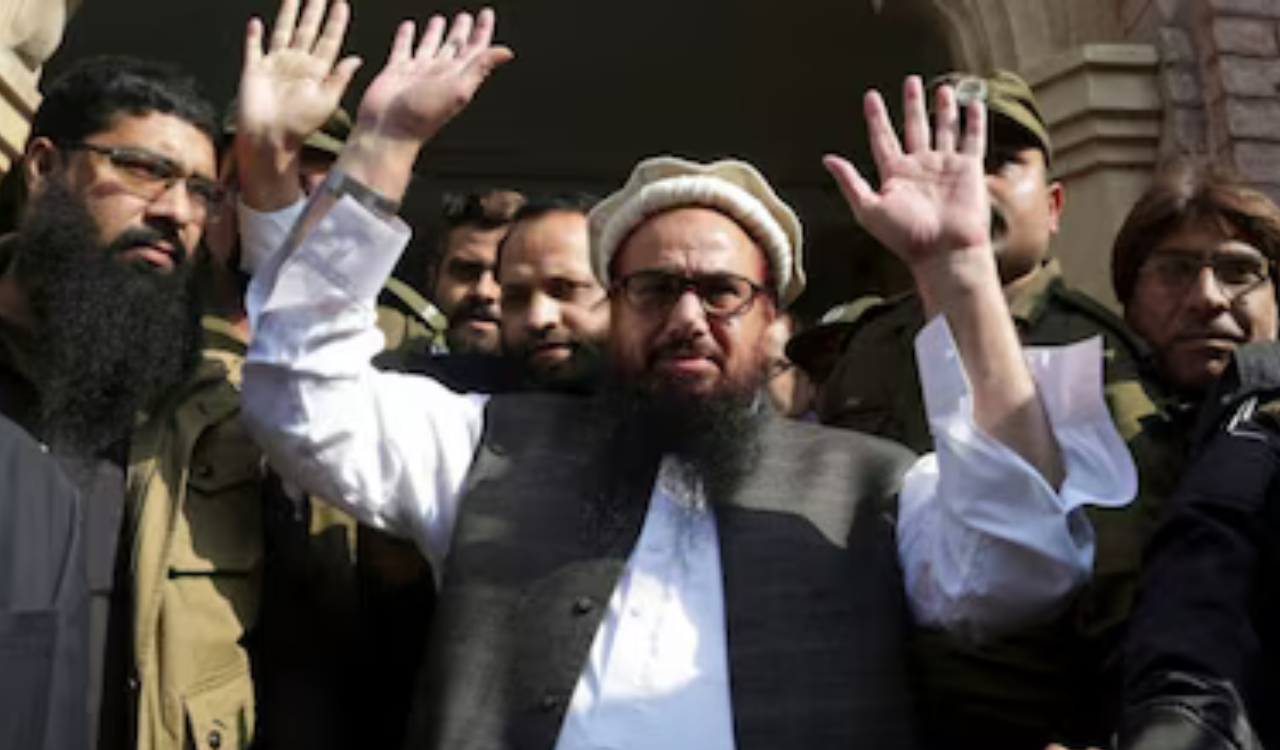


New Delhi: The Lashkar-e-Taiba, which suffered the heaviest losses during Operation Sindoor last year, has begun efforts to rebuild its network and leadership.
After weeks of internal deliberations over succession, the outfit has finally decided to elevate its founder Hafiz Saeed’s son, Talha Saeed, to lead the organisation. While some within the group argued that the ageing Hafiz Saeed should step aside, the old guard was unwilling to completely sideline him. As a result, he will continue to play a key role as the outfit’s mentor and ideological head, even as Talha Saeed assumes operational leadership.
The Inter-Services Intelligence (ISI) shares a similar assessment. An official said that even as the outfit resolves its internal leadership issues, the Lashkar-e-Taiba has begun restructuring its operational network. Under the new plan, the group will function through three separate operational commands within Pakistan, with dedicated wings for Balochistan, Khyber Pakhtunkhwa (KP) and Pakistan-occupied Kashmir (PoK).
While the top leadership would remain the same, there would be three different operational commands for the three regions. In all three regions, the Pakistan security forces have suffered huge embarrassment. Many have deserted the forces, and outfits such as the Balochistan Liberation Army (BLA) and Tehreek-e-Taliban Pakistan (TTP) have wreaked havoc on the security establishment.
An official said that the reason the ISI wanted the Lashkar to be split into three region-specific commands is to have effective control over the situation. It is an open secret that the Pakistani establishment has roped in cadres of the LeT to fight alongside the security forces against the TTP and BLA.
A region-specific command gives the top leadership more control over the situation. Moreover, each region would have locals from the respective region. This would help the Lashkar as these operatives are better aware of the logistics. In recent months, both the Lashkar and Pakistan’s security forces have suffered repeated setbacks at the hands of the TTP and the BLA, largely due to intelligence failures and logistical shortcomings.
The LeT feels that if locals are roped in for specific regions, then the intelligence gathering would improve because of the local connect. The terror outfit also plans to have some operatives who would work covertly too. These persons would mingle with the locals and gather information for the Lashkar.
An Intelligence Bureau official said the Lashkar is also expected to try to infiltrate the BLA and the TTP by planting operatives within the two groups to improve its intelligence gathering.
If the outfit succeeds in establishing such an internal network, it could significantly strengthen the intelligence capabilities of Pakistan’s security forces, the official added.
While in Balochistan and KP, the intention is to battle the BLA and TTP, in PoK, the plans are entirely different. In this region, the idea is to have the Lashkar carry out attacks.
They are likely to carry out strikes at multiple locations using either fidayeen attackers or explosive devices. The objective is to intimidate the local population and discourage them from joining or supporting protests. Another key part of the strategy is to stage major terror attacks and then attempt to pin the blame on India, another official said.
The official said that despite the ongoing restructuring, the strategy for Jammu and Kashmir remains unchanged. All India-centric operations will continue to be overseen by a single command, with every major operational decision being taken by the outfit’s top leadership.
The ISI is keen to retain this command structure for operations against India. The continued association of Hafiz Saeed and his son, Talha Saeed, is seen as crucial, as their names continue to carry influence among potential recruits. Maintaining that leadership image is considered important for the Lashkar’s recruitment and mobilisation efforts, the official added.

Related News