Muslim women join ‘Nagula Chavithi’ rituals in Kothagudem, reflect communal harmony
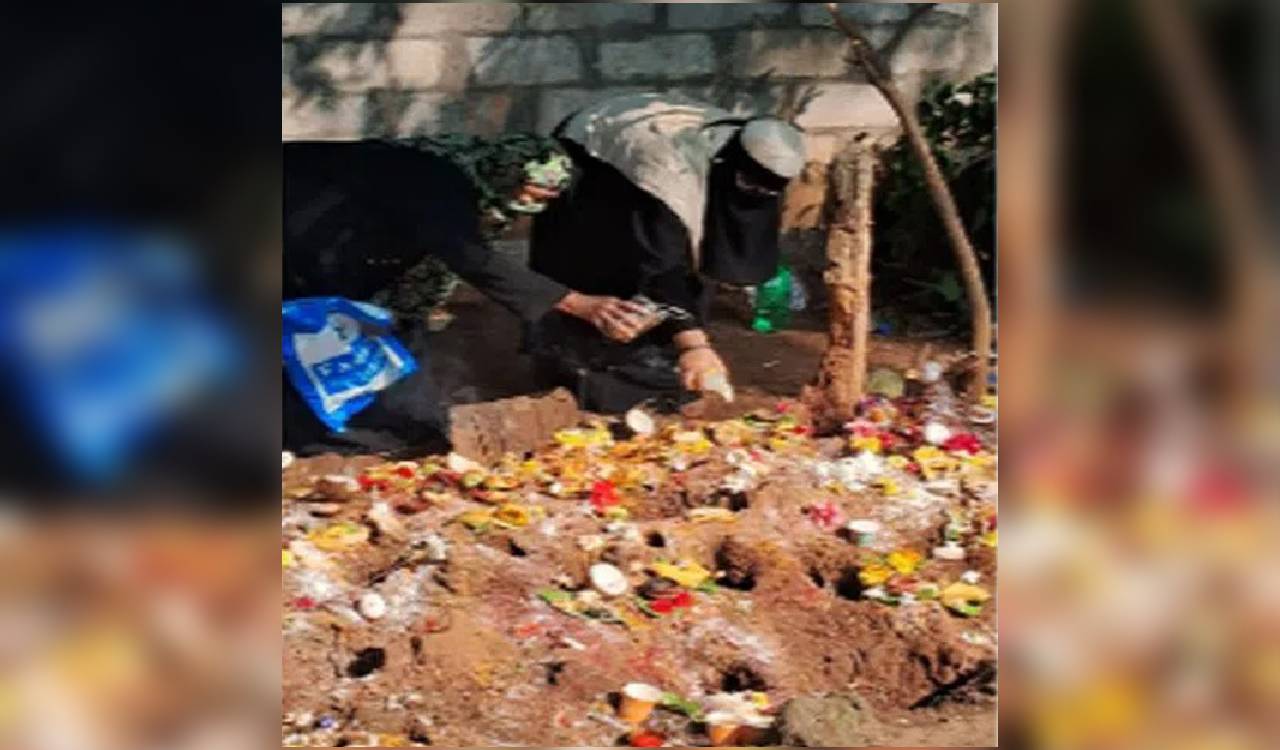
A group of Muslim women participated in Nagula Chavithi rituals alongside Hindu women in Kothagudem's Rudrampur area on Friday, drawing attention for their gesture of interfaith harmony. The participation was widely seen as reflecting Telangana's composite culture and India's tradition of unity in diversity.


Kothagudem: Former Chief Minister and BRS chief K Chandrashekhar Rao has consistently stressed the values of secularism, religious tolerance and the composite culture of Ganga-Jamuna Tehzeeb in Telangana.
He was often seen referring to the concept of Ganga-Jamuna Tehzeeb (Ganga-Jamuni Tehzeeb) which compares Hindu-Muslim harmony and friendship to the holy confluence of India’s major rivers, the Ganga and Yamuna, symbolising peaceful co-existence among all communities.
In a remarkable demonstration of this concept a beautiful scene unfolded in Kothagudem on Friday on the occasion of ‘Nagula Chavithi’, a festival dedicated to the worship of Nag Devatas (serpent gods)
A few Muslim women, clad in their traditional attire, were seen expressing their devotion by pouring milk at a ‘Nagulaputta’ (snake burrow) in the Rudrampur area alongside Hindu women. Their participation in rituals significant to the Hindu faith caught the attention of the local community.
By respecting the customs and traditions of others, transcending the barriers of caste and religion, they exemplified the greatness of Indian culture. The participation of these Muslim women served as a powerful testament to India’s unique ethos: unity in diversity, many said.

Related News