On the trail of lost desert rat-kangaroo
The species was previously thought to be long extinct, until mammal researcher Hedley Herbert Finlayson led the rediscovery of the animal in the 1930s. But soon after, it vanished again
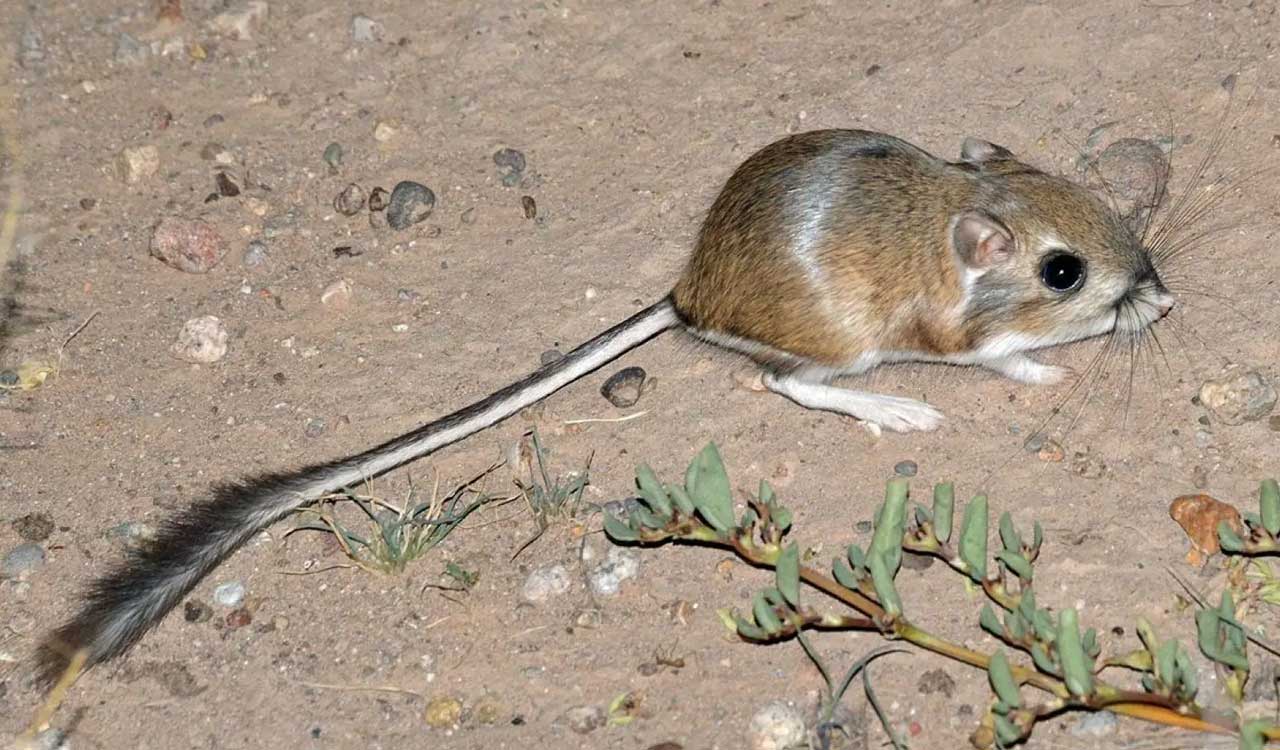


When it comes to how hard an animal can bite, size always matters. There may be no truer a case of this than the desert rat-kangaroo (Caloprymnus campestris), known as the ngudlukanta to the traditional custodians of its country of origin, the Wangkangurru Yarluyandi people.
This small, possibly extinct marsupial from the inhospitable Sturt Stony Desert may have had a solid skull built for hard biting. But not enough to bite through the kinds of foods biologists used to think it ate. A lack of chomping power in the skull of this rat-kangaroo was discovered while testing new approaches for analysing skull biomechanics.
Declared extinct 30 years ago, there remains hope the critter might still emerge in some parts of its original home range.
A difficult desert
The Sturt Stony Desert in the far north-east of South Australia is one of the world’s most inhospitable places. Few animals can make it their home. However, one small marsupial species was known to brave the heat, drought, and scarcity of food: the ngudlukanta.
The species was previously thought to be long extinct, until mammal researcher Hedley Herbert Finlayson led the rediscovery of the animal in the 1930s. But soon after, it vanished again.
Sadly, the tiny desert dweller was officially declared extinct in 1994. Weighing just under 1 kg, it would have been a perfect snack for introduced predators like foxes and cats. It was further pushed towards extinction by competition with rabbits, overstocking with cattle and sheep, and poor fire management.
Yet, exciting reports of possible sightings of the ngudlukanta still emerge sporadically. Descriptions of its distinctive compact size, combined with its short face and the hopping gait of a kangaroo, have sparked renewed interest in rediscovering this animal.
In the quest to find this elusive little battler, information about its diet is key. It can help people to keep a closer eye on areas where its favourite foods would be found.
From a bite to a diet
To better understand its diet and feeding behaviour, the researchers turned to the animal’s skull. The ngudlukanta had a solidly built skull, with a short and wide face. This led researchers to suggest that it could eat harder desert foods like roots, nuts and seeds.
But the latest analysis showed that these assessments were probably incorrect. Instead, the animal’s diet was more likely restricted to softer materials, rather than the tougher foods eaten by some of its harder-headed relatives like the burrowing bettong.
The reason for this?
Previous interpretations of its biting ability had drawn conclusions from comparisons of skull shape between species, but without considering size differences between them. The researchers kept information about size differences between the skulls in the models.
What was found?
The skull of the ngudlukanta is definitely efficient at biting, but it is also about one quarter smaller than the skull of the next smallest species in our sample, the northern bettong. When we included its smaller size in the analysis, the results suggested its relatively short face and robust jaw were unlikely to help it eat harder foods.
Instead, its solid skull features mostly compensated for its small size, but would only allow it to support bites about as hard as those of the long-nosed potoroo – a larger species with a much less efficient skull at biting.
Early investigations of stomach contents from the 1930s tell us the ngudlukanta fed mostly on leaves and small amounts of insects. But little further detail exists. A more restricted range of softer, fresher plant materials, as suggested by tje analysis, would narrow its range of preferred foods in the deserts it lived in.
The results therefore paint a picture of a species occupying a delicate position within the desert ecosystem.
An unsolved mystery
In recent years, a researcher mounted several expeditions into the ngudlukanta‘s habitat, hoping to find evidence of its continued existence. However, finding this tiny marsupial in a vast desert is a challenge – not just because it was probably always rare and elusive, but also because we still know precious little about its ecology.
Eyewitness accounts, remote camera traps, analysis of predator scat (poo) for mammal remains, genetic testing of scats, and the expert ecological knowledge of Traditional Owners have all been used to investigate the possibility of the survival of the ngudlukanta. No definitive evidence has yet emerged.
Whether the ngudlukanta is extinct or not, therefore, remains an unsolved mystery.
But history is replete with examples of rediscovered species believed to be extinct, known as “Lazarus species”. The desert’s vast, inhospitable terrain means it is plausible for a small nocturnal species to be evading detection.
In fact, the desert rat-kangaroo was already a Lazarus species after its rediscovery in the 1930s. The story of the ngudlukanta therefore serves as a reminder that extinction declarations are not always the end of the story.
If the species is still roaming the most inhospitable regions of the continent, the new knowledge gained from the analysis could help pinpoint areas where the ngudlukanta might persist.
Who knows? The next chapter in the story of this desert-dweller may yet surprise us.

Related News
-

Ten injured after car drives into rugby fans north of Sydney
-
Australian man is accused of being Islamic State group propagandist who shared 10,000 files online
-
Nathan Ellis helps Australia edge Zimbabwe by one wicket in third ODI
-
Tejal Hasabnis and Anushka Sharma power India A to victory over Australia A