Opinion: India’s calculated shift on Indus Waters Treaty
Abeyance is less about punishing Pakistan and more about finally asserting the country’s legitimate rights to develop its own resources


By Uttam Kumar Sinha
In a region where emotions often outrun facts, few issues ignite passions more than water sharing. How tenable is India’s move to place the Indus Waters Treaty (IWT) with Pakistan in abeyance? Only time will tell.
The Indus Waters Treaty, signed in 1960, has no exit clause. Crafted in a spirit of mutual trust, it envisioned a shared management of the Indus basin’s eastern and western rivers. Because it predates the 1969 Vienna Convention on the Law of Treaties — and because India is not a signatory — the convention’s provisions on withdrawal don’t apply. Thus, the treaty’s endurance or demise hinges entirely on the will of both nations, not international law.
In abeyance, not Termination
Suspension and abeyance — often used interchangeably in casual conversation — are distinct in law. Suspension requires formal notification, while abeyance can be a sovereign decision to pause the execution of treaty obligations without formal withdrawal. India’s April 24 letter to Pakistan placed the treaty in abeyance, not termination, signalling a calibrated yet firm stand.
Critics may ask: Is this legally sound? Absolutely. With mutual trust long eroded — especially after the 2016 Uri attack and Pakistan’s persistent use of the treaty to obstruct Indian projects — India’s decision is less about water and more about geopolitics. The “business-as-usual” approach is over. In invoking Article XII (3) last August to propose modifications, India laid the groundwork for this step. As Delhi sees it, Islamabad’s consistent support for terrorism amounts to a “fundamental change in circumstances” — a well-accepted ground for reassessment of treaty obligations.
Will it hit Pakistan?
But would withholding or manipulating river flows immediately hurt Pakistan?
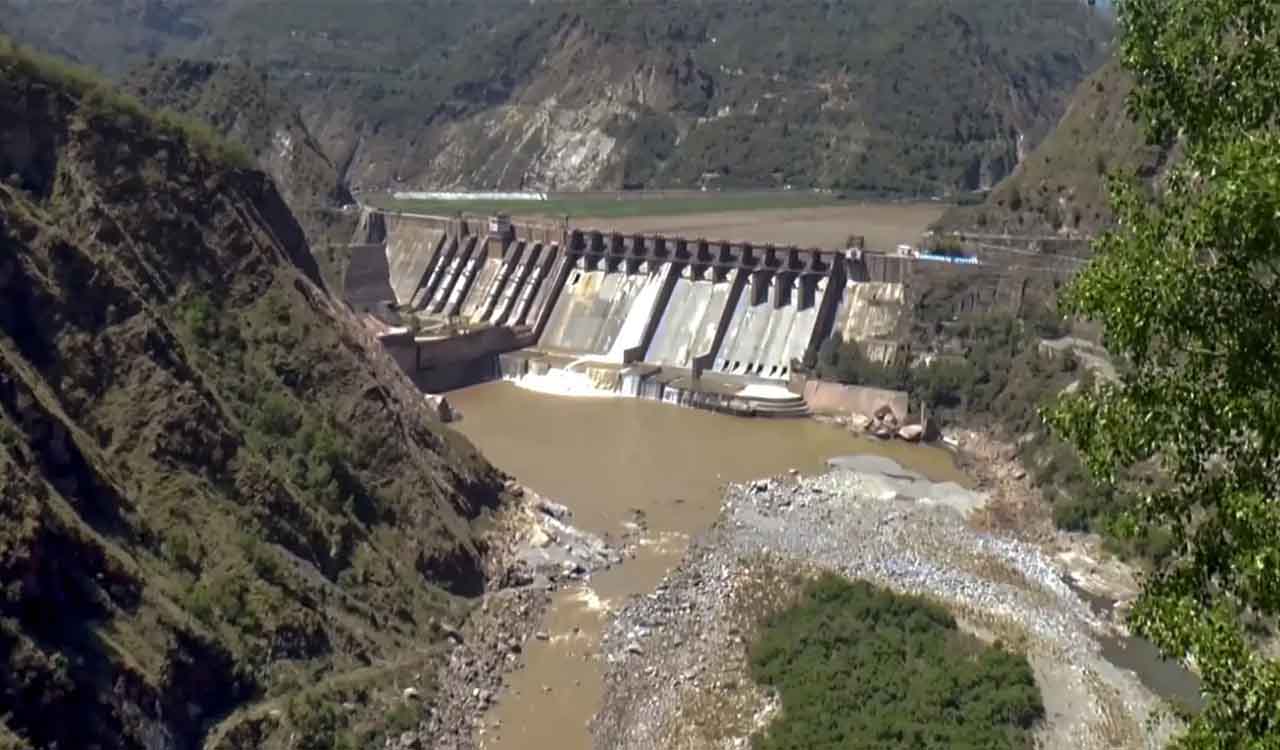
In the short term, not really. Despite dramatic headlines, water will not stop overnight, nor will Pakistani agriculture wither in a single season. India’s projects so far, mostly run-of-the-river hydropower plants, haven’t significantly altered natural flows. Future impact depends on India’s ability to build storage projects on the western rivers, particularly the Chenab. Projects like the Bursar Multipurpose Project in Jammu & Kashmir and the Gyspa (Jispa) Project in Himachal Pradesh could eventually give India greater control over flow timing — a potential game changer for Pakistan’s crop cycles.
However, this will require massive political will, financial resources, and overcoming environmental and social challenges. Opposition from local communities, as seen with Gyspa, complicates matters. Building storage capacity has been India’s unrealised right under the IWT; now, in abeyance, India signals that it will no longer self-censor to accommodate Pakistan’s objections.
Viewed internally, abeyance is less about punishing Pakistan and more about finally asserting India’s legitimate rights to develop its own resources. For decades, India has underutilised the permissible storage on the western rivers. With only about 3,034 MW harnessed out of a potential 11,406 MW, the gap represents not just lost energy but also lost leverage.
Completing projects like the Tulbul Navigation Project, stalled for years, now gains fresh urgency. In Punjab and Jammu & Kashmir, new dams like the Shahpurkandi barrage on the Ravi and Ujh project, an upcoming one, are steadily enhancing India’s hold over the eastern rivers’ waters, closing off leakage to Pakistan. India already utilises 90-92% of the eastern rivers’ waters.
Some analysts argue that Pakistan’s lack of adequate water infrastructure will worsen its vulnerability if India alters river flows. But this claim oversimplifies reality. Pakistan is not lacking in infrastructure. Major dams like Mangla (1967) and Tarbela (1976) stand as monumental achievements in hydrological engineering. The newer Neelum-Jhelum Hydropower Project (2018) and ongoing Dasu Dam projects underscore Pakistan’s seriousness about water management.
While India asserts its upper riparian rights on the Indus, it must remain acutely aware of its lower riparian vulnerabilities on the Brahmaputra
Tarbela, for instance, with a storage capacity of 13.69 million acre-feet, is pivotal for irrigation and hydropower. Mangla, with its upgraded capacity, remains a cornerstone of Pakistan’s water security. Meanwhile, Warsak and other projects contribute to local and national needs. Pakistan’s real challenge lies not in infrastructure absence but in governance, maintenance and capacity optimisation.
That said, no nation can be fully prepared for disruption from a major upstream neighbour. The magnitude of India’s future water actions could expose structural vulnerabilities in Pakistan’s water management systems. Yet permanent “damage” remains speculative; much depends on how events unfold.
Sobering Mirror
Finally, India’s strategic calculations must take into account a sobering mirror: its own position as a lower riparian to China on the Yarlung Tsangpo (Brahmaputra). Beijing’s plans for a massive dam near the Great Bend are a pressing concern. Here, India’s options are limited but not nonexistent.
Building storage capacity in Arunachal Pradesh, where dams like Ranganadi and the future Dibang Multipurpose Project are planned, offers a proactive path. Rather than merely reacting to Chinese moves, India must invest in infrastructure that can buffer against upstream alterations. Completing long-delayed projects like the Lower Subansiri Dam is equally critical.
Thus, while India asserts its upper riparian rights on the Indus, it must remain acutely aware of its lower riparian vulnerabilities on the Brahmaputra. Water diplomacy demands consistency, foresight and strategic patience.
In conclusion, India’s decision to place the Indus Waters Treaty in abeyance is legally tenable, strategically calculated and long overdue. It reclaims agency over a vital national resource without immediately breaching the broader principle of cooperative riparian conduct. Whether this move deepens confrontation or catalyses a long-needed renegotiation will depend not only on Islamabad’s response but also on India’s resolve to follow through.

(The author is senior fellow, Manohar Parrikar Institute for Defence Studies and Analyses, New Delhi)

Related News