Opinion: Redefining relationships
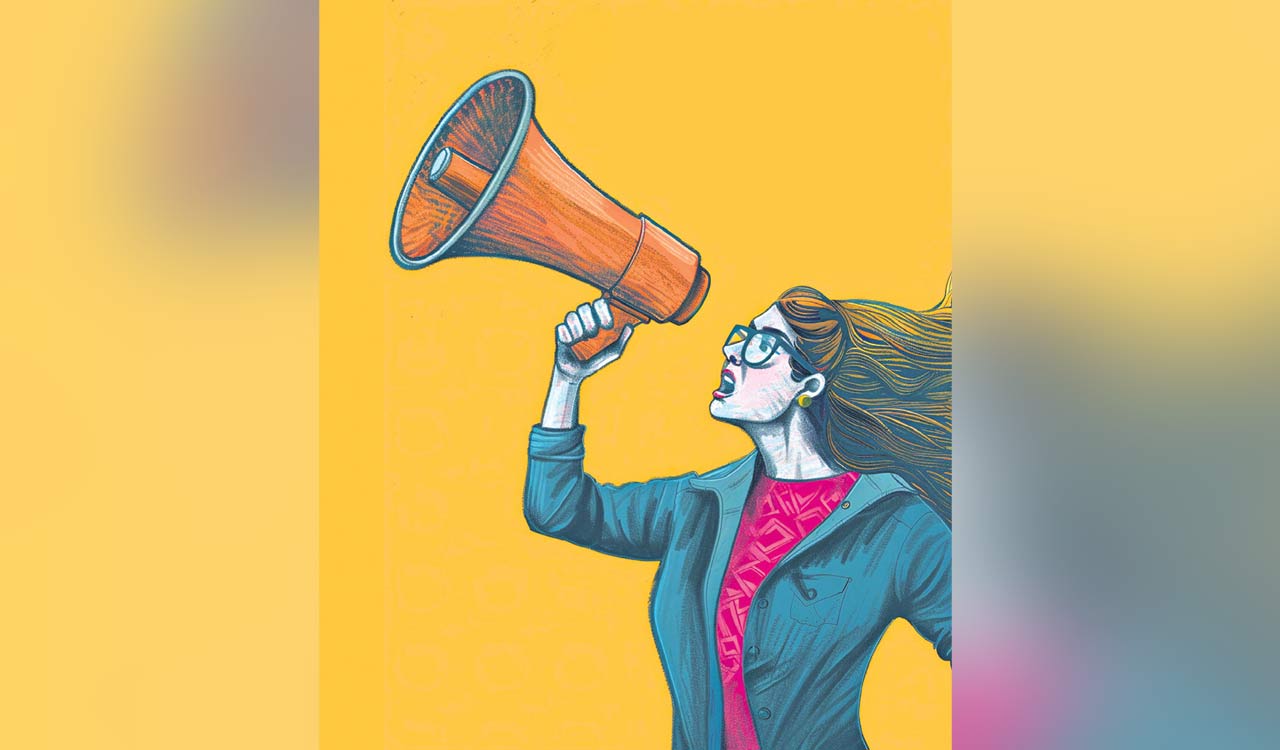
Women are asserting their autonomy, challenging socio-cultural setting of patriarchal norms and capitalist structures


By Devabala Smitha, Dr Moitrayee Das
Some newsflash from the recent past: ‘Indian man convicted for killing his wife Uthra with a cobra while recovering from a viper’s bite. Her family alleged murder, saying Sooraj had been harassing them for dowry. Suspicions confirmed as police traced both attempts to Sooraj’. ‘Vismaya, an Ayurveda medical student, committed suicide in her marital home following harassments for dowry. Kerala court sentences Kiran Kumar to 10 years in prison, compounding the offences of dowry death, abetment to suicide and dowry-related harassment under the IPC and various provisions of the Dowry Prohibition Act’.
According to the National Crime Records Bureau (NCRB), in 2022 alone, about 13,479 cases were registered under the Dowry Prohibition Act (1961) of which 6,450 cases were dowry deaths. This is the state of affairs six decades after the law to prohibit dowry was passed!
Historically, marriage has been a cornerstone contract of societal expectations for women, often relegating them to subordinate roles within patriarchal structures. However, singlehood is on the rise globally. Consequently, a decrease in fertility rates in several developed countries, including Germany, Italy and Japan, is being viewed as a hindrance to maintaining a stable population size. And this shift underscores a broader cultural movement of challenging traditional gender norms, representing a growing cohort of unattached and independent women who have consciously opted out of the socially prescribed default setting of married life. (Lamb, 2022).
A recent study from Kerala suggests that young females reluctant to enter the institution of marriage are suffering from gamophobia — a fear of commitment or fear of marriage. While this phobia might have persisted for decades, it is tricky to generalise and attribute the reluctance towards marriage solely to dread and distress. Doing so may lead to a failure in understanding that the issue is a lot more than just fear.
Before the Leap
So why are women taking a step back from getting married? What if it’s not a defiance of the institution altogether and delaying marriage is one’s method of choice, of rejecting the societal pressure to conform to the institution, of opting out of the heteronormative institution that provides unpaid, invisible labour services to the patriarchal society. Indeed, singlehood has gained recognition as an empowering identity among women in favour of greater autonomy in terms of education, career aspirations and financial independence. But then, what if the former is true – this alleged gamophobia? Is it because generations of women had been introduced to it as a societal obligation, only to find themselves committed to invisible (domestic and sexual) labour, internalising the trauma and passing it on to the next generation?
And what of the issues pertaining to domestic abuse, dowry deaths and intimate partner violence (marital rape)? The last one is not considered an unlawful act even now in several countries, including India, as women/wives are still seen as explicit objects of ownership of the husband. Then one can claim with conviction that their fear is not without cause and that the younger generations of women, who have witnessed such physical and psychological ordeal are intentionally breaking this vicious chain of (inter)generational trauma.
For such reasons, the younger generations of women advocate and claim for themselves a space to pursue education, career advancement and personal growth on their own terms, free from the expectations and responsibilities associated with marital status in patrifocal settings.
Besides, the attitudes as to why one is getting married are also shifting — from the normative life trajectory of producing legitimate offsprings under undue societal pressure, live-in relationships that provide more flexibility and fewer legal technicalities. Seeking companionship has become a major goal and a lot has changed, including in countries like India which is seeing a surge in the number of live-in relationships and Japan’s recognition of friendship marriages.
Capitalism: The Villain
Among couples, rising expenditure is a big deciding factor for having kids. A quantity-quanlity trade-off trend is observed by the IMF, as “[parents] invest more in the “quality” (for example, education) of their children. This investment is costly, so parents choose to have fewer children.” This seems to be the case with high-income countries including Germany, Italy and Japan, where fertility has been “lower than the average of just over two children per woman needed to maintain a stable population size” as, apparently “[…] even taking temporary leave to start a family can have long-term repercussions for women’s labor market prospects” (Doepke, Matthias et al, 2022).
And of course — the climate baby dilemma — the cherry on top. Living in the midst of a climate catastrophe in a capitalistic society, witnessing world leaders being more worried about population collapse and the economic crisis that would follow, the present generation’s reluctance to have children or even to get married is completely justified. Anyhow, more rigorous efforts are being introduced, like Tokyo launching a dating app where “users have to verify their income and promise they want to get married” (Thompson, 2024). And the wealthy few, in control of the financial affairs of the world, would rather be concerned about population collapse or an impending economic crisis. It means only one thing to them – a backlash for the capitalist society that feeds on a consumerist culture. The dying planet does not hold back their corporate mentality.
In conclusion, as we, as a society, navigate through the trends in modern relationships amid declining marriage rates and economic shifts, the landscape of relationships is being profoundly re-evaluated. Women are asserting their autonomy and redefining their roles beyond traditional expectations. This evolution challenges both the socio-cultural setting of patriarchal norms and capitalist structures. So even if such trends are borne out of fear of what women have been experiencing for generations, it all boils down to their individual agency being exercised.

(Devabala Smitha is pursuing postgraduate diploma. Dr Moitrayee Das is Assistant Professor of Psychology, FLAME University, Pune)

Related News
-

Karan Johar opens up about his love life, reveals whether marriage is on the cards
-
Bhagyashree enjoys date night with hubby Himalaya Dassani re kindle the joys of a relationship
-
‘Bring Rs 50,000, then use toilet’: UP woman accuses in-laws of harassment
-
Radhika Apte highlights need for women to make time for themselves