Opinion: Veerashaiva-Lingayat row — Karnataka’s religion dilemma tests State politics
The renewed push for recognising Veerashaiva-Lingayat as a separate religion requires consensus between Congress and BJP


By Nayakara Veeresha
On 25 September 2025, a Karnataka High Court bench declined a petition seeking intervention in the Socio-Economic Survey conducted across the State. The petitioners had argued that the survey violated Article 21 of the Constitution. Even as the State government proceeded with the household survey, several gatherings and processions were held across Karnataka, especially in the Kalyana Karnataka region, demanding separate religious status for the Veerashaiva-Lingayat community.
Also Read
The community, much like Jain, Buddhist or Sikh groups, seeks a different identity separate from the Hindu religion. At present, Veerashaiva-Lingayats are listed within the Hindu religion in official records such as Census, though they are assigned a separate code. The demand for the separate religious status has become a site of political contestation for the Karnataka government.
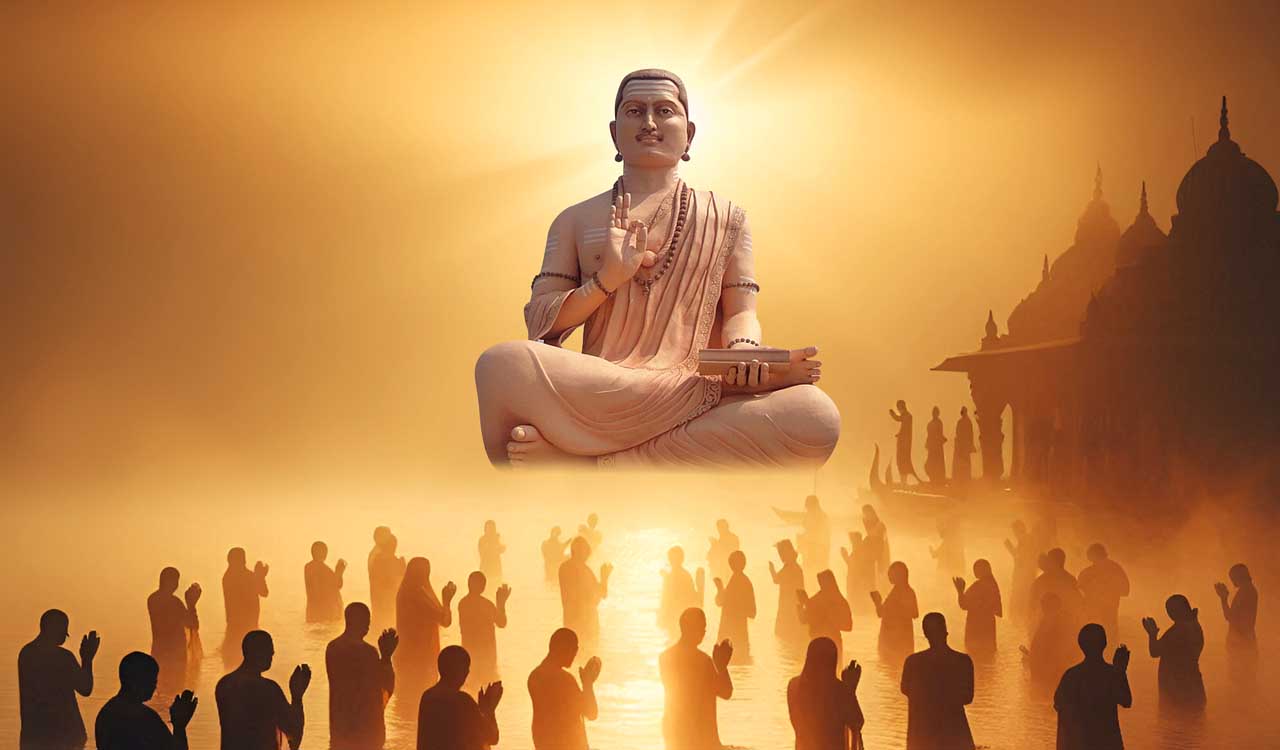
Karnataka Chief Minister Siddaramaiah remarked that “Basavanna launched a separate religion” aimed at uprooting the caste system. His comments came during the closing ceremony of the Basava Cultural Campaign organised by the Lingayat Mutt seers in Koppal district. A day later, the Chief Minister clarified his position, stating: “I have no stand (on demand for separate religious status for Lingayats). Some Virakta Mutt seers are demanding it. The stand of the people is my stand. We will write what they say their religion is during the survey.”
Forest, Ecology and Environment Minister Eshwara Khandre said: “Our stand is clear: Lingayat and Veerashaiva are the same. Shivakumara Swami (late Siddaganga Mutt pontiff) and all Mahasabha presidents have clarified that Lingayat and Veerashaiva mean the same”.
The Bharatiya Janata Party (BJP) was quick to counter this on the grounds that it is meant to divide the Veerashaiva-Lingayat community for vote bank politics. Bengaluru South MP Tejasvi Surya urged people to oppose the survey. On X, he posted: “I appeal to the people of the state not to participate in this caste survey, which is filled with political malice, for which proper procedures have not been followed, which is illegal, and which does not give any guarantee of protecting your personal data. This caste survey should be boycotted”.
Resolving the Issue
The internal dissonance within the Indian National Congress (INC) on the issue of a separate religion for the Veerashaiva-Lingayat community has come to the fore. The issue needs to be resolved politically at least at three levels: within the Congress, the BJP’s position, and then between the Congress and the BJP.
Given the current reality of the state of religious minorities in the country, it would be prudent for the Veerashaiva-Lingayat community to remain under the Hindu religion
First, the Congress must evolve an internal consensus as its leaders differ significantly on the matter. It can escalate the rift and divide them on the basis of religion and caste lines, thereby corroding the secular ideology of the party. It is believed that the issue resurfaced in 2017-18, significantly transforming the electoral destiny in the then Assembly elections.
As per estimates, Lingayats constitute 17-18 per cent of Karnataka’s population and play a decisive role in electoral politics. In 2017-18, the Congress-led cabinet approved a separate religious status for the Veerashaiva-Lingayat community and forwarded the resolution to the Centre. However, the Union Government informed the Karnataka High Court that it had declined to accept the State’s recommendation, reiterating that it is part of the Hindu religion. Now with the issue gaining support, the Congress faces an uphill task as internal differences and questions about the party’s secular positioning looms large.
Second, the BJP’s position is equally complex. Senior leaders like former Chief Ministers Basavaraj Bommai, BS Yediyurappa, and Jagadish Shettar all have unequivocally maintained that Veerashaiva and Lingayat are one and the same within the Hindu religion. Compared to the Congress, the BJP’s political position is somewhat tricky in the sense that if the BJP supports the separate religious status, it would contradict its ideological commitment to Hindu nationalism. However, rejecting the demand could lead to a loss of a significant vote base. Given these circumstances, the BJP must form a clear and balanced position.
Ultimately, any durable resolution will require political consensus between the Congress and the BJP. Such an outcome is possible only if both parties engage with the issue constructively, setting aside narrow electoral calculations. The matter is not about one political party or the other; it concerns the Veerashaiva-Lingayat community and its place in Karnataka’s politics and governance. While the idea of a separate religion has constitutional and social grounding, given the broader realities faced by religious minorities in the country, it would be prudent for the Veerashaiva-Lingayat community to retain the current status within the Hindu religion.
Prioritising People’s Welfare
Antonio Gramsci’s notion of ‘politics of hegemony’ aptly captures this situation wherein social identities take centre stage rather than the people’s welfare. Basavanna initiated Lingadharana to promote equality within the community. The politics of religion in Karnataka runs contrary to the ideals of Basavanna in terms of equality.
The Italian philosopher and writer Niccolo Machiavelli’s call for separating politics from religion, combined with Kautilya’s vision of governance for the welfare of the greatest number of people, needs to be emphasised. As modern states emerged from the clutches of religious roots/papacy, political parties too must avoid hegemonic politics that disturbs social equilibrium. Practising the politics of belongingness/oneness in the spirit of Vasudhaiva Kutumbakam (The World is One Family) is the need of the hour instead of divisive politics based on caste and religion.
(The author is Assistant Professor, Symbiosis Law School, Pune, Symbiosis International (Deemed University), Pune, India. Views are personal)

Related News
-

HD Kumaraswamy says Deve Gowda-Chennamma’s 72-year marriage is a model for younger generation
-
Karnataka: Congress govt orders re-verification of Gruha Laxmi beneficiaries
-
No doctor for 30 minutes: Co-passengers help woman give birth on train
-
Telangana caste survey shows 135 communities more backward than state average