PM Modi recalls 2016 surgical strikes, says India follows zero-tolerance policy
Prime Minister Narendra Modi recalled the 2016 surgical strikes in his Mann Ki Baat address, saying they demonstrated India's counter-terrorism policy. He also highlighted Operation Sindoor, the fight against drugs, cleanliness initiatives and the birth centenary of Ashok Singhal
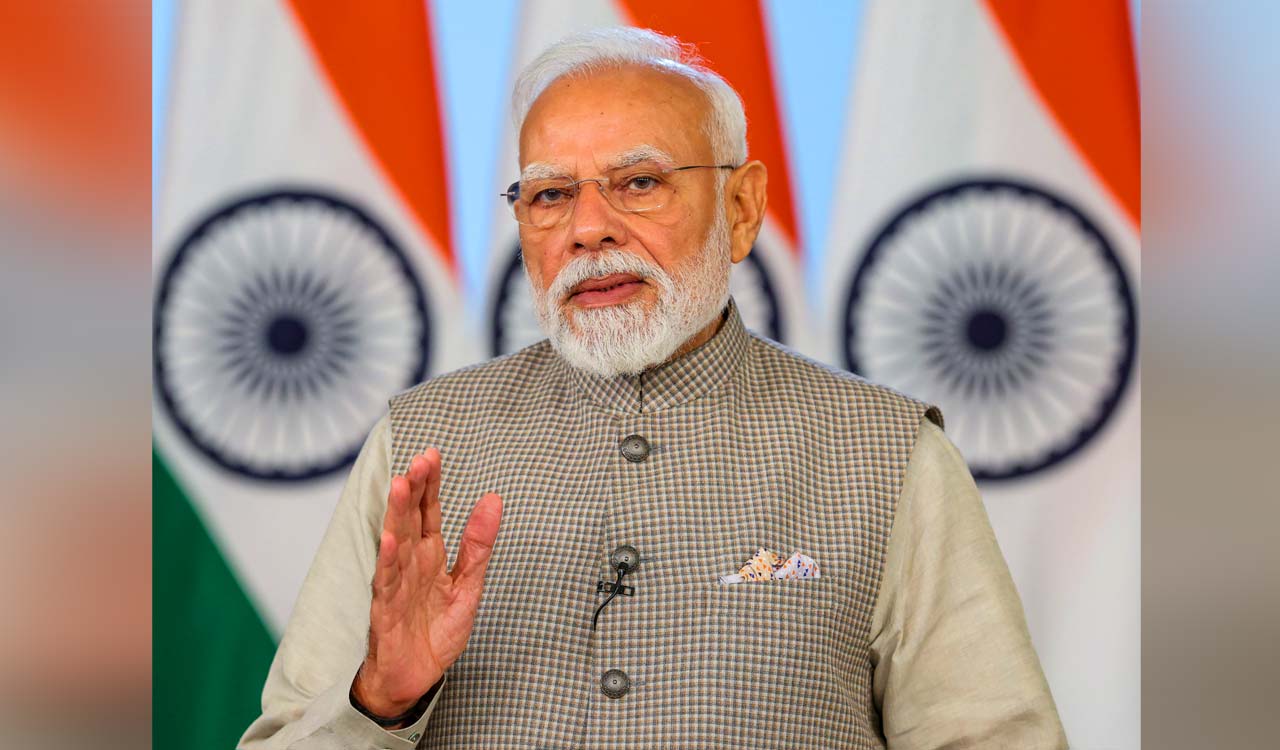


New Delhi: Prime Minister Narendra Modi on Sunday said the 2016 surgical strikes were India’s decisive response to the pain caused by terror attacks and presented a new example of the country’s counter-terrorism policy.
Asserting that India follows a policy of zero tolerance towards terrorism, he said in his monthly broadcast, Mann Ki Baat, that the country has made it clear that terrorism will be dealt with strongly and decisively.
He said over the past decade — from the Balakot air strike to Operation Sindoor — India has repeatedly sent a clear message that if terrorists dare to cast an evil eye on the country, they will be met with a befitting response.
Referring to the 2016 surgical strikes, Modi said the world was astonished to see the manner in which India’s brave soldiers crossed the Line of Control (LoC) to take action against terrorism.
“A major historic achievement of India is set to mark its 10th anniversary in just a day — this achievement is the surgical strikes. Ten years ago, on September 28-29, 2016, the Indian Army carried out surgical strikes on terrorist hideouts in Pakistan,” he said.
The prime minister said the surgical strikes were the country’s decisive response to the long-standing pain India had endured due to terrorist attacks.
“The surgical strike boldly demonstrated to the entire world a new example of India’s counter-terrorism policy,” he said.
The surgical strikes were carried out by Indian forces on terror camps across the LoC after terrorists attacked an army camp at Uri in Jammu and Kashmir, leaving 18 soldiers dead.
Modi said India has long suffered wounds inflicted by terrorist attacks and recalled that there was a time when serial blasts had become a common occurrence in the country.
He said it was in this very month of September, specifically on September 13, 2008, that many innocent lives were lost in the serial blasts in Delhi.
“Just a few weeks later, the massive 26/11 attack took place in Mumbai. In the past too, there used to be demands for action against Pakistan following every terror attack, but such calls were often not given due attention; time was simply allowed to pass,” he said.
The prime minister asserted that India pursues a zero-tolerance policy against terrorism, and everyone is witnessing the results of that.
Modi’s reference to Pakistan’s involvement in cross-border terrorism comes two days after Pakistan Prime Minister Shehbaz Sharif used the UN General Assembly podium to raise the Kashmir issue in his address to the world organisation.
Sharif raised the Kashmir issue, saying that to ensure South Asia never reaches the precipice of the conflict of 2025 again, a just and fair solution to the Kashmir issue is required.
India has repeatedly rejected Pakistan’s assertions on Kashmir made at the UNGA forum as well as on other UN platforms, saying Jammu and Kashmir has been, is, and will always remain an integral and inalienable part of India.
India had launched Operation Sindoor on May 7 last year, targeting terror infrastructure in Pakistan and Pakistan-occupied Kashmir in retaliation for the April 22, 2025, Pahalgam attack that killed 26 civilians.
In his radio broadcast, the prime minister noted that this year also marks 25 years since the 9/11 terrorist attacks and that among the innocent lives lost at the World Trade Centre in the US, the highest number of victims after Americans were Indians.
“I recall that after becoming prime minister in 2014, when I visited the US, I had reached New York to pay homage to those innocent citizens. Today, once again, I extend my condolences to the bereaved families on behalf of crores of Indian citizens,” he said.
In his address, the prime minister also touched upon the fight against drugs and said millions of young people across the country have recently taken a significant resolve against substance abuse and drugs.
He said the youth have vowed to stay away from drugs themselves and have also taken up the responsibility of spreading this message to others — all under the ‘Nasha Mukt Yuva Abhiyan’.
The prime minister said there is one aspect of this campaign: the youth are propagating the message against drugs in their own language and in their own way.
“I had urged young people in Mann Ki Baat as well to join this campaign using their creativity, and I am delighted that thousands of youth have stepped forward in response to this call,” he said.
Paying tributes to Vishwa Hindu Parishad leader Ashok Singhal, Modi said there are many aspects of Singhal’s work that do not receive much attention.
“Alongside the Ram Mandir movement, he also waged a major battle against social discrimination and inequality. Today, on the occasion of his birth centenary, I bow to him on behalf of his millions of admirers. I offer my heartfelt tribute,” he said.
Talking about the “Somnath Swabhiman Parv”, the prime minister said that a thousand years ago, in 1026, Mahmud of Ghazni had demolished the Somnath temple for the first time.
However, those who came to destroy Somnath and erase India’s identity have no existence at all today, whereas the Somnath temple stands in all its grandeur by the vast sea, bestowing the blessing of immortality upon India, he noted.
“That is why we celebrated the ‘Somnath Swabhiman Parv’ this year with immense pride,” he said.
Referring to the birth anniversary of Mahatma Gandhi on October 2, Modi said he gave many people guiding principles for life, and cleanliness is one of them.
“We often see numerous efforts related to cleanliness around us. These efforts are very inspiring and uplifting. Such photos, videos and reels frequently catch our attention on social media as well,” he said.
The prime minister said he has witnessed many such initiatives recently and that, at a place in Madhya Pradesh, young people are working to clean up a river, with the entire community joining in their small effort.
Similarly, Modi said in Andhra Pradesh, the youth are cleaning up old stepwells and wells, thereby helping to restore ancient heritage.
In Mumbai, he said, some young people are taking an initiative to keep beaches clean; every week, hundreds of young people gather at one beach or another to participate in cleanliness drives under the “Swachhata Se Sewa” initiative.
“Here in Delhi, children and the youth are raising awareness about segregating waste and maintaining cleanliness in their surroundings. In West Bengal, young students are collaborating with locals to clean up market areas at picnic spots,” he said.

Related News
-

Rahul Gandhi seeks evidence to file cases over alleged police brutality
-
PM Modi wishes speedy recovery to Pope Leo XIV as he undergoes surgery
-
Canada aims to seal trade pact during PM Modi’s visit: Indian envoy
-
SC stays trial in defamation case against Rahul Gandhi over derogatory remarks against PM Modi