Rahi Masoom Raza’s centenary celebrations begin with focus on Urdu legacy
Rahi Masoom Raza's centenary celebrations began with an event highlighting his literary legacy, secular vision and Urdu writings. Organisers announced the republication of Aadha Gaon in its original Urdu script and sought to correct the author's birth date to August 1
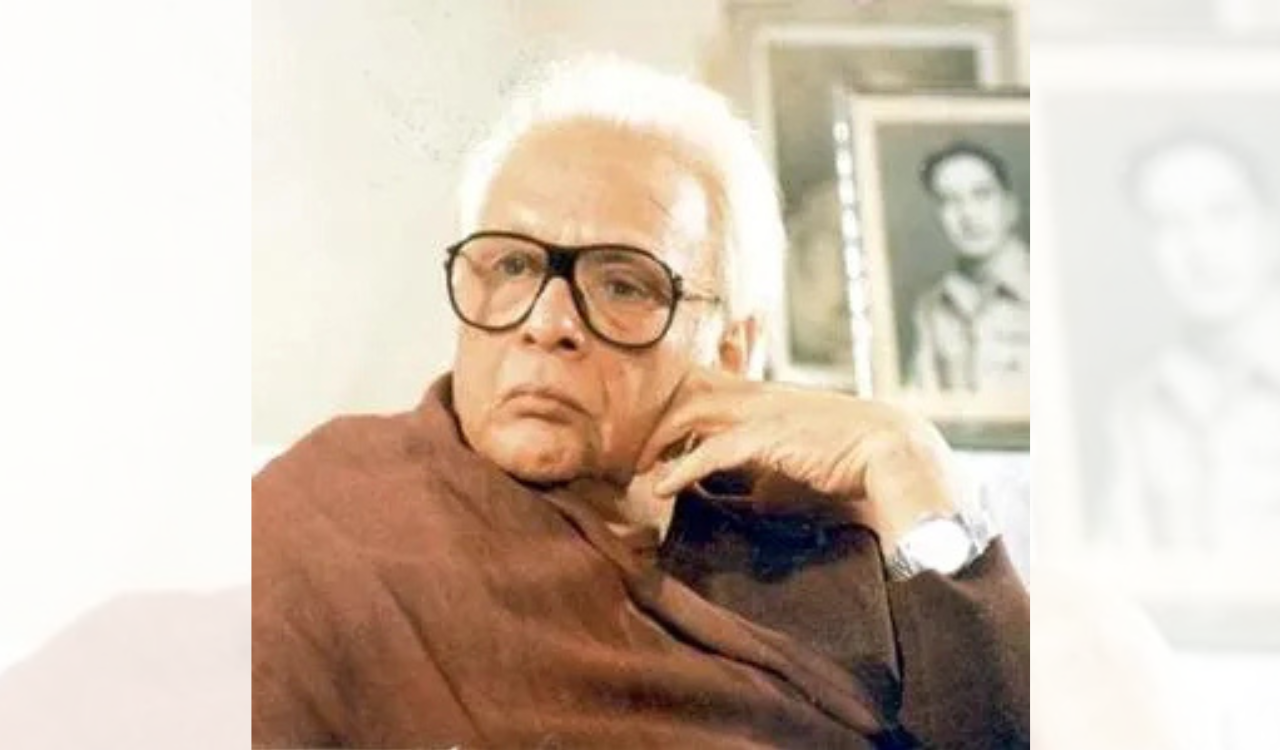


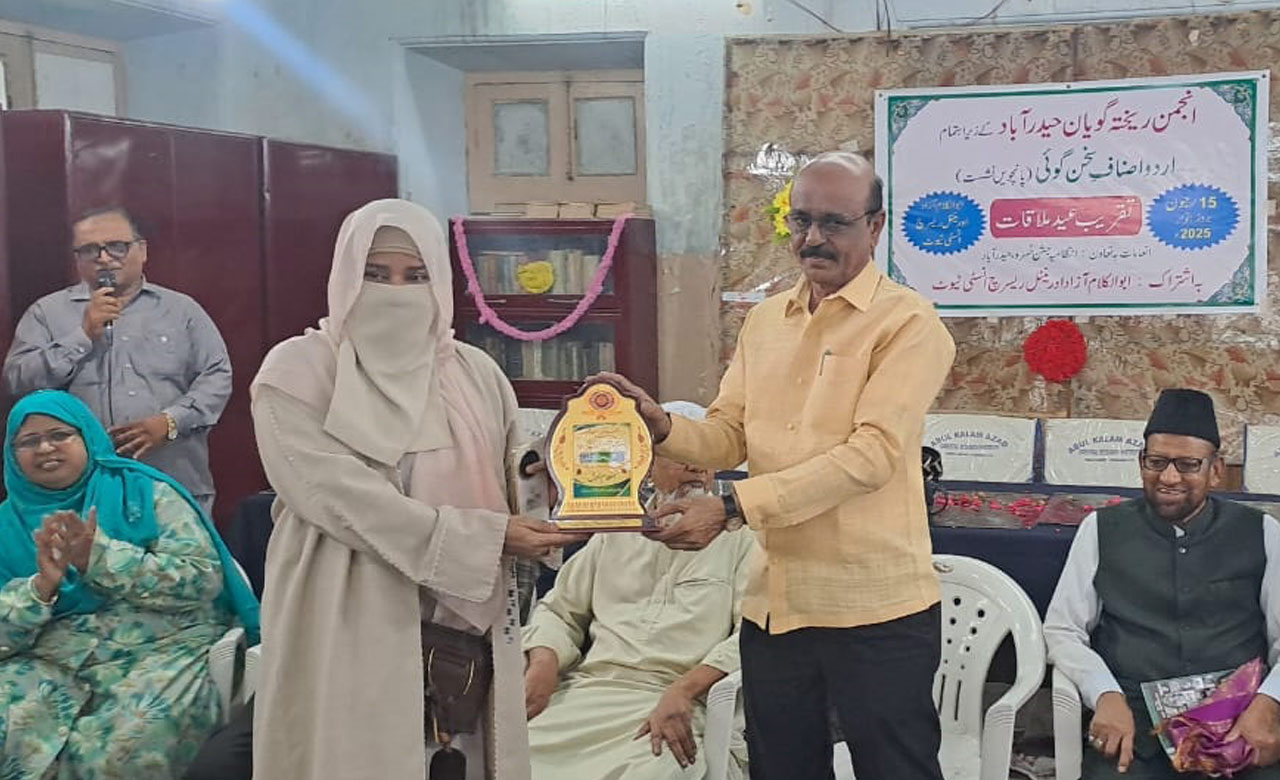
New Delhi: “Main samay hoon. Main kabhi rukta nahin, main hamesha aage badhta rehta hoon”. These opening words of “Mahabharat”, written by Rahi Masoom Raza, reverberated through the hall at Anjuman Taraqqi Urdu (Hind) in a reminder of the writer’s enduring presence through his body of work, inimitable language, and secular thought.
The evening on Saturday marked the beginning of Raza’s centenary year celebrations that will see events, republication of his books in their original Urdu script, and discussions on his literary legacy to “reassess his place in our literary and intellectual history, and to restore him to the central position he so richly deserves”. The literary organisation also said that the event will “correct the error” of Raza’s birth date, which is largely believed to be September 1, 1927.
“The celebrations deliberately commence on August 1, Rahi Masoom Raza’s actual birth anniversary, a date that has, for reasons never satisfactorily explained, long been overshadowed by the mistaken belief that he was born on September 1. “Correcting that error is itself an important beginning to the centenary year,” Ather Farooqui, general secretary of Anjuman Taraqqi Urdu (Hind), said in a statement.
While “Mahabharat”, the 1988 TV serial based on the Hindu epic, remains one of Raza’s notable works originally written in Urdu and Persian scripts, his debut novel, “Aadha Gaon”, established him as a formidable voice in the Indian literary scene. One of the foremost events as part of the centenary celebrations will be the publication of “Aadha Gaon”, which was first published in Hindi in 1966, in its original Urdu script.
“The publication of the original Urdu text of ‘Aadha Gaon’, came to the Anjuman Archives in Rahi’s own handwriting. The manuscript was preserved in the family archives, marking the beginning of a larger scholarly endeavour,” Farooqui said.
He added that publication of the book, which is centered around the village of Gangauli in the Ghazipur district of Uttar Pradesh and explores the lives of Shia Muslim zamindar families around the time of Partition, will present an opportunity to start a conversation about “the place of the Urdu script in the literary history of Khari Boli”.
“Rahi himself wrote all his works in that script. To read him in the original is therefore not merely a matter of textual fidelity, but of recovering the linguistic and cultural universe from which his literature emerged,” he said.
Speaking at the event, Congress leader and life trustee of the organisation Salman Khurshid said that the publication of his works in Urdu will “do justice” to not only the writer but to the composite culture that Raza wrote of in his books.
“For a long time now, I have felt that we have failed to do justice to our own composite culture, and naturally, to Rahi Masoom Raza. Today, our struggle to rectify that is finally bearing fruit,” Khurshid said.
He added that the evening and the upcoming events in the centenary year will help Anjuman achieve the enduring spirit of the “Ganga-Jamuni tehzeeb”. The evening was also attended by Subhashini Ali, former Lok Sabha MP and a long associate of the Raza family; Professor Harish Trivedi, Vibhuti Narayan Rai, Professor Shafey Kidwai, Professor Asim Siddiqui and Professor Muhammad Sajjad.
Former IPS and writer Rai, who was a close associate of noted Hindu and Urdu writers of the including Kunwarpal Singh and Kamleshwar, said that Raza had a difficult time trying to get “Aadha Gaon” published in Urdu.
“Kunwarpal Singh was a great admirer of Raza, so much so that he sent the Urdu transcript to all the publishers and magazines of the time. And he would always get them photocopied before sending. He lost over 170 manuscripts doing so, they never sent it back,” Rai said.
The reason, he said, was the language of the book. “Aadha Gaon” is known for its flavour of the Bhojpuri language in which Raza freely uses expletives that are part of the colloquial.
“I once sent the manuscript to a publisher and they removed all the expletives. Kunwarpal Singh was very angry with that. I still have some 500 copies of that print with me. The Urdu community would not accept Raza’s use of expletives,” he said.
He also noted that Kunwarpal Singh sat down with Raza and went through translating the entire book, the proofs of which were checked by the author himself. It was finally published in Hindi by Akshar Prakashan in 1966.
Ali recalled that in her early days with the CPI(M), she was introduced to “Aadha Gaon” that became a “big part of my education”. “Understanding Uttar Pradesh, understanding the society of the village, and understanding a lot of things, became possible for me as soon as I read that book,” she said. Ali also urged the organisation to retain the text and flavour of Raza in its Urdu publication and also publish a Hindi translation that is loyal to the original manuscript.

Related News