Rare leucistic great cormorant spotted at Ameenpur Lake
A Hyderabad-born Canadian birder spotted a rare leucistic Great Cormorant at Ameenpur Lake during a recent visit. The bird’s unusually pale plumage stood out among regular dark cormorants, prompting him to photograph it and independently verify the unusual sighting.
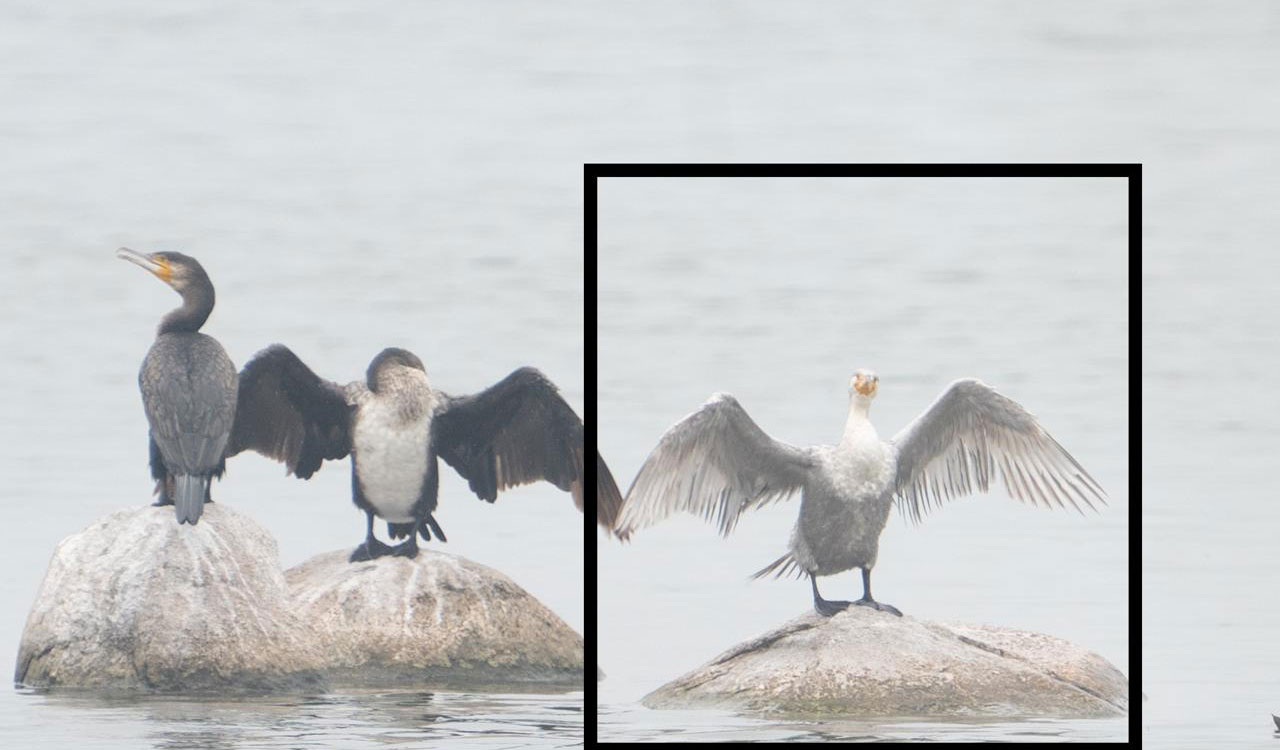


HYDERABAD: For those who are not familiar with the kind of bird species which can be sighted at Ameenpur Lake near BHEL here, the rare sighting of leucistic great cormorants could have been mistaken for one of those regular cormorants normally seen at the lake.
But for the Hyderabad-born Canadian avid birder Raghuvamsh Chavali, who flew to India on a family emergency and who still could not resist the temptation to visit the lake to take a few images of the regular visitors at the lake, it turned out to be a truly memorable experience on Sunday when he spotted the leucistic Great Cormorant. And like a pro, he took time to confirm this rare sighting in India after verifying with other sources and birder friends across the country.
“For almost a month, due to personal reasons, I hadn’t travelled or gone out to take photographs with my camera. So when I finally got a chance to go out last Sunday, I wanted to go back to somewhere old—Ameenpur Lake,” Raghuvamsh informed “Telangana Today.”
“I wasn’t expecting anything special. Suddenly I noticed a pale bird near the water from a distance. I didn’t think much of it. In fact, it looked so pale I thought it was a duck! If it was alone, I might’ve got my camera out and taken a couple of pictures,” he explains.
“They were regular cormorants. In the middle of them was this incredibly pale bird. This was when it hit me that I should stop and observe the bird. The contrast between the dark cormorants and the pale one was clear enough to see. I have taken pictures of birds for quite a while now, but I had never really seen a cormorant that looked this pale before,” Raghuvamsh said.
“Most of its feathers were almost white, starkly contrasting with the dark cormorants around it. I got curious and started clicking pictures of the bird. As if it wanted me to get a good picture, the bird climbed up on a rock and stretched out both of its wings. Seeing this pale cormorant stretching out its wings next to the dark cormorants was something special for me,” he said.
“It reminded me of leucistic Great Cormorants. Sometimes birds might have reduced pigmentation, which makes most or part of their feathers look pale or white. They are not the same as albino birds, but they can sometimes resemble them. What fascinated me most was that I could’ve easily missed the bird had it been alone. I would’ve thought it to be some other kind of bird! For me, the fact that the pale cormorant was with the dark cormorants made all the difference,” Raghuvamsh said.
“Curious about how unusual the sighting was, I began searching online for documented records of leucistic great cormorants in India. I could find very little information, which made me even more interested in having the bird independently identified and documented,” he said.

Related News