Rodent-damaged wiring may have triggered fatal RIMS Adilabad SNCU blast: Probe panel
A six-member inquiry committee has reportedly found that electric wires damaged by rodents were among the primary causes of the explosion at the SNCU of RIMS, Adilabad, which claimed the lives of five infants.
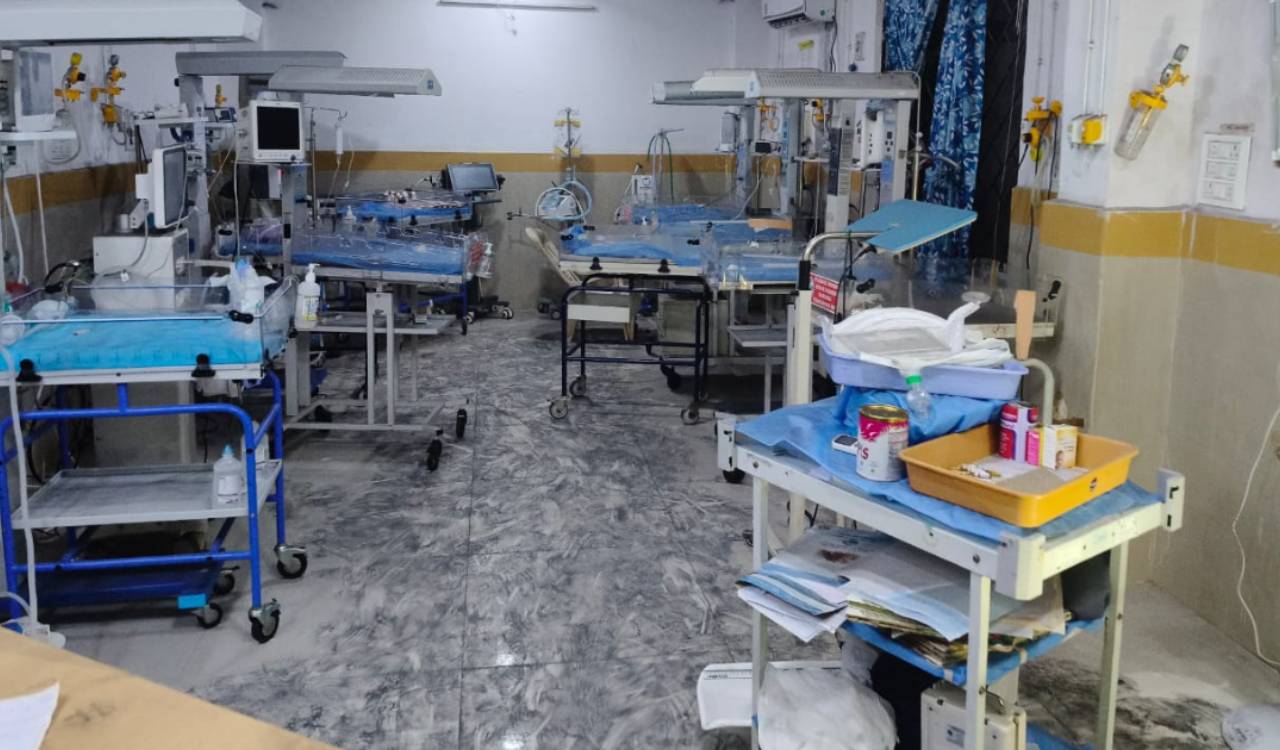


Adilabad: Have electric wires, snapped by rodents, led to the tragic blast of air conditioners in the Rajiv Gandhi Institute of Medical Sciences (RIMS)-Adilabad recently?
This was reportedly the finding of the six-member inquiry committee which probed the causes of the tragedy that claimed the lives of five infants.
The committee, headed by ITDA project officer Manda Makarandu, probed the incident and submitted a 50-page report to the government a few days ago. It investigated the major causes of the mishap by conducting field visits and gathering evidence. It also made recommendations to prevent the recurrence of similar incidents in future.
Though the contents of the report remain confidential, one of the major causes of the tragedy was found to be damaged wires gnawed by rodents, resulting in an electric short-circuit and subsequently causing the explosion of the machines at the SNCU. It was learnt that faulty wiring, poor maintenance of the electrical system, systemic lapses and lack of supervision by officials were also found to be the causes of the mishap.
The committee in its report has incorporated insights from experts to prevent fire mishaps in the future. It also suggested that the administration of the institute be streamlined by transferring the existing director, superintendent, resident medical officers and other key officials. It submitted the report to Collector Rajarshi Shah, who in turn forwarded it to the government on October 3.
During field visits by the committee, it was found that the institute had no dedicated AC technician and negligence in maintenance was evident. The facility has over 130 air conditioners in different wards and offices of the 750-bedded institute which was established in 2008. It is staffed by three outsourced electricians.
Employees regretted that mandatory inspection of the electrical system and air conditioners is not being carried out once every three months. Maintenance of the electrical and the machines has been neglected. The machines develop glitches due to faulty wiring, power interruptions and fluctuations of power at regular intervals. Delays in refilling coolant gas, which could cause the machines to overheat, may also have been among the reasons for the incident.
Five infants were killed, while 20 newborns were hospitalized after inhaling toxic gases and smoke emanating from the explosion at the SNCU on September 22 night. This incident prompted the State government to extend a compensation of Rs 5 lakh to each victim and to constitute a committee to probe the tragedy and take preventive steps to avoid similar incidents in future.

Related News