Sabarimala case: Centre defends entry ban, cites religious practices
The Centre told the Supreme Court that the 2018 Sabarimala judgement was based on the assumption that men are superior, while defending restrictions on women’s entry and highlighting religious practices as a key factor in the ongoing constitutional bench hearing



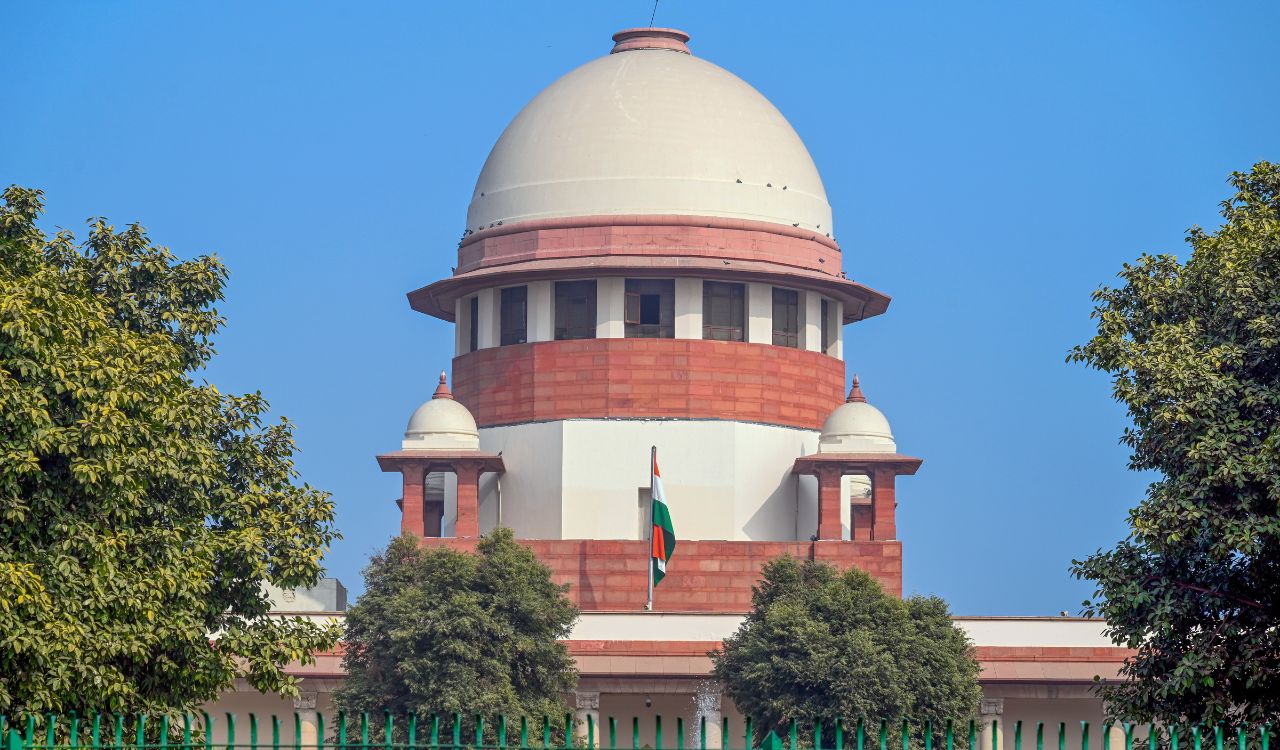
New Delhi: The Centre on Thursday backed the restriction on the entry of women of menstruating age into Kerala’s Sabarimala temple, saying that the top court’s 2018 judgement proceeds on the assumption that men are superior and women are on a lower pedestal.
A nine-judge Constitution bench is hearing petitions related to discrimination against women at religious places, including the Sabarimala temple in Kerala, and on the ambit and scope of religious freedom practised by multiple faiths.
Solicitor General Tushar Mehta, appearing for the Centre, told the Constitution bench headed by Chief Justice Surya Kant that he filed a written submission and gave instances where men are not allowed in temples.
“It is a Devi Bhagwati temple, there are certain faiths and beliefs attached. There is one temple in Kerala, I read it, where men go dressed as women. They go to beauty parlours and female family members help them dress in saree…
“So it is not a question of male-centric or female-centric religious beliefs. In the present case, it happens to be woman-centric,” Mehta told the bench, also comprising Justices B V Nagarathna, M M Sundresh, Ahsanuddin Amanullah, Aravind Kumar, Augustine George Masih, Prasanna B Varale, R Mahadevan and Joymalya Bagchi.
At the Kottankulangara Sree Devi Temple in Kerala, men dress as women annually for the Chamayavilakku festival, honouring the goddess in a tradition dating back centuries.
Additional Solicitor General KM Nataraj said public morality is the governing standard, and not constitutional morality as interpreted earlier.
In September 2018, a five-judge Constitution bench, by a 4:1 majority verdict, had lifted the ban that prevented women between the ages of 10 and 50 from entering the Sabarimala Ayyappa temple in Kerala, and held that the centuries-old Hindu religious practice was illegal and unconstitutional.
Later, on November 14, 2019, another five-judge bench headed by the then CJI Ranjan Gogoi, by a majority of 3:2, referred the issue of discrimination against women at various places of worship to a larger bench.
The bench had then framed broad issues on freedom across religions, saying they could not be decided without the facts of the particular case.

Related News
-

Delhi protest: SC rules out complete Metro shutdown, orders regulated services
-
Cheque bounce cases: Rajpal Yadav offers Rs 2 crore payment; SC expresses displeasure over conduct
-
India, Russia discuss strengthening judicial cooperation and global coordination
-
SC Collegium recommends new chief justices for Rajasthan, MP, J&K high courts