Sabarimala hearing: SC backs limited judicial review on religious restrictions
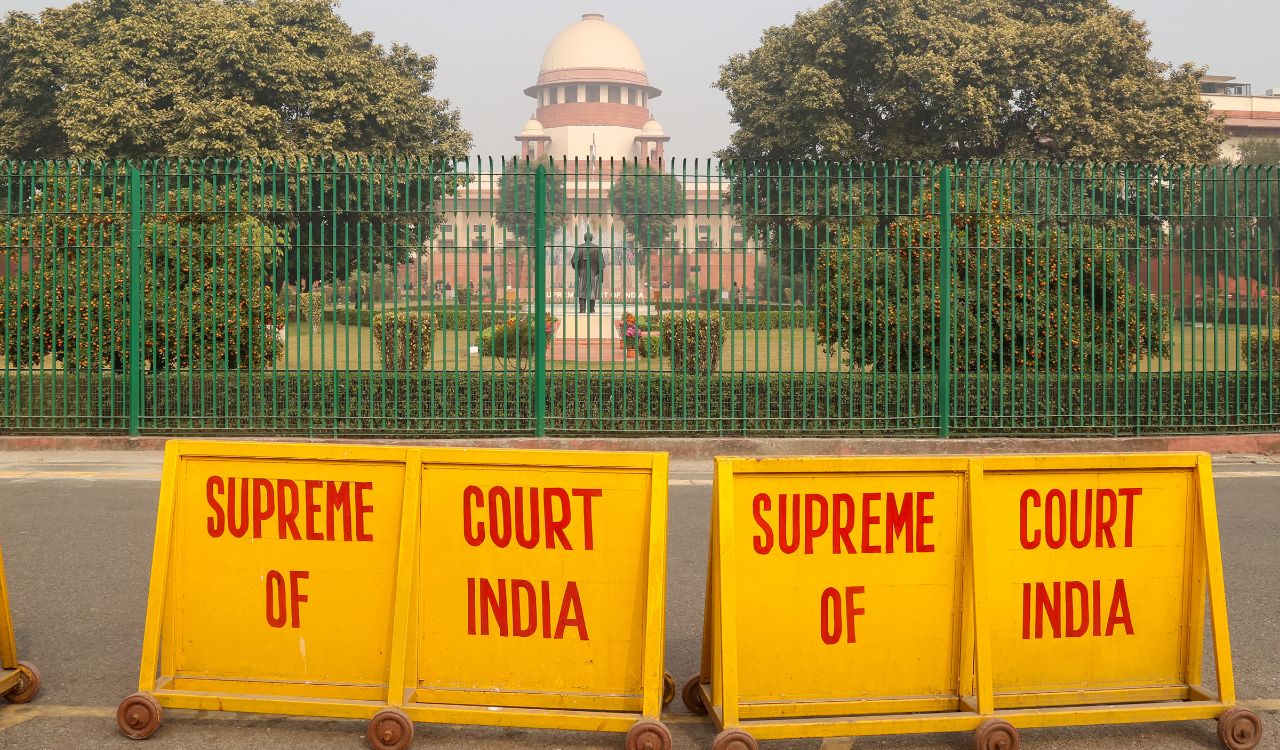
The Supreme Court of India said it can review State actions restricting religious practices in the name of reform, despite limits on judicial review, during hearings in the Sabarimala temple case on balancing faith and fundamental rights



New Delhi: The Supreme Court orally observed on Tuesday that despite limitations on the power of judicial review, it can examine if the State prohibits a religious practice or custom in the name of social welfare or reform.
Dealing with the vehement submissions asking the court to refrain from venturing into the essential-religious-practice arena, a nine-judge Constitution bench headed by Chief Justice of India (CJI) Surya Kant said there are certain limitations on the court’s power of judicial review in such matters but to say there is no authority at all would be a “difficult proposition to accept”.
The observations were made by the bench on the submissions of senior advocate J Sai Deepak, who appeared in the court for the Pandalam royal family and the historic Shriur Mutt, that if a religious practice is inherently beyond the court’s jurisdiction due to its sacred nature, the mere act of the State recognising or “codifying” that practice through a law does not suddenly grant the judiciary the power to review it.
The CJI told Deepak, “If the State, in the name of social welfare, prohibits a religious practice, who will examine it? We understand that there are certain limitations, but to say that there is no power at all, it may also be a very difficult proposition to accept. There is no need to attack the power of judicial review so much.” Deepak, who also represented various other Hindu organisations in the court like Chetana Conscience of Women, All India Organisations of Lord Ayyappa Temples, besides the head priests of the Sree Padmanabhaswamy and Chilkur Balaji temples, submitted that what cannot be done directly, cannot be done indirectly. The lawyer told the bench, also comprising Justices B V Nagarathna, M M Sundresh, Ahsanuddin
Amanullah, Aravind Kumar, Augustine George Masih, Prasanna B Varale, R Mahadevan and Joymalya Bagchi, that a legislation should not be used as a back door for courts to test the “rationality” of centuries-old religious traditions.
He submitted that the rights under Article 25(1) of the Constitution extend not just to natural persons but to juristic persons as well and in the context of Hindu faith systems, juristic persons include religious institutions, deities and other objects of worship, such as holy books, relics, natural formations, rivers, mountains, holy sites and in certain instances, even animals.
“This inclusivity and elasticity of ‘persons’ within the meaning of Article 25(1) must be borne in mind to accommodate the rights of the objects of worship and the believers since the latter are not just practitioners exercising their own rights but are also agents on behalf of the objects of worship,” he said.
Referring to a 2015 verdict of the apex court, Deepak said it has been held that it is not for the court to entertain writ petitions that challenge religious practices since making law on the subject falls exclusively within the realm of the State, which as stated earlier, does not include the judiciary. “The role of the judiciary is only ex post facto, that is, after the promulgation of a law, and only on parameters and to the extent permitted by the Constitution.
Even when entertaining writ petitions in relation to a State-made law that impacts religious practices and customs, the role of the judiciary is limited to adjudicating on the validity and constitutionality of State action and enforcement of rights against the State but does not extend to adjudication of the essentiality or validity of religious practices and customs,” he contended.
The senior counsel submitted that if a pre-existing religious practice is codified through a statute, it would only amount to statutory acknowledgment of a pre-existing practice or tradition and not make it amenable to a judicial review.
Earlier in the day, the court asked as to who will come to the rescue of a believer who is not allowed to touch the deity and itself answered the question, saying it has to be the Constitution.
The remarks of the judges came after the senior counsel representing the chief priest of the Sabarimala temple in Kerala said when a devotee goes to a temple for worship, it cannot be in antagonism to the characteristics of a deity.
Senior advocate Gopal Sankaranarayanan, representing the review petitioners, said the court must examine the broader scheme of Part III of the Constitution that deals with fundamental rights, particularly the interaction between Articles 25 and 26. He urged the bench to step back from the specifics of the Sabarimala case and instead, consider how religious freedom operates across diverse contexts, from temple entry to practices in other faiths.
The nine-judge Constitution bench is hearing petitions related to discrimination against women at religious places, including the Sabarimala temple, and on the ambit and scope of the religious freedom practised by multiple faiths.
Tuesday was the sixth day of the hearing, which would continue on Wednesday. In September 2018, a five-judge Constitution bench, by a 4:1 majority verdict, lifted a ban that prevented women between the ages of 10 and 50 years from entering the Sabarimala Ayyappa temple and held that the centuries-old Hindu religious practice was illegal and unconstitutional.

Related News
-

AP civic polls: SC asks state election body to defer publication of final candidates’ list
-
Supreme Court clarifies legal route for complaints against elected candidates
-
NEET-PG 2026: Plea seeks permanent copies of question papers and response sheets
-
SC issues notice to ECI on Rahul Gandhi-led plea against Special Intensive Revision exercise