Shashi Tharoor suggests degressive proportionality for Lok Sabha delimitation
Congress leader Shashi Tharoor has proposed adopting degressive proportionality in Lok Sabha seat allocation to balance population and federal equity, urging wide consultations before delimitation, while warning against marginalisation of smaller and southern states
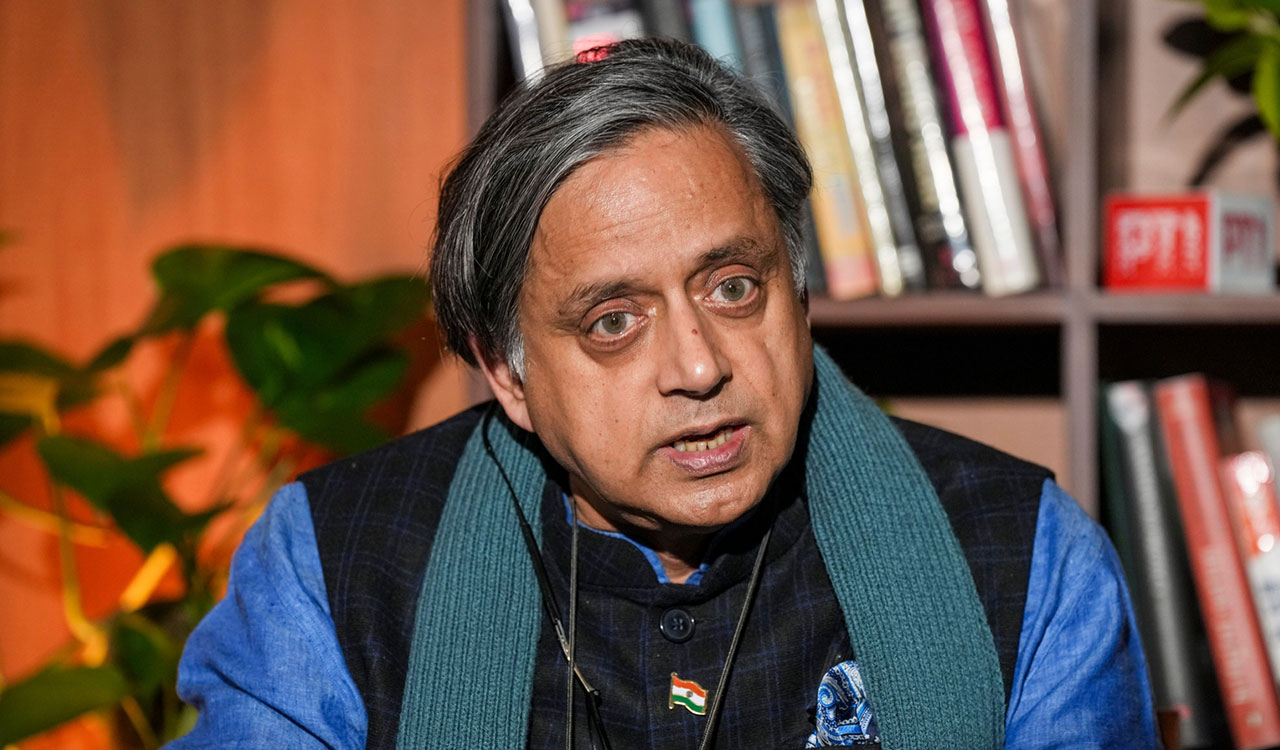


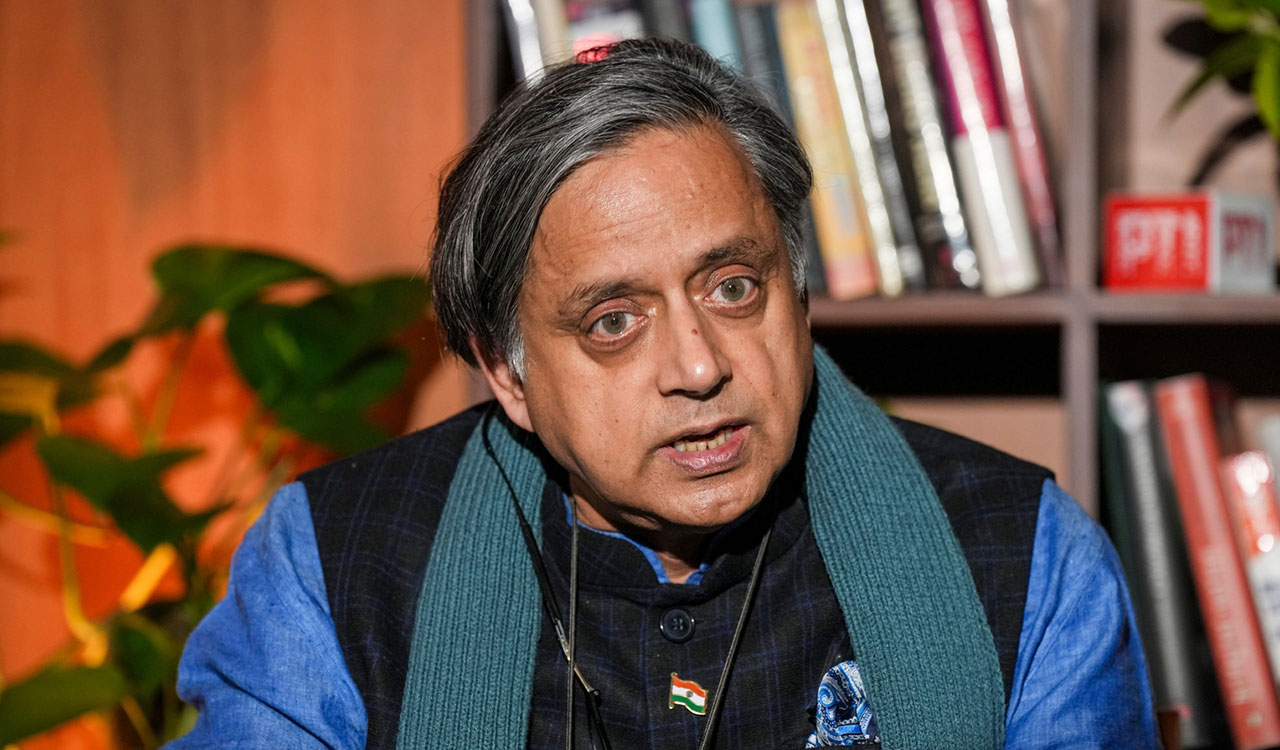
New Delhi: Congress leader Shashi Tharoor on Tuesday suggested “degressive proportionality” in the Lok Sabha to balance population with federal equity and urged Prime Minister Narendra Modi to hold extensive consultations with all parties and states before rushing into a hasty delimitation process that leaves “core underlying issues unaddressed”.
The MP from Thiruvananthapuram said it would be dangerous for the country’s federalism if smaller states felt that their prosperity and human development were being punished with relative disenfranchisement.
Reacting to a post stating that if nothing changes in the existing constitutional scheme, southern states are set to lose their absolute and proportional share in the Lok Sabha, he said the answer can be found in Europe.
There, the principle of “degressive proportionality” is applied to the composition of the European Parliament, as they have the same problem of small and big states coexisting in one Union, Tharoor said.
India also needs a compromise between strict democratic representation (one person, one vote) and the necessity of ensuring smaller political entities have a meaningful voice, the former Union minister argued.
He said the idea essentially means that while larger populations get more seats, the ratio of citizens to representatives increases as the population grows.
“In the European Parliament, the allocation must follow these constraints: Minimum threshold: No member state can have fewer than 6 seats. Maximum ceiling: No member state can have more than 96 seats,” Tharoor said.
“Inverse ratio: The ‘efficiency’ of a vote must decrease as population increases. For example, a Member of the European Parliament (MEP) from Malta might represent roughly 80,000 citizens, while an MEP from Germany represents roughly 8,50,000 citizens,” he added.
Tharoor said the goal is to prevent the ‘Big Four’ — Germany, France, Italy and Spain — from holding a permanent absolute majority that could override the collective interests of the smaller nations, thereby maintaining the federalist spirit of the Union.
“Applying this to India is what we need to debate, not women’s representation, which no one objects to. We need to address the North-South divide that has arisen over delimitation,” he said.
A strict population-based reallocation (proportional representation) would drastically increase seats for northern Hindi-belt states like Uttar Pradesh and Bihar, while states that successfully implemented population control like Kerala and Tamil Nadu would see their relative political influence diminish, Tharoor said.
If India were to adopt a degressive model, Parliament could be structured to balance population with federal equity, he argued.
Similar to the EU, a “floor” could be set for smaller states like Goa, Sikkim or the Northeast to ensure they are not reduced to insignificance, he said.
“Instead of a fixed ratio of, say, 2 million citizens per MP, the ratio could scale, and a state with 200 million people might have 2.5 million citizens per MP, while a state with 30 million might have 1 million per MP,” Tharoor said.
This is to ensure no state feels disenfranchised, he added.
Echoing Telangana Chief Minister A Revanth Reddy’s suggestion, Tharoor said a state’s contribution to the national GDP could also be considered.
“It would be dangerous for our federalism if smaller states felt their prosperity and human development were being punished with relative disenfranchisement,” Tharoor cautioned.
One could argue that the Rajya Sabha already exists for federal representation. However, degressive proportionality in the Lok Sabha would provide a “weighted” democratic mandate that acknowledges population without penalising states for their developmental successes, he said.
Finding a mathematical formula that satisfies both the high-growth and low-growth states, and both the large and small states, would require a level of bipartisan and interstate cooperation that is in the interests of the central government to promote, he said.
“I urge PM Narendra Modi to initiate extensive consultations with all parties and with all states, before rushing into a hasty delimitation process that leaves the core underlying issues unaddressed,” Tharoor said.
As the government circulated bills related to the women’s quota law and delimitation among the MPs, the Congress commented that when the intent behind a bill is “mischievous” and its content “devious”, the extent of damage to parliamentary democracy is enormous.
The number of Lok Sabha seats will be increased to up to 850 from the current 543 to “operationalise” the women’s reservation law before the 2029 parliamentary polls, following a delimitation exercise to be carried out based on the last published census.
According to the draft Constitution amendment bill, which will be introduced in the upcoming special sitting of Parliament, seats would also be increased in the state and Union Territory assemblies to accommodate 33 per cent reservation for women.
The Budget Session of Parliament has been extended, and a special three-day sitting of the House has been convened from April 16 to 18, during which amendments to the ‘Nari Shakti Vandan Adhiniyam’, more commonly known as the Women’s Reservation Act, will be brought for its implementation in 2029.

Related News