South Korea’s automobile exports fall 5.5pc in September amid Middle East tensions
South Korea’s automobile exports fell 5.5 per cent in September amid Middle East tensions and weaker used-car shipments. Eco-friendly vehicle exports and production increased, while domestic sales declined. Seoul shares later narrowed losses as institutional buying supported the benchmark index
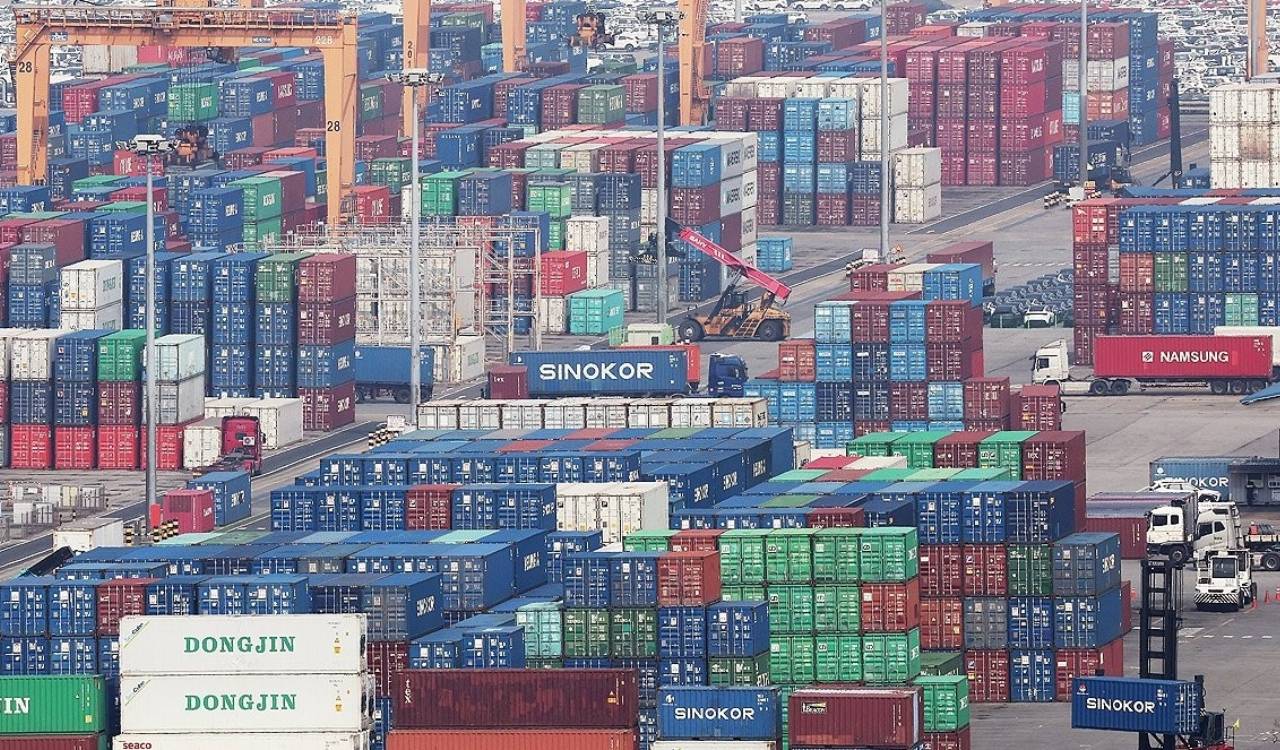


Seoul: South Korea’s automobile exports fell 5.5 per cent in September from a year earlier due to persistent tensions in the Middle East and a decline in used-car shipments, government data showed on Monday.
The value of automobile exports fell to US$6.05 billion last month from $6.4 billion a year earlier, the Ministry of Trade, Industry and Resources said in a press release.
“Escalating tensions in the Middle East and a decline in used-car shipments due to tighter regulations in major export markets weighed on exports,” the ministry said, reports Yonhap news agency.
By region, exports to North America and the European Union increased 9.2 percent and 15.3 percent, respectively, to $3.07 billion and $1.11 billion.
Shipments to Asia and the Middle East on the other hand plunged 60 percent and 7.1 percent, respectively, to $330 million and $350 million.
Exports of eco-friendly vehicles, including battery electric and gasoline hybrid models, meanwhile, rose 5.9 percent to $2.89 billion.
Domestic vehicle sales fell 14.3 percent to 135,000 units last month due to fewer working days driven by the Chuseok holiday.
The number of locally produced vehicles rose 3.7 percent to 347,000 as productivity improved at major automakers following wage agreements with labor unions.
The government will support the automobile industry’s sustainable growth through close engagement with the industry as competition from Chinese automakers intensifies, the ministry said.
Meanwhile, Seoul shares narrowed their losses late Monday morning helped by institutional buying after a technology-led sell-off on Wall Street raised speculation over heavy spending in artificial intelligence (AI) infrastructure.
After opening a sharp 3.17 percent lower, the benchmark Korea Composite Stock Price Index (KOSPI) was down 14.8 points, or 0.26 percent, from the previous session to 5,653.25 as of 11:20 am.

Related News
-

Foreign investors pull Rs 5,109 crore from govt bonds in 3 days amid global uncertainty
-
Sensex, Nifty open lower as IPO rush, Middle East tensions weigh on sentiment
-
US says it intercepted Iranian ballistic missiles in attempted surprise attack
-
Gold, silver prices fall as stronger US dollar and Middle East tensions weigh on sentiment