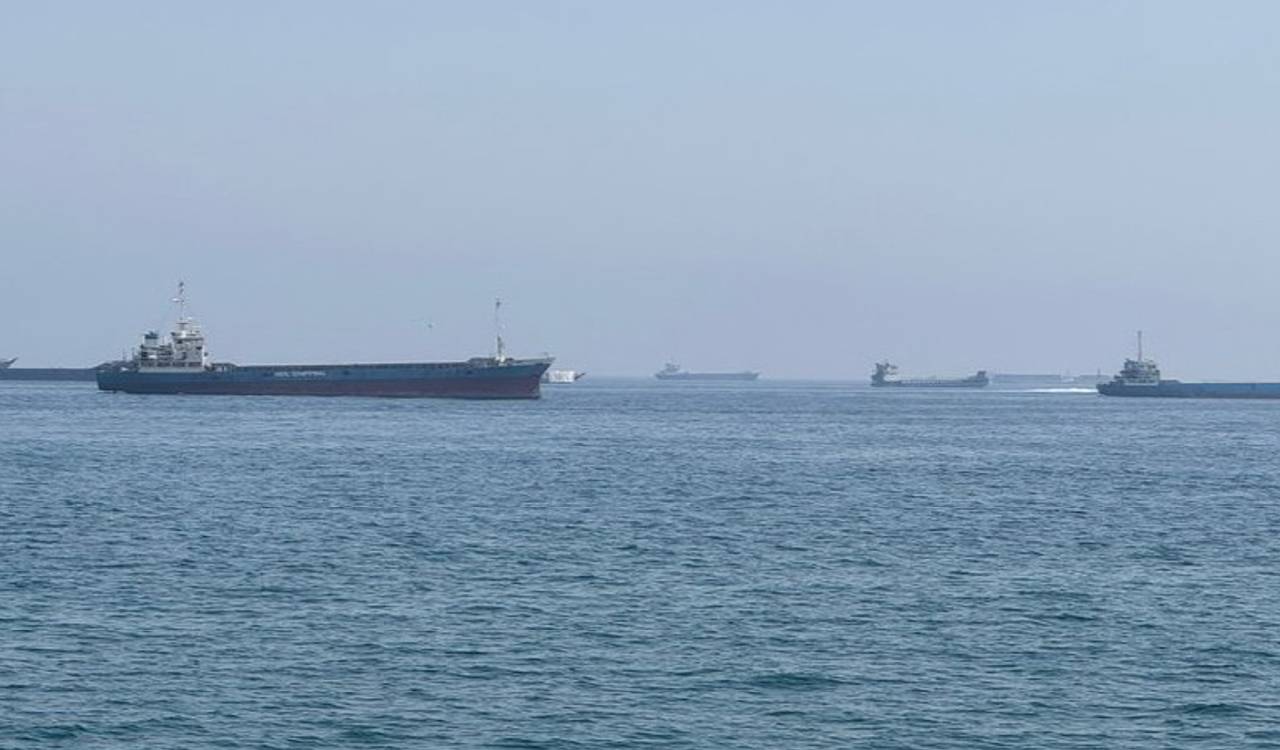
Strait of Hormuz vessel traffic recovers to 57 per cent of pre-war levels
Vessel traffic through the Strait of Hormuz has recovered to 57 per cent of pre-war levels after a new safe shipping corridor was introduced along Oman's coast, according to an S&P Global report. Meanwhile, global crude oil prices continued to decline on easing supply concerns



New Delhi: A new daily record of 78 vessel transits after the US-Iran war has been recorded through the Strait of Hormuz, representing a recovery to about 57 per cent of pre-war daily volumes, a report said on Friday.
The recovery in transits comes after Oman and the International Maritime Organization (IMO) announced a new safe corridor for vessels transiting close to the Omani coast, the report from S&P Global said.
More than 40 per cent of the day’s transits — 33 vessels — used this route, with 25 of them outbound, while other ships continued to transit closer to Iran’s territorial waters. Eight vessels were also detected operating dark during the passage.
“While most outbound vessels had been trapped inside the Gulf since the onset of hostilities, a subset of these movements involved ships that entered more recently and are now exiting, pointing to early signs of normalisation and a gradual re-establishment of freedom of navigation patterns,” the report added.
Total ship movements included 22 oil and chemical tankers, 21 bulk carriers, 12 cargo ships, seven container ships, four LPG tankers and two LNG tankers.
Overall, inbound movements accounted for 37 per cent of traffic, with 41 per cent of these ships linked to Iran.
Additionally, 10 crude tankers transited on June 24, comprising five VLCCs and three Suezmax vessels moving outbound, and two VLCCs crossing inbound into the Gulf.
Only one vessel — the VLCC AMAK — sanctioned by the US is linked to Iran.
Further, 12 product tankers moved through the strait, evenly split between inbound and outbound movements. Only one bitumen tanker — the VIRAJ — is linked to Iran, the report said.
Global crude oil prices fell sharply on Friday and were on track to post steep weekly losses as easing supply concerns in the Strait of Hormuz outweighed fresh geopolitical tensions following an attack on a cargo vessel near Oman.
International oil benchmark Brent crude futures fell $1.51 or 2 per cent to $73.75 a barrel, while US West Texas Intermediate (WTI) crude decreased $1.50, or about 2 per cent, to $70.42 a barrel.

Related News