
Study: Connectivity of language areas unique in the human brain as compared to chimpanzee brains
Washington: A team of neuroscientists have found a new approach to how our brain evolved into a language-ready brain. The study revealed that the pattern of connections of language areas in our brain is very much like chimpanzee brains and has expanded more than ever thought in the past. The findings of the study were […]
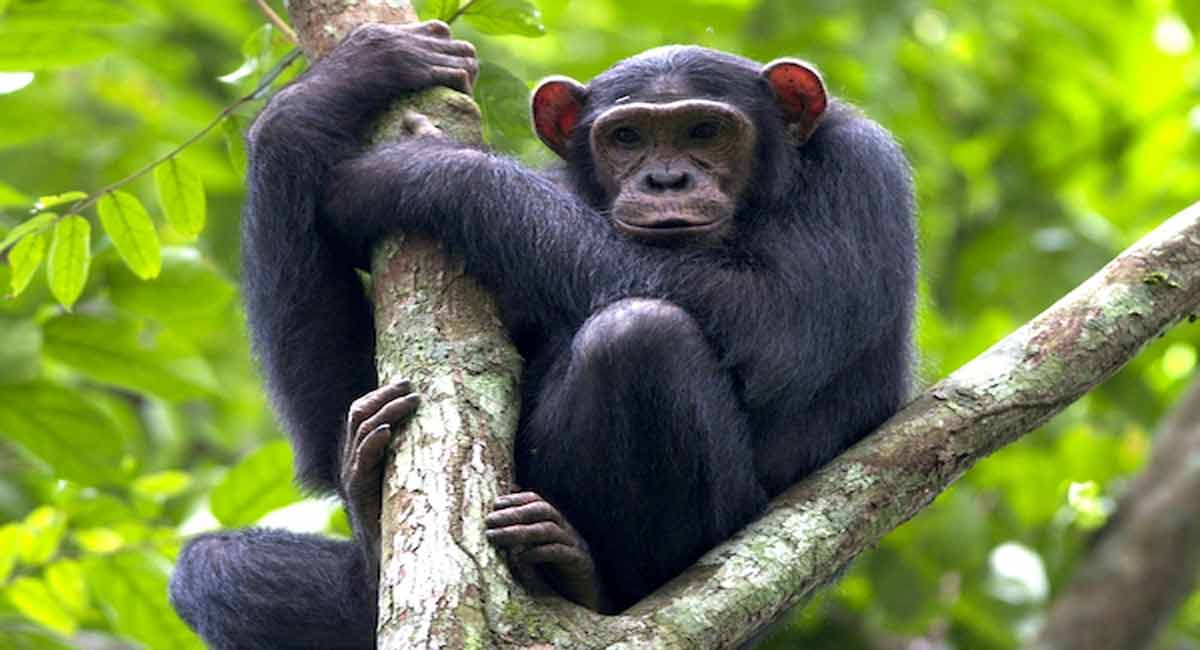


Washington: A team of neuroscientists have found a new approach to how our brain evolved into a language-ready brain. The study revealed that the pattern of connections of language areas in our brain is very much like chimpanzee brains and has expanded more than ever thought in the past.
The findings of the study were discovered by researchers from Radboud University and the University of Oxford and published in the journal PNAS.
“At first glance, the brains of humans and chimpanzees look very much alike. The perplexing difference between them and us is that we humans communicate using language, whereas non-human primates do not,” says co-first author Joanna Sierpowska.
Understanding what in the brain could have enabled this unique ability has inspired researchers for years. However, up to now, their attention was mainly drawn towards a particular nerve tract connecting frontal and temporal lobes called arcuate fasciculus, which besides showing significant differences between species, is well-known to be involved in language function.
“We wanted to shift our focus towards the connectivity of two cortical areas located in the temporal lobe, which are equally important for our ability to use language,” says Sierpowska.
Imaging white matter
To study the differences between the human and chimpanzee brain, the researchers used scans of 50 human brains and 29 chimpanzee brains scanned in a similar way as humans, but under well-controlled anesthesia and as part of their routine veterinary check-ups. More specifically, they used a technique called diffusion-weighted imaging (DWI), which images white matter, the nerve pathways that connect brain areas.
Using these images, they explored the connectivity of two language-related brain hubs (the anterior and posterior middle areas of the temporal lobe), comparing them between the species. “In humans, both of these areas are considered crucial for learning, using and understanding language and harbor numerous white matter pathways,” says Sierpowska. “It is also known that damage to these brain areas has detrimental consequences for language function. However, until now, the question of whether their pattern of connections is unique to humans remained unanswered.” New connections in human brain
The researchers found that while the connectivity of the posterior middle temporal areas in chimpanzees is confined mainly to the temporal lobe, in humans a new connection towards the frontal and parietal lobes emerged using the arcuate fasciculus as an anatomical avenue. In fact, changes to both human language areas include a suite of expansions to connectivity within the temporal lobes. “The results of our study imply that the arcuate fasciculus surely is not the only driver of evolutionary changes preparing the brain for a full-fledged language capacity,” says co-author Vitoria Piai.
“Our findings are purely anatomical, so it is hard to say anything about brain function in this context,” says Piai. “But the fact that this pattern of connections is so unique for us humans suggests that it may be a crucial aspect of brain organization enabling our distinctive language abilities.”

