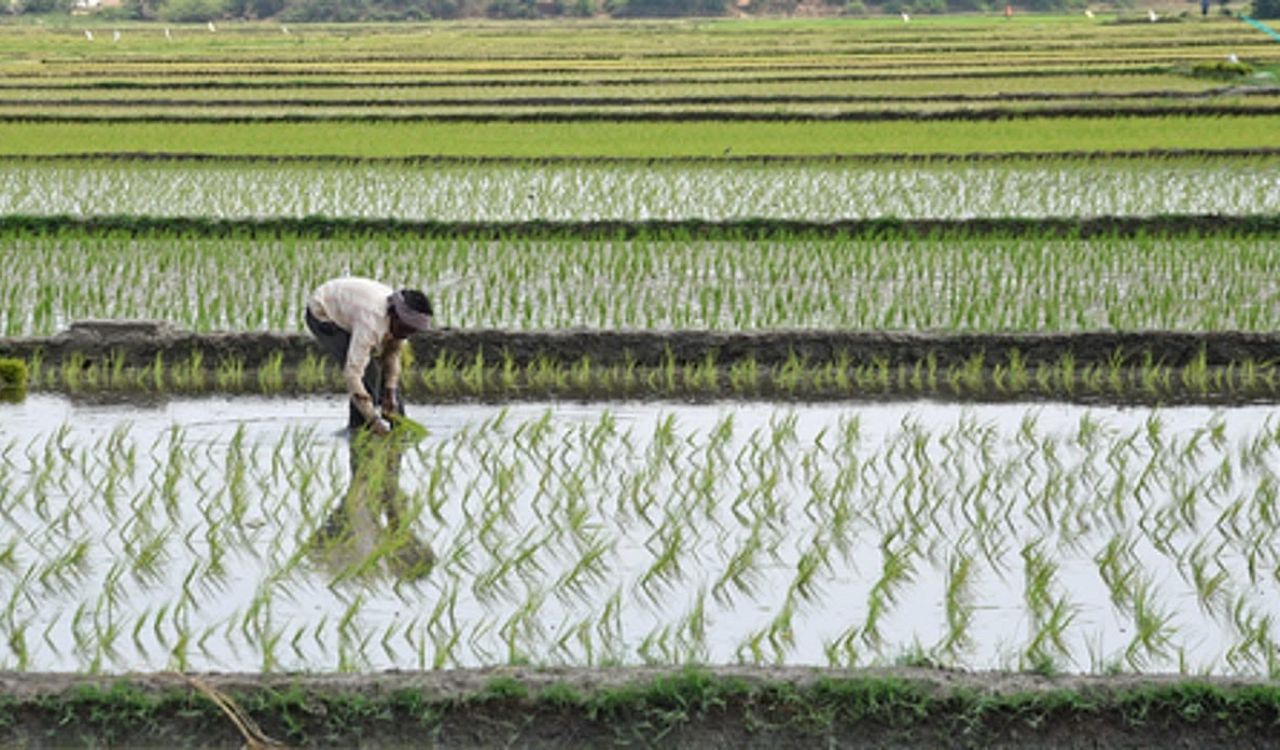
Study establishes relevance of traditional knowledge for agricultural sustainability
New Delhi: Crop nutrients determine the nutritional content and vigour of crops. The deficiency or occurrence below the minimum level of any of the nutrients is often seen as a cause of poor growth or complete crop failure. A study has found that farm practice based on traditional knowledge was better than chemical-intensive systems in […]


New Delhi: Crop nutrients determine the nutritional content and vigour of crops. The deficiency or occurrence below the minimum level of any of the nutrients is often seen as a cause of poor growth or complete crop failure.
A study has found that farm practice based on traditional knowledge was better than chemical-intensive systems in altering and modifying the nutrient dynamics of the soil with respect to Nitrogen (N), Phosphorus (P), Potassium (K), Sulphur (S), Calcium (Ca), and Magnesium (Mg) levels on a long term basis.
It was conducted in Kachchh in Western India, which is a typical representative of allied arid and semi-arid tropics that are prone to various natural threats and stressors like drought, salinity, and erratic rainfall pattern.
Seasonal amendment data showed that the traditional knowledge-based systems were efficient in the accrual of soil organic carbon (SOC) over seasons, while their impacts with regards to the major primary (N, P, K) and secondary (S, Ca, Mg) nutrients were at par with or higher than integrated chemical-intensive systems. The traditional knowledge-based amendments were found to ensure proper and timely management of nutrients in the soil.
The comparative study was conducted by analysing soils on 10 fields for the pre, mid and post-harvest phases of the crop in six cropping seasons spread across four years. For avoiding site variability, the 10 fields that were based on the traditional knowledge system were located on one farm and the 10 fields that were based on chemical-intensive systems were located on another farm.
The traditional knowledge system-based farm used farmyard compost (FYC) as a basal dose before sowing and ‘Jivamrit S’ which is a fermented concoction consisting of cow urine, cow dung, jaggery, gram flour, and soil. The concoction was prepared onsite in composting pits and was applied with watering twice, at a seven and fourteen-day interval from sowing.
The study was conducted by researchers from the Department of Earth and Environmental Science, KSKV Kachchh University, and Blue Bay Coastal Research Foundation, Chennai, India. The team consisted of Seema B. Sharma, G.A.Thivakaran, and Mahesh G.Thakkar. They have published a report on their work in the journal, `Scientific Reports’.
Speaking to India Science Wire, Dr. Sharma, who was the team leader, noted, “The world population is expected to be 9.7 billion by 2050. This increased population pressure would demand an increased food production. However, the most important entity in agricultural production-the arable land is limited and its expansion beyond a certain threshold is not possible. Meeting the demands of the growing population would require an increased yield from present arable land. However, this increase in yield has to ensure that it was based on sound soil nutrient management, in a way that a self-reliant system is developed that maintains soil fertility in the long run”.
Now you can get handpicked stories from Telangana Today on Telegram everyday. Click the link to subscribe.
Click to follow Telangana Today Facebook page and Twitter .

Related News