Study shows kids might consider past choices when judging others
The sample was mostly White and middle class from an Australian city. All children were tested at a local museum and received a small armband for participating.
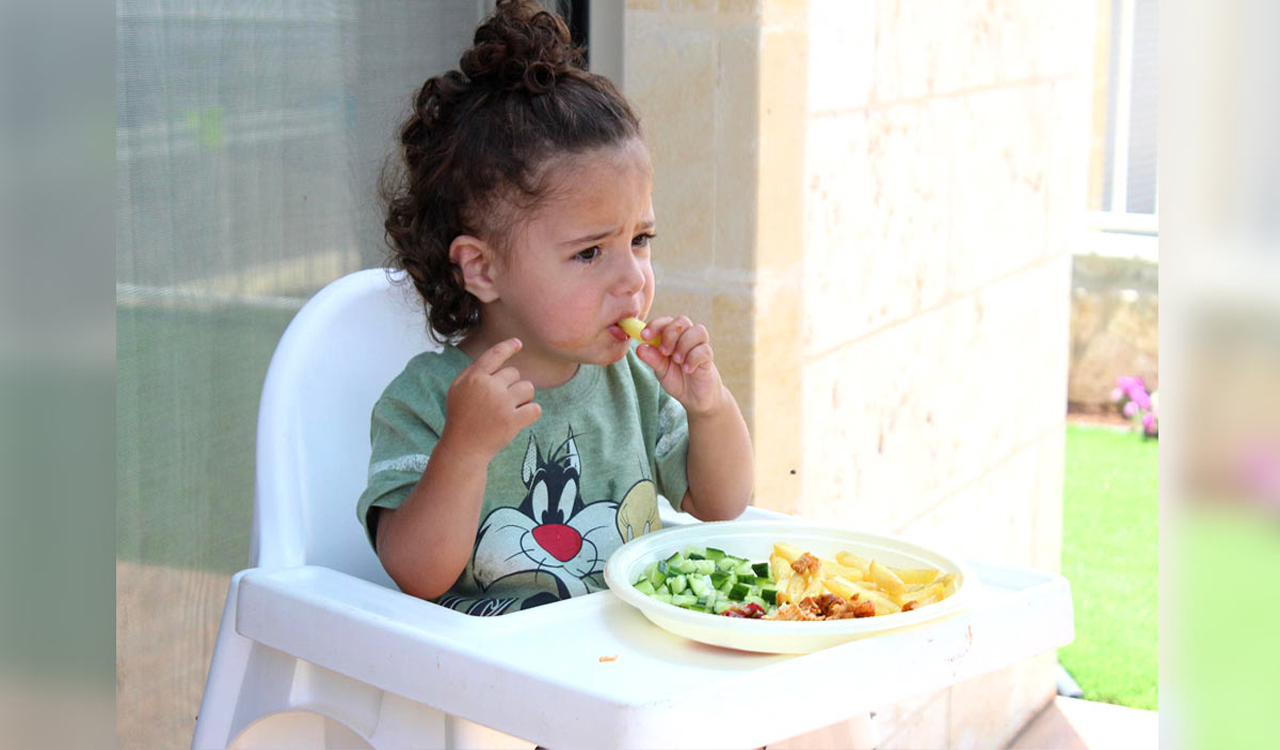


Washington: A new study published in the journal Child Development by researchers from Boston College in Massachusetts and the University of Queensland in Australia analyses whether four- to nine-year-old children consider their own prior behaviours while making moral judgements about others.
The findings revealed that beginning at the age of six, youngsters considered what characters may have done when judging how good or bad they are behaving, but four and five-year-olds’ moral evaluations were solely impacted by the actual outcome.
Also Read
When making moral judgement of past actions, adults often think counterfactually about what could have been done differently. Reflecting on what could have happened in the past allows us to consider the choices we had available to us, which is in turn an important component for judging the behavior of others. We would likely judge someone who causes harm less harshly if we find out they had no other choice.
“Our findings highlight how understanding the choices someone had is an essential feature of making mature and nuanced moral judgements,” says Shalini Gautam, postdoctoral researcher at Boston College. “It shows that children become able to do this from the age of six. Children younger than six may not yet be incorporating the choices someone had available to them when judging their actions.” Across two studies, 236 (142 females) children aged four to nine were told stories about two characters who had a choice that led to a good or bad outcome, and two characters who had no choice over the good or bad outcome.
The sample was mostly White and middle class from an Australian city. All children were tested at a local museum and received a small armband for participating.
At the start of the first study, the children were presented with an iPad and shown a training procedure with images of items in a cupboard dropped into a character’s possession.
The purpose of this exercise was to make sure the children understood the items and the main characters they would see in the main story. They were also introduced to a five-point ‘nice-to-mean’ scale (e.g., “How is Sophia acting towards Clara? Very nice, a little nice, just ok, a little mean or very mean? Why?). Children were told a story about four characters who brought a snack to share with a friend, on that friend’s birthday.
Two of the characters had a choice over which snack they brought – either one their friend likes or one their friend dislikes – and two of the characters had no choice. The children rated the characters who brought the good snack as “nicer” than those who brought the bad snack. Researchers found that children at age six were influenced by what that character could have chosen to do on both the nice-to-mean scale and the comparison questions.
In the second study, the story centered around a main character who was hosting a ‘Lego Party.’ Characters with a choice always selected between two items whereas the characters without a choice always selected the single item available. For example, some children might have rated characters differently depending on whether they selected the last item in the cupboard, or if there was another item left over. It is also possible that some children in the first study believed that the character would get to keep whatever they did not bring as it was left behind in the cupboard. In the second study however, the unselected item was left behind in the shop (i.e., the characters did not get to keep it).
While the main character loved playing with Legos, friends that were invited to the party all preferred to play with playdough. The character hosting the Lego party asked the friends to bring something to the party, and each child visited a shop to buy one item to bring. Following this introduction to the story, children were asked comprehension check questions to make sure they understood the key components of the story, such as what toy each character liked best. As in the first study, the findings showed that with increasing age, children were significantly more likely to account for choice when judging which character was meaner or nicer, both for the characters who brought the good toy (i.e., the Legos) or for the character who brought the bad toy (i.e., the playdough).
The findings raise questions about how children’s counterfactual thinking may influence more complex moral judgements, for example when people intend to do the right thing but find themselves lacking the choice to do so.
“Understanding choices is not only an important part of moral judgements, but of understandings actions and outcomes in general,” continued Gautam. “This research may provide the first direct evidence that children account for counterfactuals in their moral judgements.
It may be useful for parents, teachers and other caregivers who want to consider how they can explain complicated moral judgements to young children. In addition, this research raises several important questions for future research, such as whether it’s possible to improve or facilitate young children’s understanding of counterfactuals in order to help them to understand complex moral judgements.”
Related News
-

Ten injured after car drives into rugby fans north of Sydney
-
Australian man is accused of being Islamic State group propagandist who shared 10,000 files online
-
Nathan Ellis helps Australia edge Zimbabwe by one wicket in third ODI
-
Tejal Hasabnis and Anushka Sharma power India A to victory over Australia A