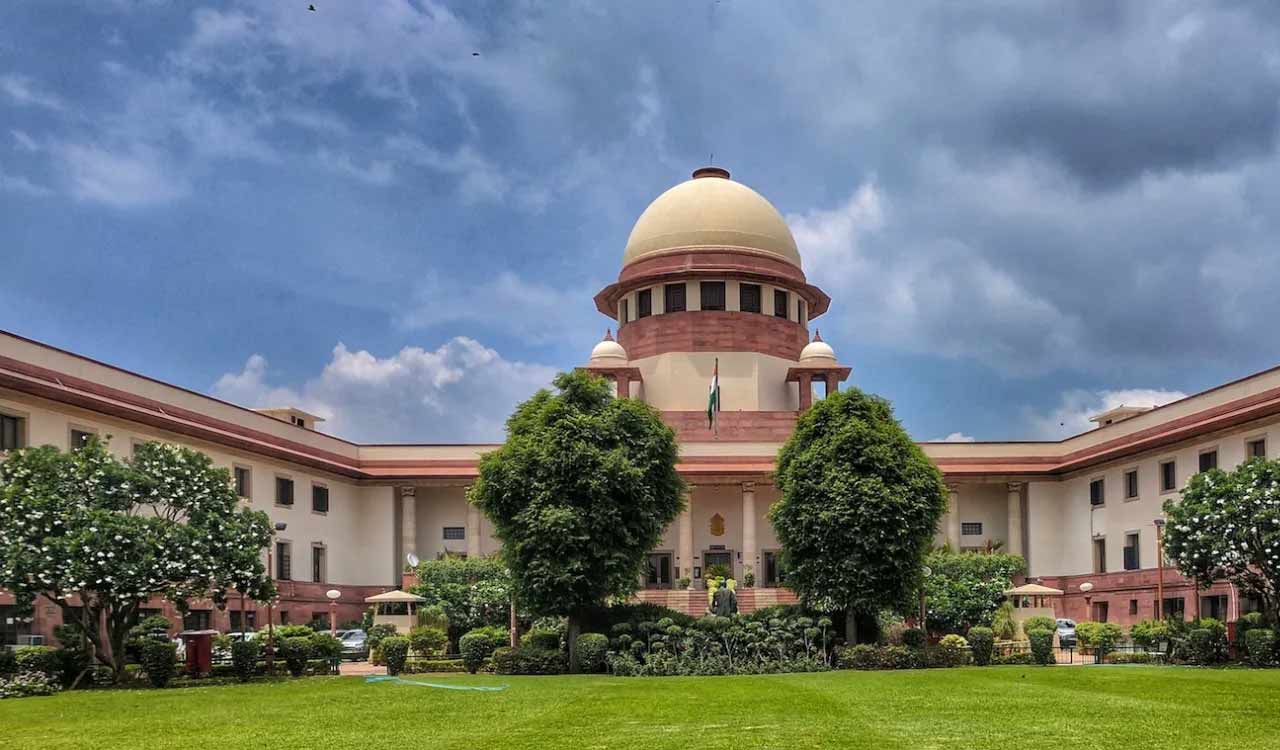
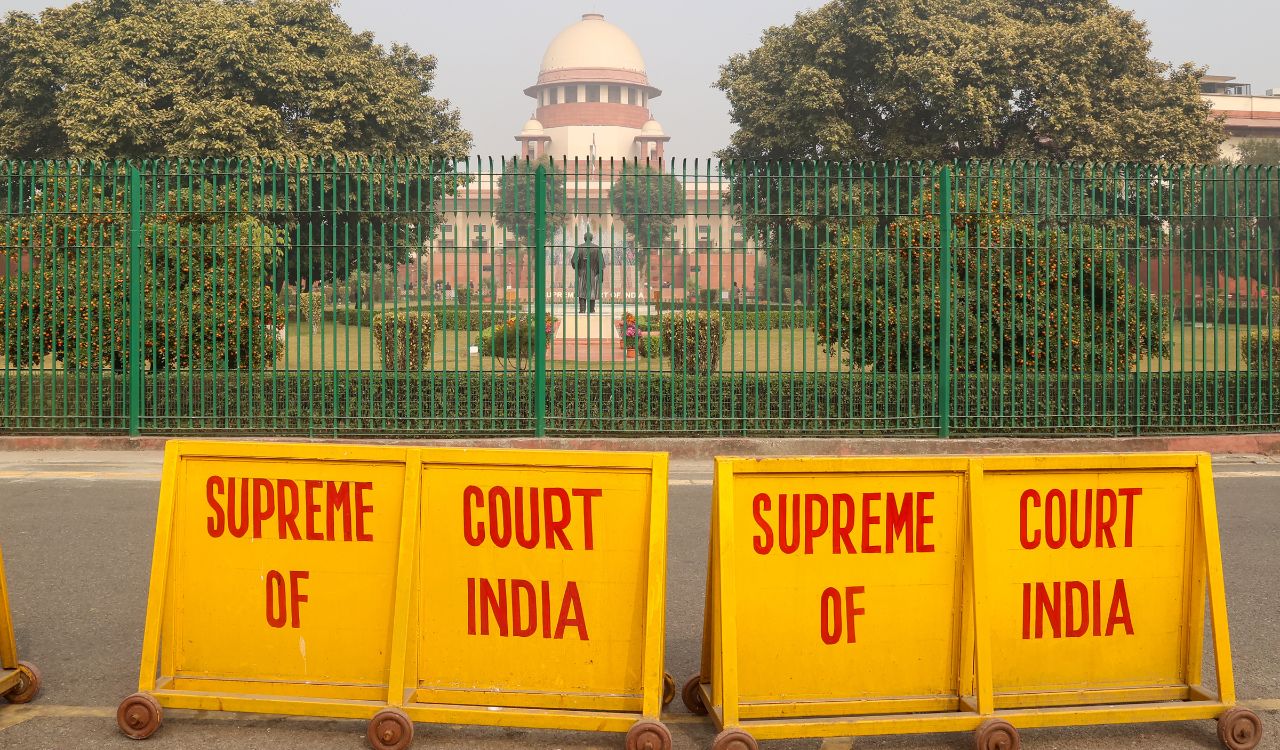
Supreme Court hears challenge to land acquisition for three Ayodhya schemes
The Supreme Court reserved its verdict on a challenge to land acquisition for a housing scheme in Ayodhya. The petitioners cited safeguards under the 2013 law, including social impact assessment and the use of previously acquired land, while the state opposed delaying development



New Delhi: The Supreme Court on Monday reserved its verdict on a petition filed by the Shri Saryu Nagar Vikas Samiti challenging land acquisition for a residential housing scheme in Ayodhya.
On August 6, the Lucknow bench of the Allahabad High Court had directed the Uttar Pradesh Awas Evam Vikas Parishad to determine compensation, rehabilitation and resettlement benefits in compulsory land acquisition proceedings under the Uttar Pradesh Awas Evam Vikas Parishad Adhiniyam, 1965.
The high court had asked the authority to deal with the issues in accordance with the legal principles laid down in its judgment, including those contained in the Right to Fair Compensation and Transparency in Land Acquisition, Rehabilitation and Resettlement Act, 2013.
A bench comprising Chief Justice of India Surya Kant and Justices Joymalya Bagchi and V Mohana reserved its verdict on the Samiti’s appeal against the high court order after hearing submissions from senior advocate Gopal Sankaranarayanan, appearing for the petitioner, and Additional Solicitor General Aishwarya Bhati, representing the state government and its department.
Sankaranarayanan argued that the authorities could not limit the benefits available to affected landowners to monetary compensation, rehabilitation and resettlement while disregarding other safeguards under the 2013 Act, including provisions relating to social impact assessment (SIA), the use of previously acquired land and the acquisition of multi-crop agricultural land.
The bench observed that SIA could not be brushed aside lightly but cautioned that it should not become a “millstone around the neck” of the state government.
The judges also highlighted the need to consider public interest in development projects that were already underway.
During the hearing, Sankaranarayanan contended that the high court’s judgment had effectively restricted the Samiti’s rights to compensation under the 2013 Act, whereas the legislation provided a broader framework of protections for landowners.
He submitted that the distinction drawn in earlier judgments between acquisitions initiated before the 2013 law came into force and those undertaken subsequently was relevant to the dispute.
According to him, the acquisition in the present case was initiated after the new law came into force, but its provisions had not been fully applied.
The Chief Justice questioned the contention that the high court had restricted the Samiti’s rights, pointing out that the judgment provided for benefits under the 2013 Act, or at least its underlying principles, to be applied to the acquisition.
Sankaranarayanan, however, maintained that the dispute extended beyond compensation and rehabilitation benefits to safeguards applicable at the stage of deciding whether and how land could be acquired.
He also relied on Section 8(1)(d) of the 2013 Act, arguing that the government was required to ensure that previously acquired land in the area had not remained unutilised before proceeding with further acquisition.
Sankaranarayanan told the bench that three residential housing schemes had involved the acquisition of 1,407 acres, of which, according to his submissions, only 70 acres had been utilised.
He further said that approximately 1,300 acres remained surplus under the first two schemes and argued that the authorities had not provided adequate details about the utilisation of that land.
The senior lawyer said the challenge was confined to the third scheme. He urged the bench to prevent the scheme from proceeding until the SIA process, which had been initiated and subsequently discontinued, was completed.
Additional Solicitor General Bhati maintained that the authorities had made, or were making, all benefits available under the 2013 Act, including enhanced compensation, solatium and other applicable entitlements.
She said the acquisition framework had been treated as a self-contained code, with benefits under the central legislation being extended to affected landowners.
Bhati argued that once those benefits were available, the dispute had largely become academic and should not delay the development plan.
She also submitted that the project formed part of a broader policy decision and development plan for Ayodhya, comprising multiple components.
She offered to place the complete plan before the court and said development in a major pilgrimage destination could not be stalled in the manner sought by the petitioners.
On the question of future acquisitions, she said the authorities were not opposed to improving the process and would continue to make changes where necessary.
The bench reserved its verdict after hearing the parties.
The respondents include the Uttar Pradesh Awas Evam Vikas Parishad, the Housing Commissioner, the Executive Engineer, the District Magistrate and the Special Land Acquisition Officer.
Earlier, the high court had disposed of a batch of petitions challenging land acquisition proceedings for three housing and development schemes in Ayodhya. It had directed the Uttar Pradesh Awas Evam Vikas Parishad to determine compensation, rehabilitation and resettlement benefits under the 1965 Act in accordance with the legal principles set out in its judgment.

Related News
-

Supreme Court stays probe against Pinarayi Vijayan in CMRL bribery case for a week
-
YSRCP hails Supreme Court directions on Andhra Pradesh local body polls
-
AP civic polls: SC asks state election body to defer publication of final candidates’ list
-
Supreme Court clarifies legal route for complaints against elected candidates