Telangana farmers face paddy cultivation dilemma ahead of Yasangi season
Telangana farmers face uncertainty over paddy cultivation in the upcoming Yasangi season as fine-rice prices encourage sowing. Concerns over irrigation water and power persist, while officials promote pulses, oilseeds and vegetables to reduce water requirements amid forecast El Niño conditions
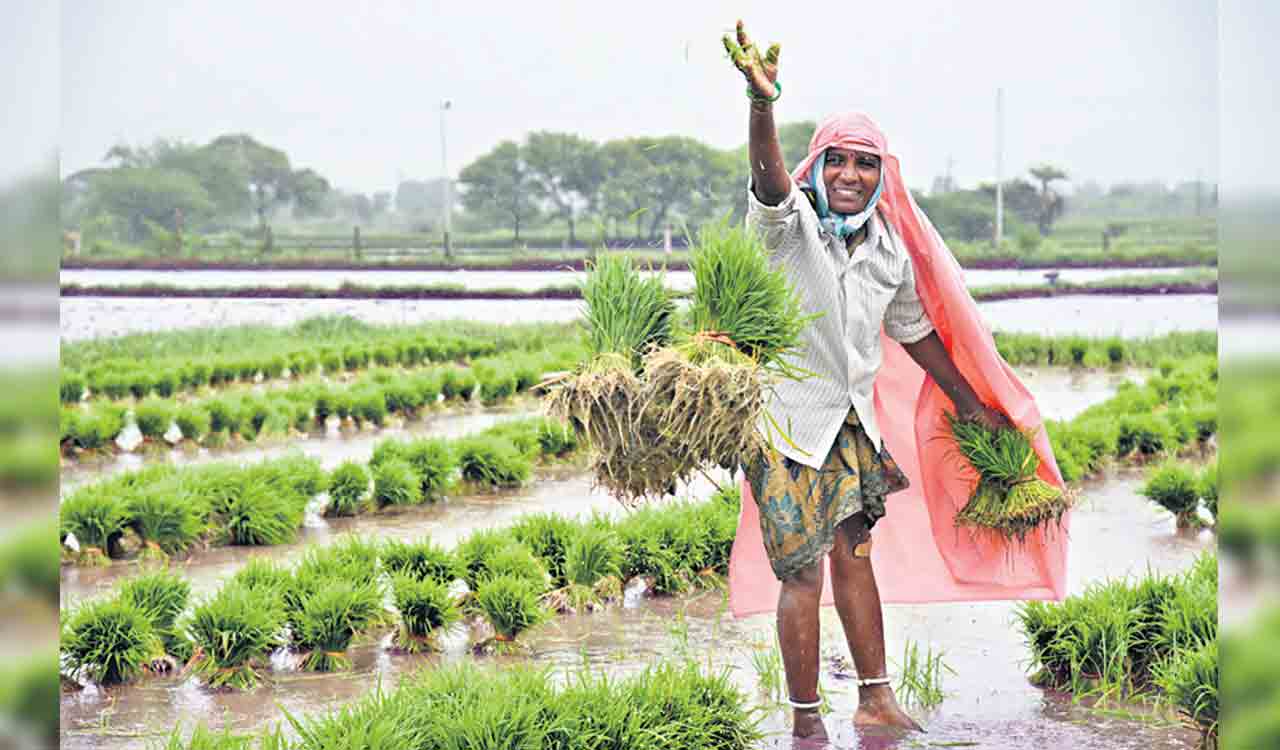


Hyderabad: Uncertainty prevails among farmers over paddy cultivation in the upcoming Yasangi season, even as the State government promotes crop diversification on a large scale, citing water scarcity.
With fine rice fetching record prices in retail markets during the current Vanakalam season, farmers are keen to take up paddy cultivation in Yasangi. However, concerns over the availability of irrigation water and power in the coming season are weighing on their decisions.
Fine rice prices currently range from Rs 6,000 to Rs 6,500 per quintal and are expected to rise further to Rs 8,000 per quintal. The prospect of remunerative prices could encourage more farmers to cultivate paddy in the next season, but such a decision could prove counterproductive, Telangana Farmers Federation president Yadagiri Reddy said.
“Availability of water and power will be crucial in the Yasangi season. Farmers are already facing several hardships in the current season due to insufficient water and power supply. It will be a risky situation next season,” he said.
During the Vanakalam season, paddy was cultivated on about 78 lakh acres across the State. Although the area under paddy generally declines during Yasangi, the anticipated demand for rice in the coming months could further encourage farmers to opt for the crop.
Farmers may delay sowing in the hope that water and power supplies will improve. However, delayed sowing could also postpone harvesting, exposing crops to the risk of drying up as temperatures rise in March.
Against this backdrop, farmers are finding it difficult to decide which crops to cultivate in the next season. Unlike paddy, alternative crops can involve considerable expenditure on inputs and labour, besides requiring resources such as water and power. The availability of storage facilities for harvested produce is another concern.
Given these challenges, many farmers continue to prefer paddy over other crops.
Meanwhile, the Agriculture Department is preparing an action plan for the 2026-27 Rabi (Yasangi) season.
In view of the potential impact of El Niño, the department has convened meetings with senior officials to promote short-duration pulses, oilseeds and high-value vegetable crops as alternatives to paddy, citing their lower water requirements.
Officials have been directed to prioritise crop diversification and create awareness among farmers about alternative crops suited to available water resources and prevailing weather conditions.
Instructions have also been issued to conduct district-wise review meetings on the Yasangi season in the context of El Niño conditions. Field-level officials have been asked to educate farmers on selecting crops with lower water requirements, suitable seed varieties and appropriate crop management practices.

Related News