Three Kaleshwaram barrages may need Rs 2,500 crore for restoration
Restoration of the three Kaleshwaram barrages could cost Telangana around Rs 2,500 crore, with Medigadda alone accounting for over Rs 700 crore. The State is considering a separate funding mechanism while negotiating contractor dues and targeting completion by June 2027
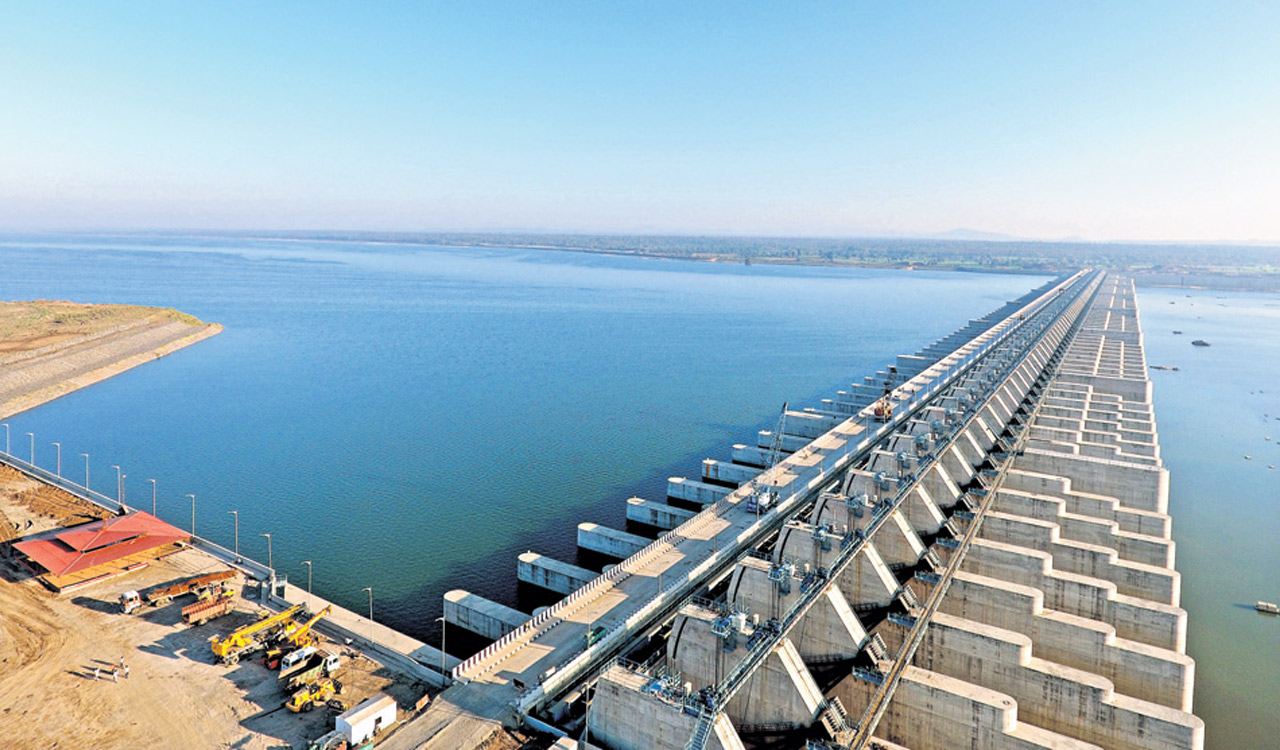


Hyderabad: Nearly three years after the Medigadda barrage suffered structural damage, the Telangana government has estimated that restoring the three Kaleshwaram barrages could cost around Rs 2,500 crore. The prolonged delay is likely to add to the burden on the State exchequer, with the government now considering a separate corporation or other mechanism to mobilise funds for the works.
Medigadda alone is expected to cost more than Rs 700 crore. The final estimate will be known after the rehabilitation designs are approved. The government is planning to complete the restoration by June 2027.
The proposed expenditure has raised questions over why the restoration was not taken up earlier, particularly when the damage occurred within the contractual framework under which the construction agencies were responsible for defect rectification. The State is now negotiating fresh agreements with the agencies even as more than Rs 800 crore in contractor bills remains pending.
About Rs 460 crore is reportedly due to L&T for Medigadda and around Rs 170 crore each to the agencies that executed the Annaram and Sundilla barrages. Contractors have reportedly pressed for settlement of their dues before taking up fresh restoration works.
The government had initially cited the need to await the National Dam Safety Authority (NDSA) report before deciding on restoration. However, even after the NDSA submitted its recommendations, the process did not move at the required pace. The NDSA recommended rehabilitation of all three barrages and said Medigadda’s Block 7 had suffered irreversible damage.
The issue of responsibility has also complicated the process. The judicial commission that examined the Medigadda failure held L&T responsible for pending defect-rectification and restoration works, including Block 7, with recovery provisions if the State had to execute the work.
The proposed restoration design envisages construction of diaphragm walls at all three barrages and expansion of the stilling basins to withstand hydraulic forces. The stilling basin may have to be extended by up to 60 metres at Medigadda and 45-50 metres at Annaram and Sundilla.
At Medigadda, the cost will depend on the treatment of the damaged seventh block. Options include strengthening and modifying the block or dismantling and rebuilding it, with the latter involving higher expenditure.
An Oversight Committee is scheduled to meet in New Delhi on October 12 to examine the rehabilitation designs and test results. The meeting is expected to provide greater clarity on the scope and cost of the works.
The State government is also examining pending maintenance bills for the three pump houses, which have reportedly remained unpaid for the last three years. Engineers have warned that prolonged delays in settling dues and finalising maintenance agreements could lead to further operational problems.

Related News