UN warns ‘wrecking ball’ El Nino could trigger global economic shocks
The United Nations has warned that a potentially unprecedented El Nino event could trigger extreme heat, droughts, floods and cyclones across Asia, the Pacific, Africa and Latin America, causing humanitarian crises and economic shocks worldwide. UN officials have called for urgent global action and preparedness measures, warning that the impacts could last well beyond the climatic event's peak.
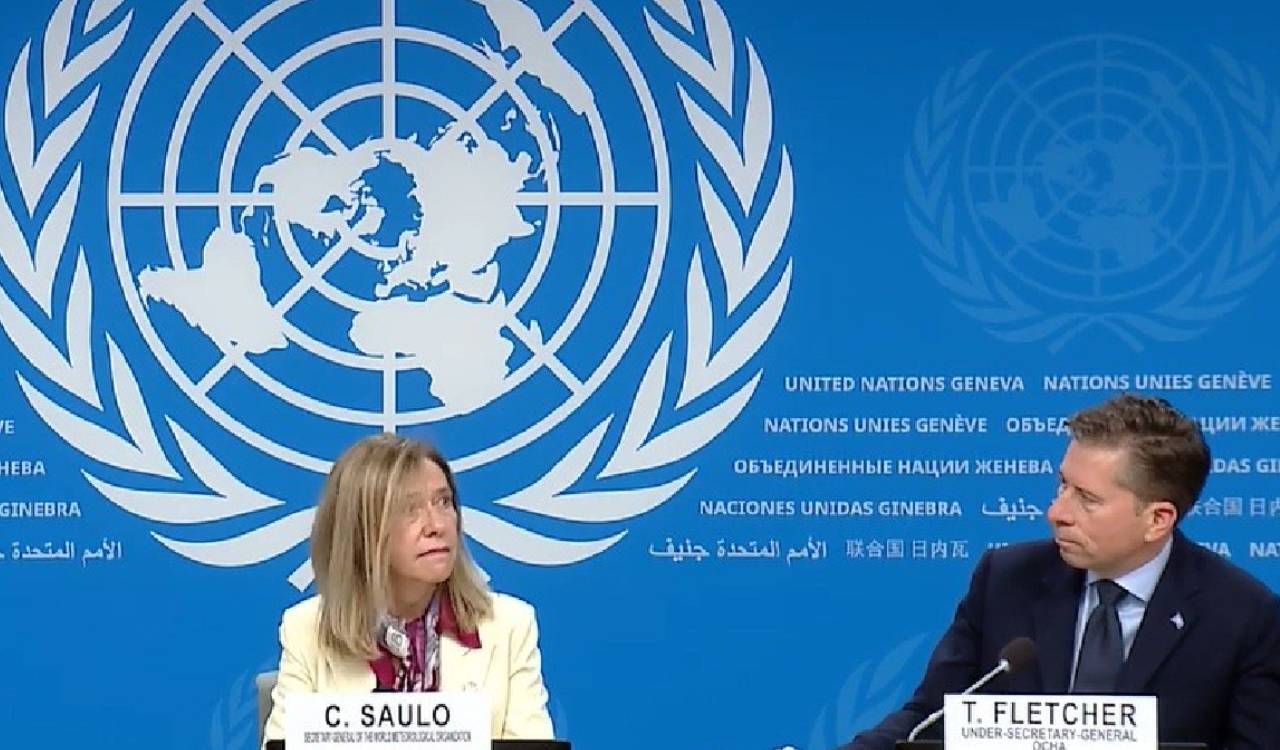


United Nations: The United Nations (UN) is warning that the El Nino is a “wrecking ball” that will create “shocks for the global economy” and hit Asia and other regions in the Global South with droughts, floods and extreme heat.
“This El Nino is a behemoth. It is a wrecking ball. It will tear through, as you’ve heard, Latin America, Eastern and Southern Africa, Asia and the Pacific with extreme heat, droughts and floods,” UN Under-Secretary-General Tom Fletcher said on Wednesday.
“The damage will not stay in the countries in the immediate path of this El Nino,” he said.
“It will create economic shocks for the global economy and drive further conflict, displacement, migration.”
“The next two weeks are the critical window to act before that damage is done” and “Asia and the Pacific must prepare for droughts, floods and cyclones,” Fletcher said at a news conference in Geneva.
The UN Under-Secretary-General proposed “a much wider global mobilisation of solidarity, expertise and action across governments, civil societies, academics, businesses”.
“I’m writing to countries with existing disaster response capacity, part of our coordinated emergency network, to ask them to place that capacity on immediate standby to support the effort,” Fletcher said.
India has taken on an international role in weather disaster forecasting and relief in the aftermath.
New Delhi’s India–UN Development Partnership Fund has sponsored projects for early warning systems, and disaster risk reduction in seven Pacific Island countries.
India along with the other members of the Quad, the US, Japan and Australia, also has Humanitarian Assistance and Disaster Relief (HADR) programmes for the Indo-Pacific region.
Neither Fletcher nor the World Meteorological Organisation (WMO) Head Celeste Saulo, who spoke at the briefing, gave country-specific information.
“It would be an extraordinary failure to see this crisis coming, to hear the predictions from the experts, and yet still squander the opportunity to protect people in its path,” Fletcher said, whose portfolio is humanitarian and emergency relief.
Saulo said that although the El Nino will peak towards the end of this year, “its impacts will be felt long after that”.
It “could be (of) unprecedented in strength, literally off the monitoring charts that we have used for the past four decades,” she added.
For Southeast Asia, she foresaw “warmer conditions and rainfall deficits increase the risk of heat exposure and place additional pressure on agriculture and water supplies, like the increasing wildfire and smoke hazards risks we are already seeing”.
A news bulleting from the WMO last week said that “normal to above normal maximum and minimum temperatures are likely” over most parts of the southern part of South Asia for the rest of the year.

Related News
-

Outer space should remain realm for corporation, not conflict: MP Sudha Murty tells UNGA
-
Telangana planning foodgrain buffer for 3.42 crore PDS beneficiaries: Uttam Kumar reddy
-
Drought-like conditions in 315 mandals in T’gana: Agriculture Minister
-
Medak farmers urged to opt for low water-consuming crops during Yasangi season