Venus and Jupiter to dazzle sky-watchers in rare conjunction on June 9
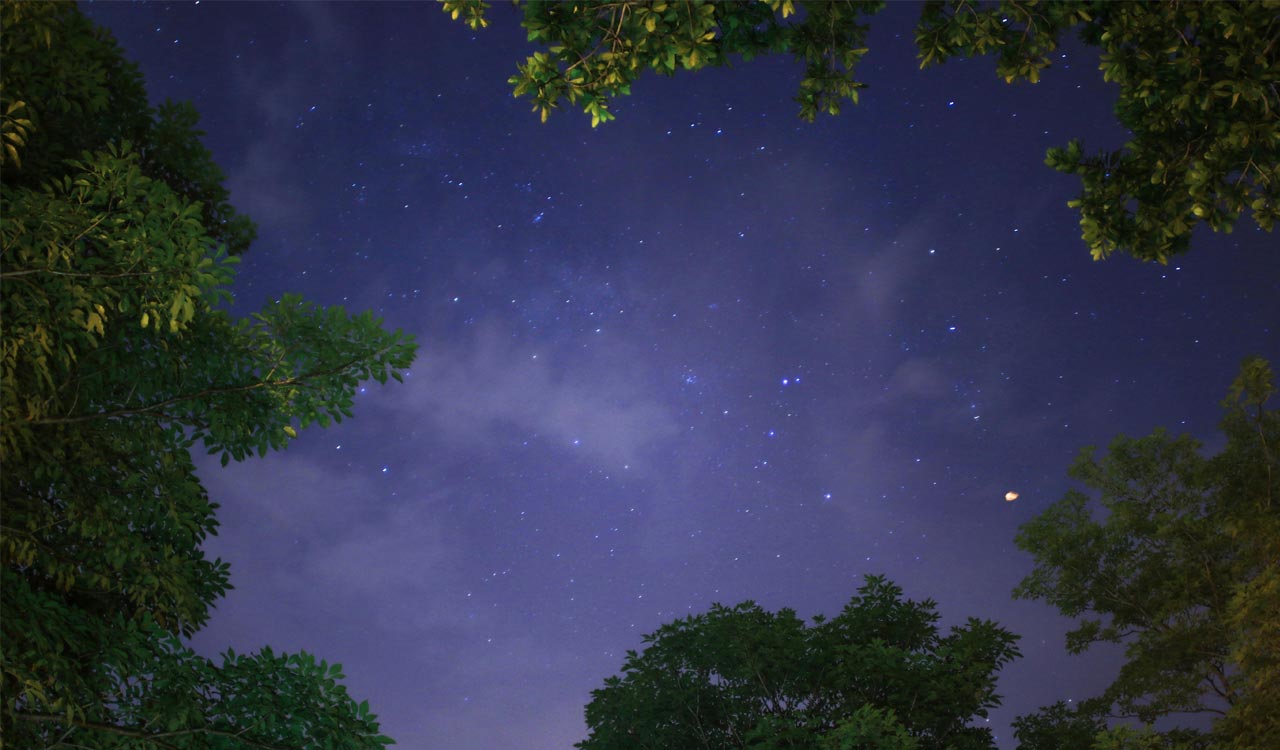
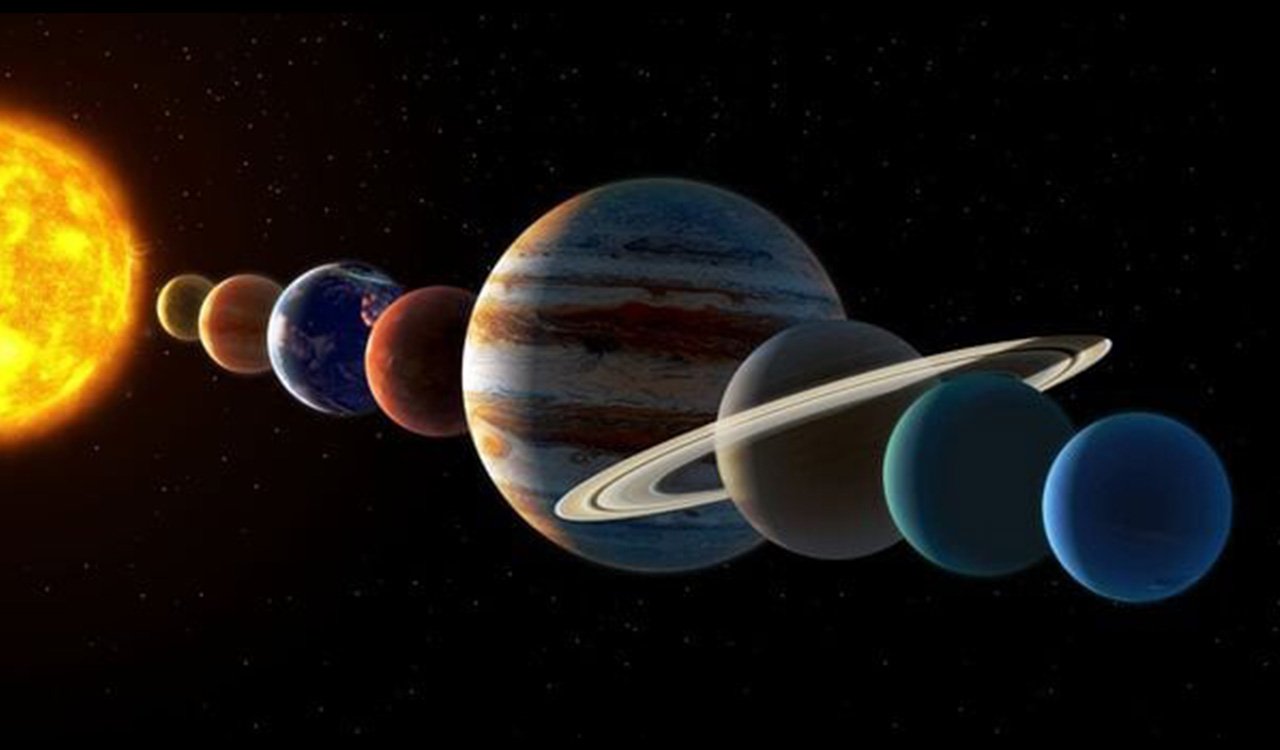
Sky-watchers across India will be able to witness a stunning conjunction of Venus and Jupiter on June 9. The two brightest planets in the night sky will appear unusually close together, creating one of the year's most spectacular naked-eye astronomical events.
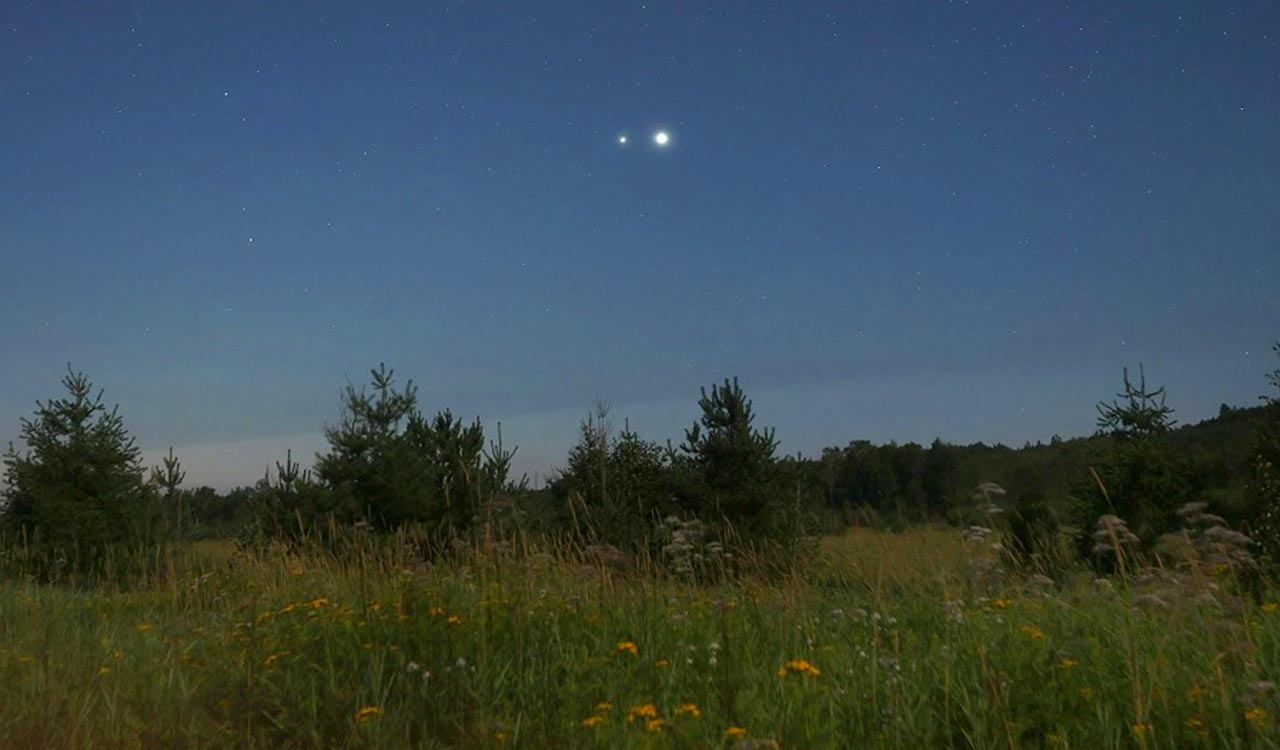


Hyderabad: On June 9, sky-watchers will have the opportunity to witness one of the most captivating astronomical sights in the western sky after sunset.
Two brightest planets visible from Earth—Venus and Jupiter—will appear remarkably close to each other in a striking celestial event known as a planetary conjunction, according to Dr. Y. Ravi Kiron, Director, Nehru Planetarium Prime Minister Museum and Library, New Delhi.
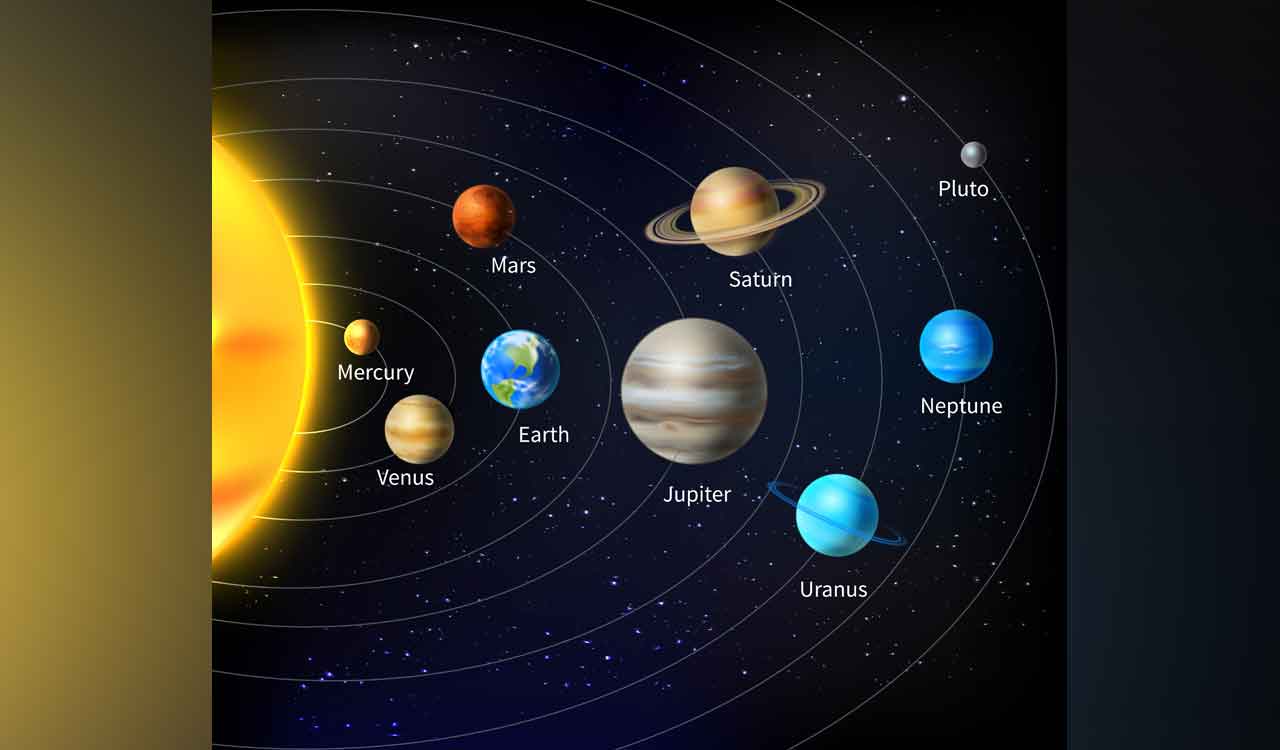
Although Jupiter is at a distance of 900 million km from Earth and Venus at 180 million km, the two planets appear side by side in the sky due to their alignment along our line of sight.
At their closest approach, they will be separated by an angular distance of 1.5 degrees which is roughly equal to the width of a little finger held at arm’s length, Dr Ravi Kiron said.
Both Venus and Jupiter are currently visible in the evening sky. In the coming days, Venus will appear progressively higher above the western horizon, while Jupiter will gradually descend toward the Sun.
On 9 June, their apparent paths will bring them extremely close together, creating a beautiful and memorable sight for observers, he explained.
Jupiter takes nearly 12 years to complete one orbit around the Sun, whereas Venus completes its orbit in about 224 days. Consequently, conjunctions between these two planets occur approximately every 10 to 15 months, Dr Ravi Kiron said.
The previous Venus–Jupiter conjunction was observed on 12 August 2025. While conjunctions between Venus and Jupiter are not uncommon, they remain among the most spectacular naked-eye astronomical events.
The conjunction will be easily visible to the naked eye throughout India, although binoculars or a telescope may offer an even more impressive view, he said.
To celebrate this celestial event, Nehru Planetarium, Prime Ministers Museum and Library, will organize a free public sky-watching session on the front lawns of Teen Murti Bhawan from 7:30 PM onwards.
The conjunction will be visible until approximately 8:30 pm, subject to weather and sky conditions.
Astronomy enthusiasts are invited to join this special observation session.

Related News