Warangal numismatist’s rare collection traces Ganesha’s presence on ancient coins
Warangal numismatist Vaikunta Chary Ragi’s collection of rare copper coins highlights the role of religious imagery in South Indian coinage. Coins from the Thanjavur and Madurai Nayaka periods feature Ganesha, offering insights into the region’s religious and artistic traditions.
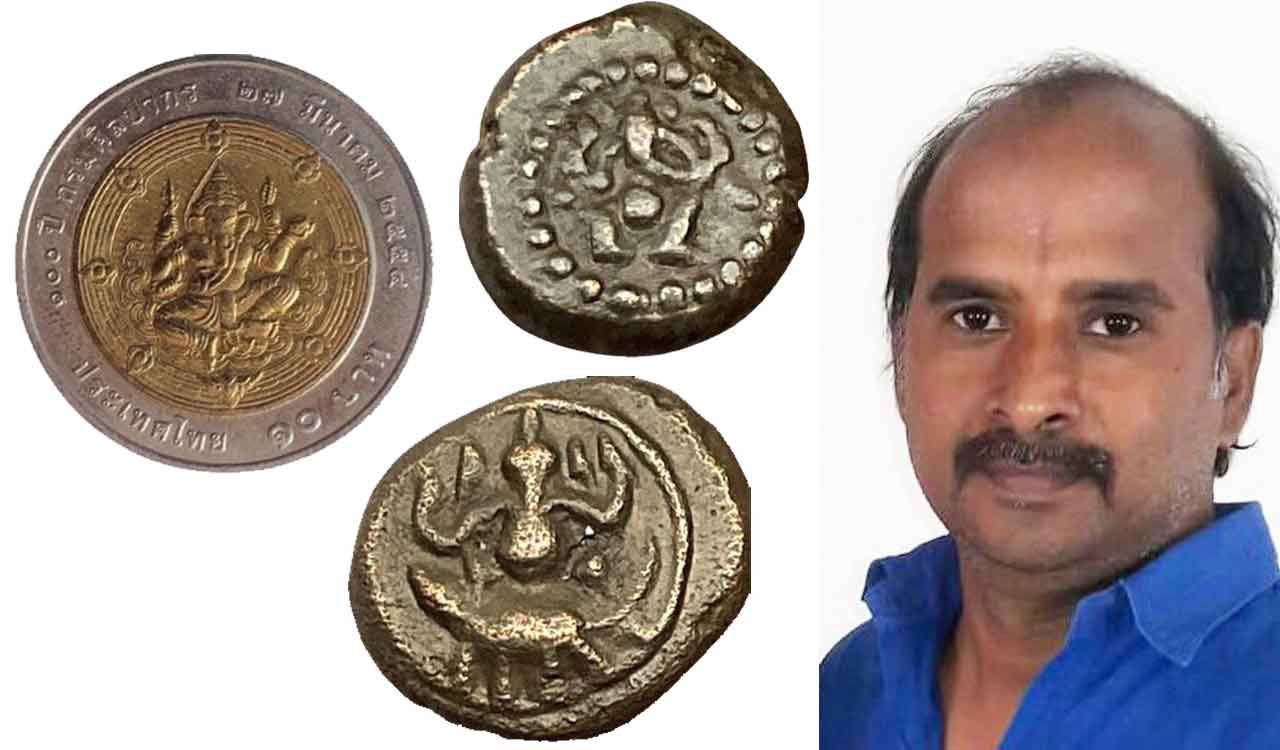


Hyderabad: Warangal-based numismatist Vaikunta Chary Ragi has a collection of rare 17th- and 18th-century copper coins featuring Lord Ganesha, highlighting the religious symbolism, political authority and artistic traditions of South Indian coinage.
Coinage attributed to the Thanjavur Nayaka period provides evidence of its religious and political environment. Copper Kasu coins bore religious imagery, including Ganesha seated on or accompanied by his mouse vehicle, Mushika, and Shiva Linga motifs.
Chary says such imagery demonstrated that religious symbolism formed an important part of the visual language of South Indian coinage.
Copper coinage of Madurai Nayakas also offers insights into the religious traditions, artistic expression, and multilingual character of South India during the 16th and 17th centuries. Several varieties feature Ganesha, reflecting Hindu religious symbolism in Nayaka-period coinage.
Coins from this era frequently blended commerce with devotion. The presence of Lord Ganesh on currency underscores the deity’s universal reverence across different kingdoms and dynasties, he said.
Chary’s collection also includes a pair of 10 Baht Lord Ganesha commemorative coins issued for the 100th anniversary of Thailand’s Fine Arts Department. The reverse depicts Lord Ganesha seated within an elaborate ornamental design.

Related News