WEF delegation meets Naidu, discusses C4IR roadmap
A World Economic Forum delegation met Andhra Pradesh Chief Minister Chandrababu Naidu to discuss the roadmap for India’s first thematic Centre for the Fourth Industrial Revolution. Discussions focused on green energy, cybersecurity, digital transformation and infrastructure development linked to the state’s clean energy ambitions
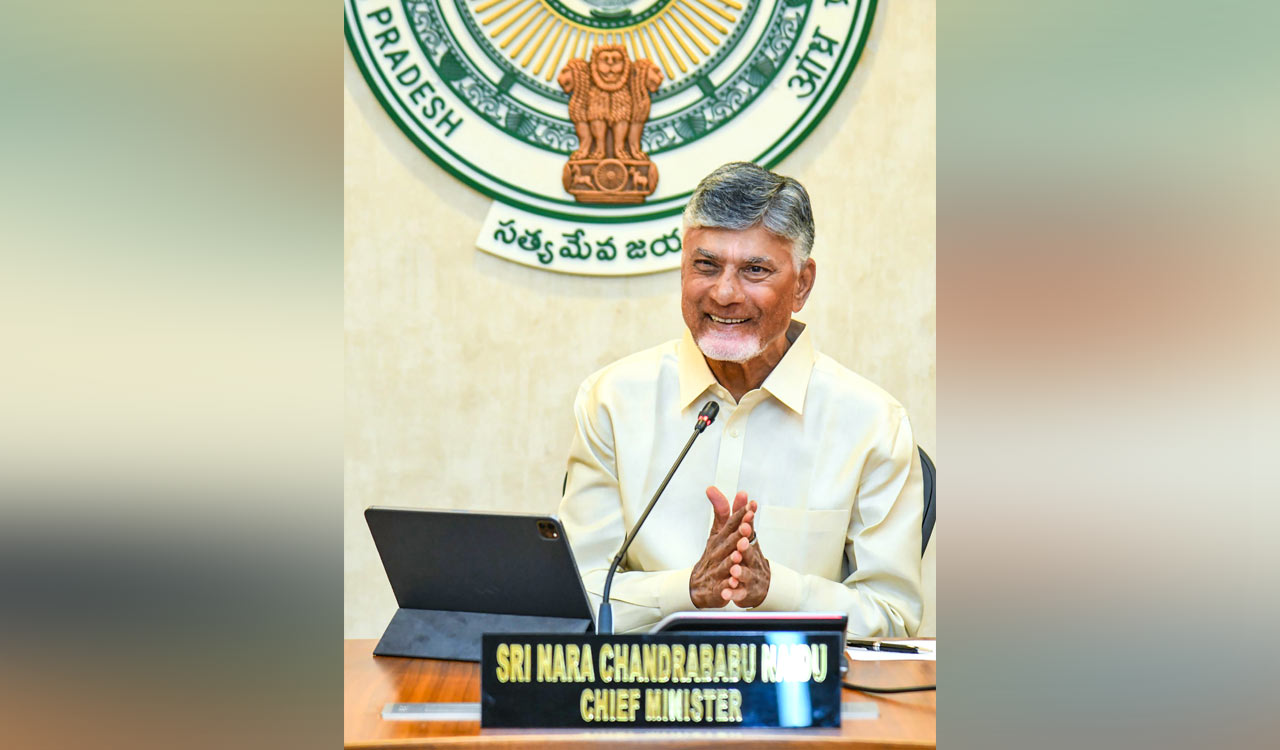


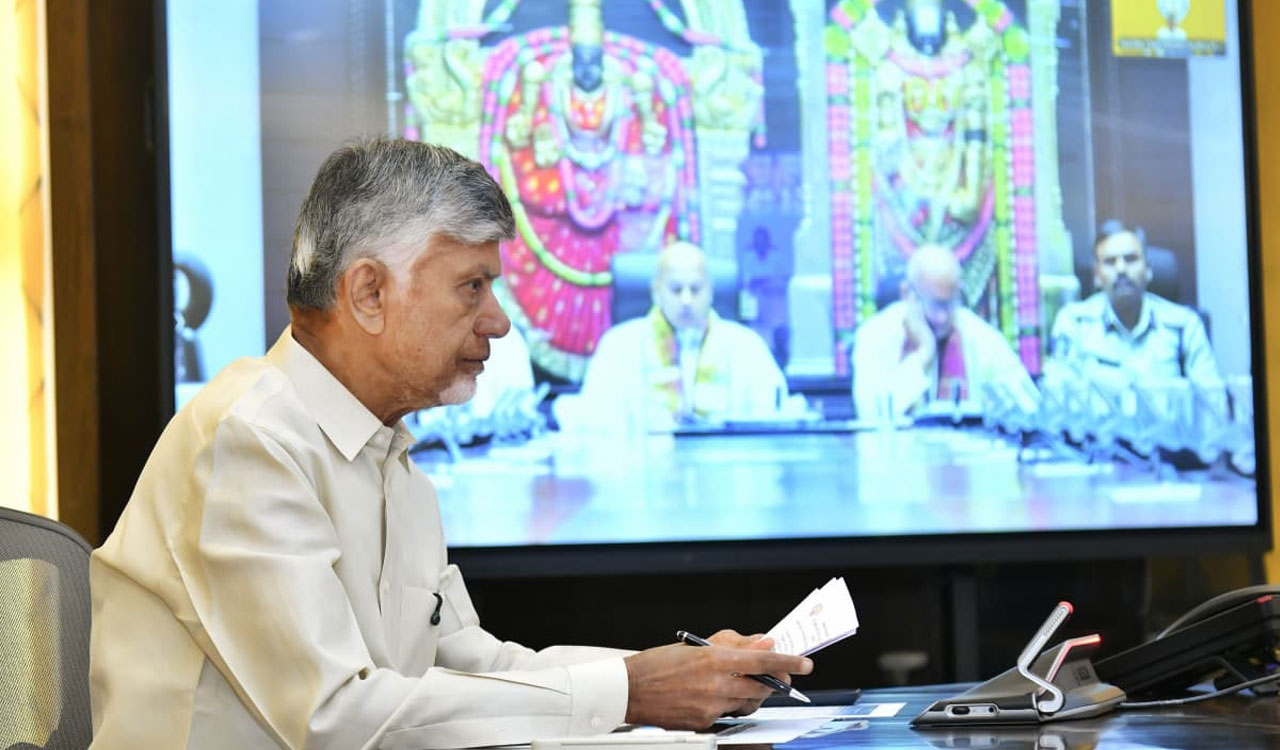
Amaravati: A WEF delegation on Friday met Andhra Pradesh Chief Minister N Chandrababu Naidu to discuss the roadmap for the country’s first thematic Centre for the Fourth Industrial Revolution (C4IR).
The delegation discussed the proposed centre’s role in areas such as green energy, energy transition and cyber resilience, while the chief minister directed officials to ensure Andhra Pradesh’s progress is showcased at the next Davos summit.
“Andhra Pradesh should emerge as a global hub for green energy, digital transformation and cybersecurity,” Naidu said during a meeting with a World Economic Forum (WEF) delegation.
An agreement had earlier been signed between Andhra Pradesh Transmission Corporation (APTRANSCO) and the WEF for establishing the C4IR in Andhra Pradesh, an official release said.
The Fourth Industrial Revolution Network is a platform for multi-stakeholder collaboration, bringing together public and private sectors to help ensure emerging technologies deliver benefits for society while minimising risks.
Meanwhile, reviewing the power sector, the chief minister examined measures being undertaken to strengthen the transmission network through the proposed Green Energy Corridor.
According to officials, proposals worth nearly Rs 22,000 crore have been prepared under Green Energy Corridor Phase-III to integrate about 18 gigawatts (GW) of green energy into the main power grid.
The proposed capacity includes 11 GW of solar power and around 7 GW from pumped storage projects, an official release said. To support the initiative, the state plans to lay 2,261 km of transmission lines and establish five major pooling stations with a combined capacity of 9,500 megawatts (MW) at Mudigubba, Talupula, Ramayapatnam, Porumamilla and Koppaka. Observing that Andhra Pradesh has set a target of generating 160 GW of green energy, Naidu said the required power infrastructure should be developed to meet future demand.
He noted that the Green Energy Corridor would support upcoming data centres and create investment opportunities across multiple sectors.
The review also covered implementation of the ‘PM Surya Ghar: Muft Bijli Yojana’ and ‘PM-KUSUM’ schemes along with the solarisation of government buildings, the release said.
PM Surya Ghar: Muft Bijli Yojana aims to light up one crore households by providing up to 300 units of free electricity every month.
The Pradhan Mantri Kisan Urja Suraksha evam Utthaan Mahabhiyan (PM-KUSUM) aims to encourage the use of renewable energy in the agriculture sector and help farmers reduce irrigation costs.
Officials informed the chief minister that solarisation of government buildings with a capacity of 200 MW has commenced under the Renewable Energy Service Company (RESCO) model through net metering systems.
As part of a pilot initiative, 78 Gurukul schools and hostels in Chittoor district have been selected, while 2,898 schools and hostels have been identified for solarisation to transform them into Net Zero campuses.
The CM observed that increased use of solar energy in government offices and educational institutions would substantially reduce the state’s electricity burden and directed officials to expedite implementation.
Officials informed him that Andhra Pradesh currently ranks fourth in implementation of the PM Surya Ghar scheme, following which Naidu instructed departments to strive for the top position.
He also directed officials to complete installation of solar panels in the remaining SC and ST households by the end of August after already covering 1,35,821 homes.
Further, the chief minister asked officials to expedite a programme aimed at installing solar panels in 10 lakh BC households with subsidy support.
Naidu also instructed officials to accelerate the establishment of EV charging stations across the state. Officials informed him that the process of setting up 577 charging stations at 131 locations has already commenced.
Officials further briefed the chief minister on initiatives being undertaken with support from Pravah and an Artificial Intelligence Lab to reduce technical power losses in the Andhra Pradesh Eastern Power Distribution Company Limited region.
They also informed him that Andhra Pradesh is developing the country’s first Digital Twin Grid for power supply management.
According to officials, peak power demand in the state between June and November 2026 is expected to reach 12,226 MW, while daily demand may range between 226 million and 261 million units.
Officials noted that the state recorded a peak demand of 15,016 MW on May 21, while electricity consumption till May 27 stood at 7,060 million units, registering growth over the previous year.

Related News