Xbox layoffs: Microsoft’s ‘reset’ reshapes gaming giant amid studio cuts
Microsoft's Xbox division is undergoing sweeping restructuring, with thousands of layoffs and major studio changes affecting popular franchises like Doom and The Elder Scrolls Online. The move has sparked criticism, raising concerns about creativity, long-term growth, and the future of Xbox's gaming strategy.


Hyderabad: The last fortnight has been nothing short of a nightmare for fans, employees, and everyone connected to the Xbox brand, as Microsoft’s gaming division chose to implement “Resetting Xbox” – a move that saw 3,200 employees lose jobs and 4 studios leave the division.
Resulting in protests, unionisation, and legal action, the resetting of the world’s largest gaming brand in terms of financial value and size of game catalogue brings to a halt the game-focused expansion ambition from just two years ago.
The full ramifications of the “resetting” are yet to unravel as studios, fans, and employees lament the widespread cuts.
It is difficult to explain the magnitude of these recent decisions based purely on numbers; thus, I would like to turn to examples to illustrate the unique predicament we find ourselves in as fans of video games.
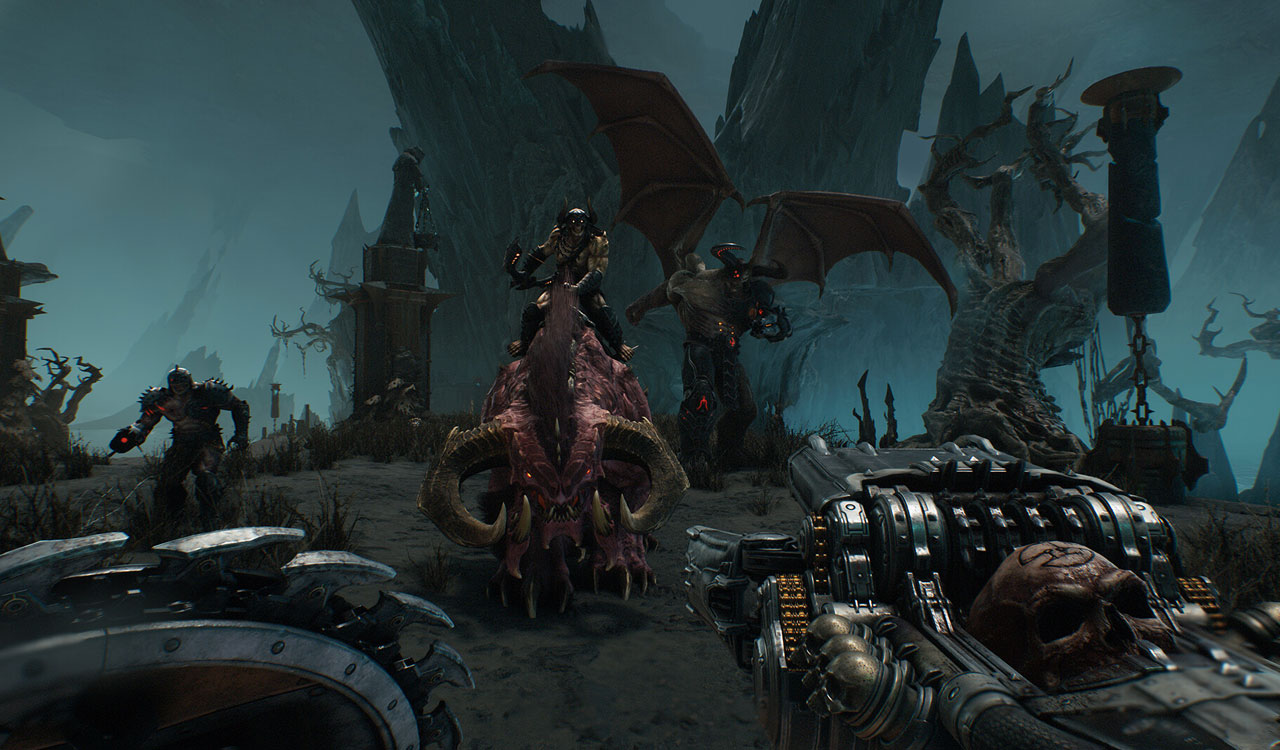
First, there are few games as iconic and popular as Doom in the first-person shooter (FPS) genre. Doom’s developer, id Software, was acquired by Microsoft alongside Bethesda and Arkane in March 2021 as part of a $7.5 billion deal when it bought their parent company, ZeniMax.
Doom has enjoyed a critically acclaimed, much-loved resurgence since the 2016 reboot of the franchise, the subsequent launch of Doom Eternal, and 2025’s Doom: The Dark Ages. Dark Ages received praise upon its release.
The July 6th announcement, however, saw 50% of the staff at id Software let go, resulting in the loss of crucial manpower proficient with the game’s legendary engine, id Tech. The reset has led Doom makers to highlight how the studio’s growth has been irretrievably hampered. Microsoft, on the other hand, claims no essential resources were lost as part of this restructuring.
Secondly, Microsoft’s reset sees a return to first-party exclusivity and a renewed willingness to compete against Sony for unique, console-specific gaming experiences.
The move is expected to make Xbox hardware desirable again, spearheaded by the popularity of franchises like Fallout, Call of Duty, and The Elder Scrolls.
However, one team that has been gutted as part of this shift toward single-player blockbusters is ZeniMax Online Studios, the developers behind the award-winning The Elder Scrolls Online (ESO).
With an estimated 3 million monthly active players, the world of ESO keeps fans engaged as we all eagerly await The Elder Scrolls VI, which remains nowhere in sight. These layoffs are expected to shrink the ESO team significantly.
Doom and ESO are just two of many such cases likely to emerge across the Xbox umbrella. However, as is evident in both instances, the decisions being made are not dictated by economic logic.
They are instead driven by metrics of visibility and popularity, where Xbox funds and supports only its largest, most recognizable titles while sacrificing smaller teams and creative projects.
There is far more to games than money, popularity, and massive production scale. If Xbox continues to “reset” along these lines, it risks killing the golden goose: because games then will be anything but fun.

Related News