2023 hottest year on record: Earth shows more signs of feverish planet
European climate agency Copernicus said the year was 1.48 degrees Celsius (2.66 degrees Fahrenheit) above pre-industrial times
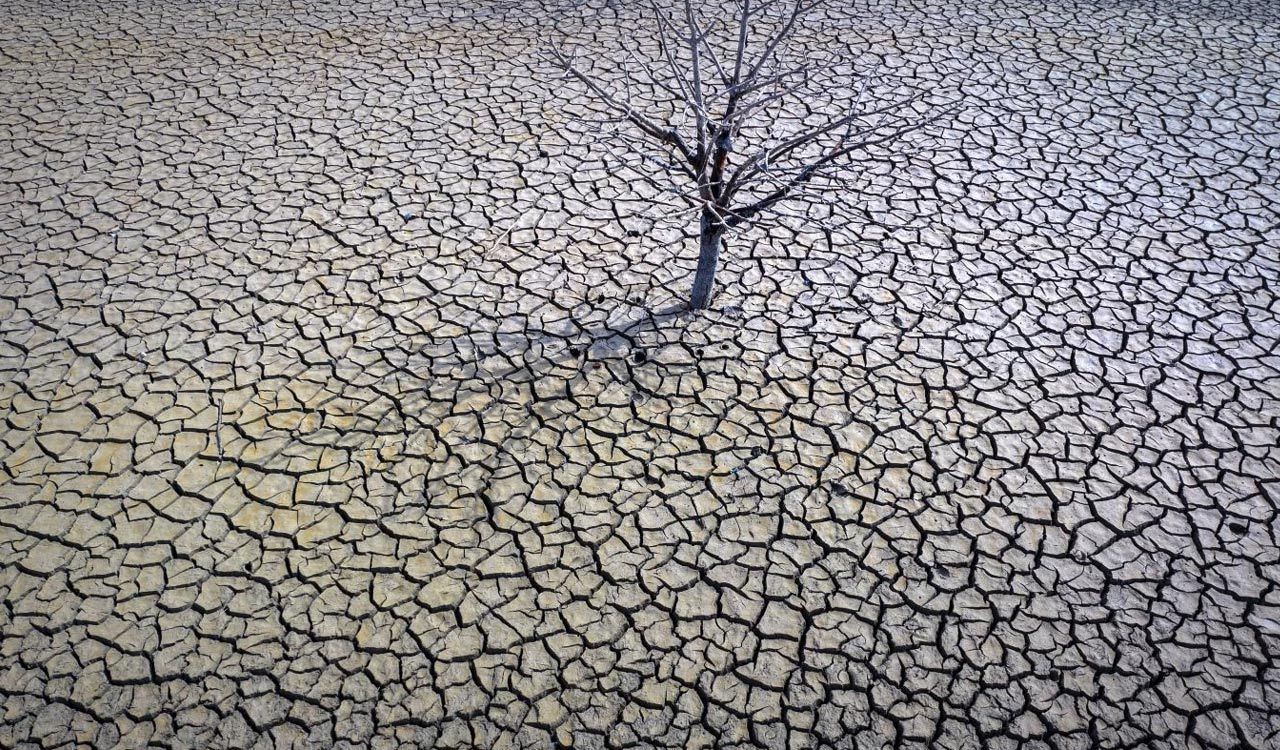


Washington: Earth last year shattered global annual heat records, flirted with the world’s agreed-upon warming threshold and showed more signs of a feverish planet, the European climate agency said on Tuesday.
In one of the first of several teams of science agencies to calculate how off-the-charts warm 2023 was, the European climate agency Copernicus said the year was 1.48 degrees Celsius (2.66 degrees Fahrenheit) above pre-industrial times. That’s barely below the 1.5 degrees Celsius limit that the world hoped to stay within in the 2015 Paris climate accord to avoid the most severe effects of warming.
Also Read
And January 2024 is on track to be so warm that for the first time a 12-month period will exceed the 1.5-degree threshold, Copernicus Deputy Director Samantha Burgess said. Scientists have repeatedly said that Earth would need to average 1.5 degrees of warming over two or three decades to be a technical breach of the threshold.
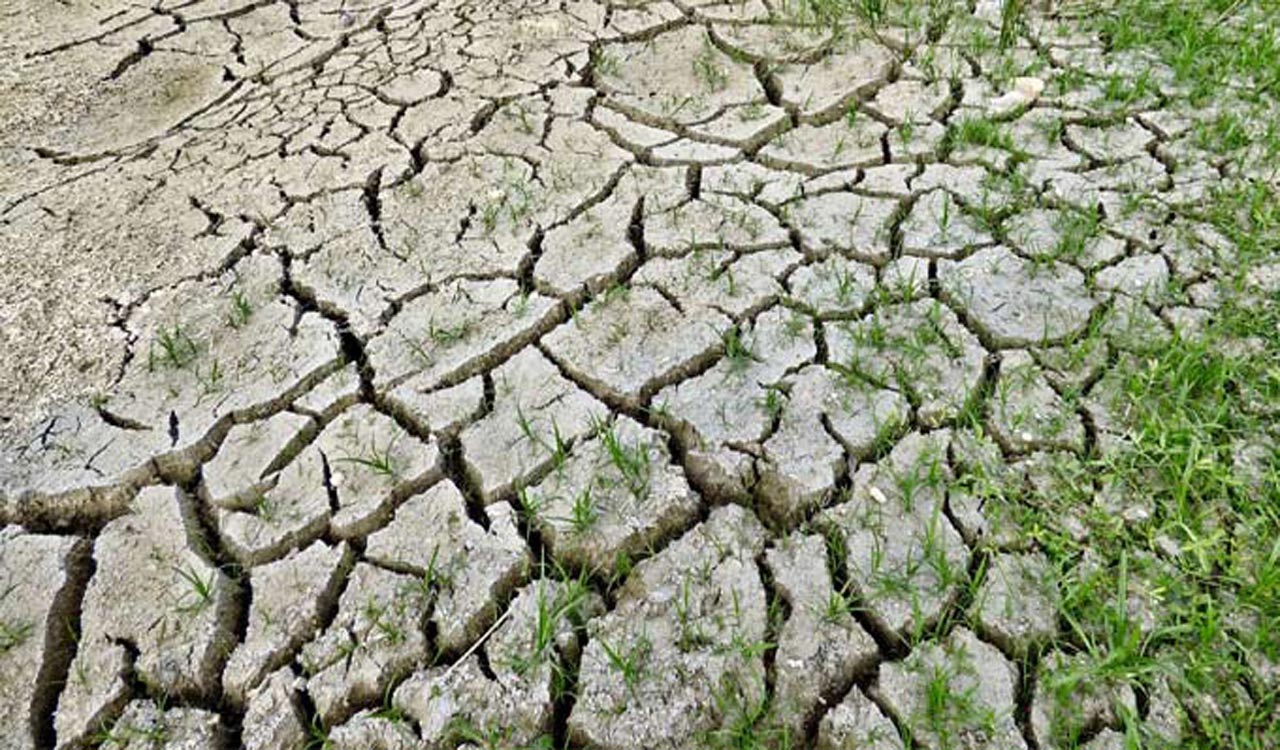
The 1.5 degree goal “has to be (kept) alive because lives are at risk and choices have to be made,” Burgess said. “And these choices don’t impact you and I but they impact our children and our grandchildren.” The record heat made life miserable and sometimes deadly in Europe, North America, China and many other places last year. But scientists say a warming climate is also to blame for more extreme weather events, like the lengthy drought that devastated the Horn of Africa, the torrential downpours that wiped out dams and killed thousands in Libya and the Canada wildfires that fouled the air from North America to Europe.
For the first time, nations meeting for annual United Nations climate talks in December agreed that the world needs to transition away from the fossil fuels that are causing climate change, but they set no concrete requirements to do so.
Copernicus calculated that the global average temperature for 2023 was about one-sixth of a degree Celsius (0.3 degrees Fahrenheit) warmer than the old record set in 2016. While that seems a small amount in global record-keeping, it’s an exceptionally large margin for the new record, Burgess said. Earth’s average temperature for 2023 was 14.98 degrees Celsius (58.96 degrees Fahrenheit), Copernicus calculated.
“It was record-breaking for seven months. We had the warmest June, July, August, September, October, November, December,” Burgess said. “It wasn’t just a season or a month that was exceptional. It was exceptional for over half the year.” There are several factors that made 2023 the warmest year on record, but by far the biggest factor was the ever-increasing amount of greenhouse gases in the atmosphere that trap heat, Burgess said. Those gases come from the burning of coal, oil and natural gas.
Other factors including the natural El Nino — a temporary warming of the central Pacific that alters weather worldwide — other natural oscillations in the Arctic, southern and Indian oceans, increased solar activity and the 2022 eruption of an undersea volcano that sent water vapour into the atmosphere, Burgess said.
Malte Meinshausen, a University of Melbourne climate scientist, said about 1.3 degrees Celsius of the warming comes from greenhouse gases, with another 0.1 degrees Celsius from El Nino and the rest being smaller causes.
Given El Nino and record ocean heat levels, Burgess said it’s “extremely likely” that 2024 will be even hotter than 2023.
Copernicus records only go back to 1940 and are based on a combination of observations and forecast models. Other groups, including the United States’ National Oceanic and Atmospheric Administration and NASA, the United Kingdom’s Meteorological Office and Berkeley Earth go back to the mid-1800s and will announce their calculations for 2023 on Friday, with expectations of record-breaking marks.
The Japanese Meteorological Agency, which uses similar techniques as Copernicus and goes back to 1948, late last month estimated that it was the warmest year at 1.47 degrees Celsius (2.64 degrees Fahrenheit) above pre-industrial levels. The University of Alabama Huntsville global dataset, which uses satellite measurements rather than ground data and dates to 1979, last week also found it the hottest year on record, but not by as much.
Though actual observations only date back less than two centuries, several scientists say evidence from tree rings and ice cores suggest this is the warmest the Earth has been in more than 100,000 years.
“2023 was probably hottest year on Earth in about 125,000 years,” said Woodwell Climate Research Centre climate scientist Jennifer Francis. “Humans were around before that but it’s certainly fair to say it’s the hottest since humans became civilised, depending on the definition of civilised.” Amid record hot months were days that were downright unprecedented hot across the globe.
For the first time, Copernicus recorded a day where the world averaged at least 2 degrees Celsius (3.6 degrees Fahrenheit) more than pre-industrial times. It happened twice and narrowly missed a third day around Christmas, Burgess said.
And for the first time, every day of the year was at least one degree Celsius (1.8 degrees Fahrenheit) warmer than pre-industrial times. For nearly half the year — 173 days — the world was 1.5 degrees warmer than the mid-1800s.
Meinshausen, the Australian climate scientist, said it’s natural for the public to wonder whether the 1.5-degree target is lost. He said it’s important for people to keep trying to rein in warming.
“We are not abolishing a speed limit, because somebody exceeded the speed limit,” he said. “We double our efforts to step on the brakes.”

Related News
-

Tenant farmers seek Cultivator Cards as Telangana assesses drought, El Nino impact
-
Explainer: How CO₂ rise is changing savanna grasslands
-
Worsening El Nino threatens Asia with drought, potentially raising food prices globally
-
Incredible to watch capability ISRO is developing in science missions: Indian-American NASA senior official