A Festival Beyond Faith: Basant Panchami at Hyderabad’s Shaikhji Hali Dargah
Basant Panchami is observed at Hyderabad’s Hazrath Shaikhji Hali Dargah with qawwali, poetry and yellow flowers. Rooted in Sufi tradition, the celebration recalls Amir Khusrau’s legacy and highlights India’s long history of shared cultural and spiritual spaces.
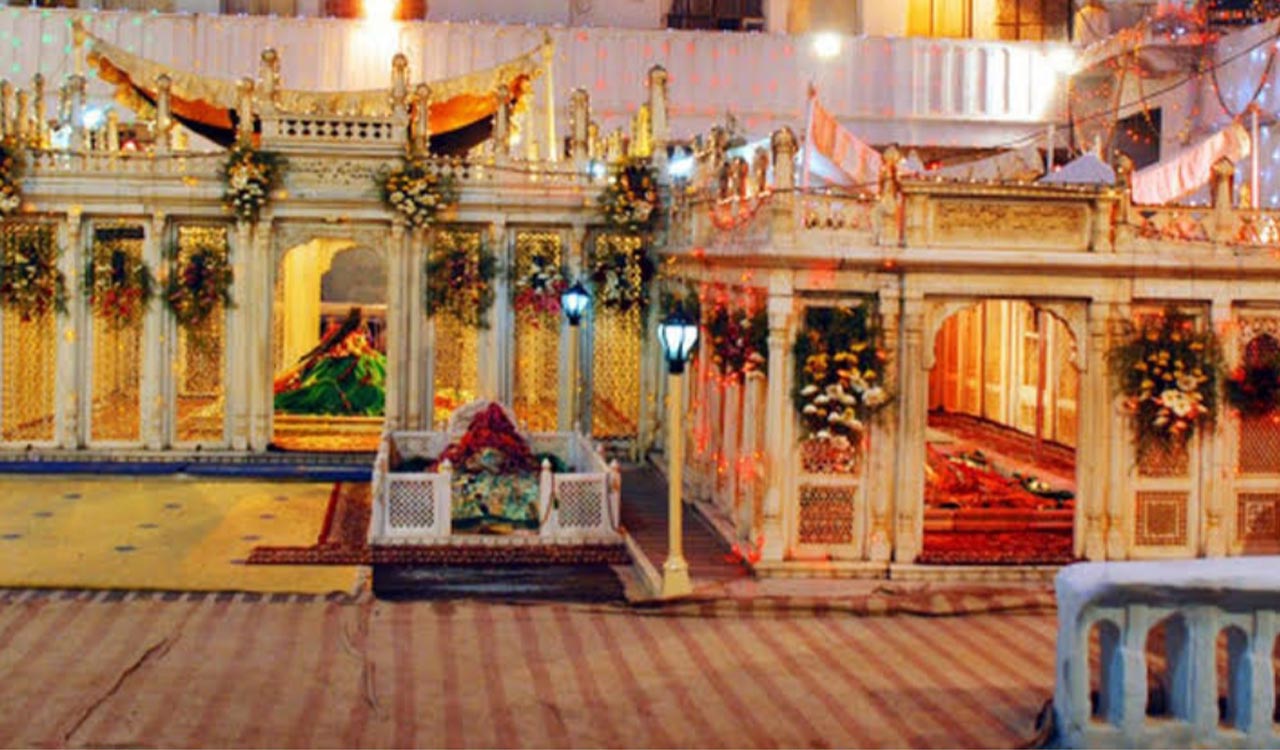


Hyderabad: At first glance, the idea of celebrating Basant Panchami at a Sufi dargah may seem unusual, even out of place. Yet every spring, Hyderabad’s Hazrath Shaikhji Hali Dargah in the old city comes alive with soulful Sufi melodies and is awash in yellow mustard and marigold flowers – the unmistakable colours of the season. A similar spectacle unfolds at the shrine of Hazrath Nizamuddin Auliya in Delhi, reminding visitors of India’s deep-rooted tradition of shared cultural spaces.
The annual observance, marking the arrival of spring, is a powerful expression of the syncretic ethos that India has long embodied. Though Basant Panchami is essentially a Hindu festival, it was embraced by certain Sufi traditions as early as the 12th century. The Chishti order, in particular, adopted the celebration to honour the revered Sufi saint Hazrath Nizamuddin Auliya, and the practice has endured ever since.
In Hyderabad, the All India Markazi Majlis-e-Chistia is preparing to observe Basant Panchami on January 23. Lovers of poetry and music are in for a rare treat at the Mehfil-e-Nizami (qawwali) to be held on Friday evening. The gathering will feature timeless compositions by the legendary poet and mystic, Amir Khusrau, whose verses continue to resonate across centuries.
Iconic sufiyana lyrics, manaqabats and ghazals will be rendered on the occasion, with special emphasis on Khusrau’s much-loved Hindavi kalaam. Among them is the immortal verse:
Chhap tilak sab cheeni re
Mose naina milai ke
Prem bhati ka madhva pilai ke
Matvali kar dini re mose naina milai ke
(You have taken away my looks,
My very identity, with just a glance
By making me drink the wine of love,
You have intoxicated me with a single look)
Amir Khusrau stands as a luminous symbol of the confluence of two great civilisations—Hindu and Islamic—woven together in a pluralistic synthesis. He is revered not only for shaping the qawwali tradition but also for enriching Indian music and vernacular literature through his Hindavi compositions.
There is a moving legend behind the Chishti order’s association with the Basant festival. Hazrath Nizamuddin Auliya, it is said, was once devastated by the sudden death of his young nephew, Taqiuddin Nooh. Overwhelmed by grief, the saint withdrew into solitude for several days. Amir Khusrau, his devoted disciple, could not bear to see his pir in such anguish and sought a way to lift his spirits.
One morning, Khusrau noticed Hindu women dressed in bright spring colours, singing as they carried flowers to a temple to mark Basant Panchami. On enquiring, he learnt that floral offerings were believed to bring joy to the deity. Inspired, Khusrau decided to make a similar offering to his pir. Disguised in spring attire and carrying mustard flowers, he approached Hazrath Nizamuddin Auliya, singing joyfully. The saint recognised Khusrau at once and smiled. To celebrate that moment of happiness, Khusrau and fellow devotees began singing Persian and Hindavi verses in praise of spring – thus giving birth to a tradition that continues to this day.
“Such celebrations integrate humanity and create atmosphere of oneness, peace and amity,” says Muzaffar Ali Soofi, Sajjada Nasheen of Dargah Hazrath Shaikhji Hali.
In keeping with the spirit of the season, the dargah is adorned with marigold flowers, and attendees are encouraged to wear yellow coloured shirt, sherwani, shamla, scarf, saree or salwar-kamis,. The ambience, steeped in devotion and music, reflects a shared cultural memory that transcends rigid boundaries.
Amir Khusrau’s sufiana poetry remains as enchanting as ever. Compositions such as “Man kunto maula fa Ali-un-maula” have become staples of the qawwali repertoire. Paying tribute to Khusrau’s enduring legacy, Allama Iqbal wrote:
Rahe na Aibak o Ghori ke ma‘rake baqi
Hamesha taza o shirin hai naghma-e-Khusrau
(The exploits of Aibak and Ghori have faded
But Khusrau’s melodies remain forever fresh and sweet.)
In the yellow glow of Basant Panchami, Sufi shrines once again remind us that India’s spiritual heritage has always flourished in harmony, dialogue and shared celebration.

Related News
-

Basant Panchami puja held at Bhojshala in MP’s Dhar amid heavy security
-
Ninth Nizam of Asaf Jahi Dynasty, Raunaq Yar Khan graces Basant Panchami festival in Hyderabad
-
Mass ‘Aksharabhyasam’ held at Sri Ramakrishna Vidyalaya in Telangana’s Khammam
-
Over 55,500 devotees throng Telangana’s Vemulawada temple on Basant Panchami