Aichi-Nagoya Asiad opens with vibrant ceremony after organisational troubles
Japan opened the Aichi-Nagoya Asian Games with a colourful ceremony blending technology, industrial innovation and cultural traditions. The event offered a positive start after organisational and logistical troubles during the build-up, with Manu Bhaker and Pawan Sehrawat leading India’s contingent


Nagoya: Japan on Saturday showcased its technological and industrial might as well as its deep cultural moorings in a frugal yet colourful opening ceremony of the Asian Games, offering a silver lining after organisational and logistical troubles significantly marred the build-up to the mega event.
The next 15 days will see around 11,000 athletes from 45 nations competing in 43 sports and 71 sub-events for a total of 469 gold medals, with the Games concluding on October 4. Competitions in basketball, football, cricket and some other events have already started.
With the theme ‘Harmonic Heart Beat’, Japan welcomed Asian athletes for the third time in its history after the 1958 Tokyo and 1994 Hiroshima Games.
The centrepiece of the ceremony was the heart-shaped main stage, chosen to visually anchor the theme of ‘One Asia’, symbolising athletes and people from across the continent connecting ‘heart to heart’.
The spectacular show at the 30,000-capacity Mizuho Park Athletic Stadium seamlessly blended local Aichi industrial technology with classical art, featuring a traditional Japanese Kabuki stage element paired with a massive industrial robot arm waving a flag.
Japanese Emperor Naruhito declared the 20th Asian Games open midway through the two-hour-long opening ceremony in the presence of Empress Masako, Olympic Council of Asia President Sheikh Joaan bin Hamad Al Thani and International Olympic Committee chief Kirsty Coventry.
With Toyota Motor Corporation headquartered in Aichi prefecture, the show would not have been complete without showcasing some of the region’s technological innovations. An Accessible People Mover (APM), a specialised, low-speed mobility vehicle developed by Toyota for the Tokyo 2020 Olympic and Paralympic Games, was a prominent part of the show.
The build-up to the massive multisport event was, however, hit by a string of operational gaffes, logistical issues and cramped accommodations, putting the beleaguered organising committee and the Olympic Council of Asia (OCA) on the defensive.
The organisational chaos did dent Japan’s reputation, which has otherwise hosted major global events, including the FIFA World Cup in 2002 and the Olympics in 1964 and 2021, with a fair amount of success.
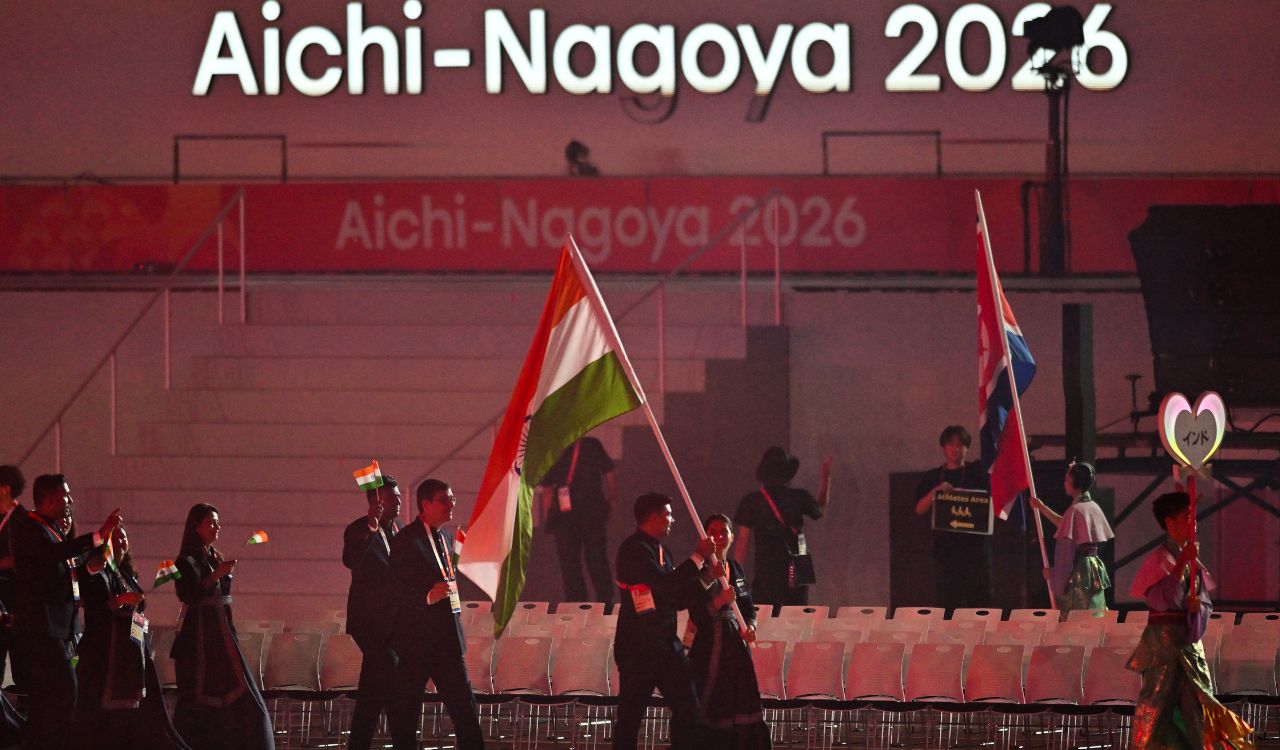
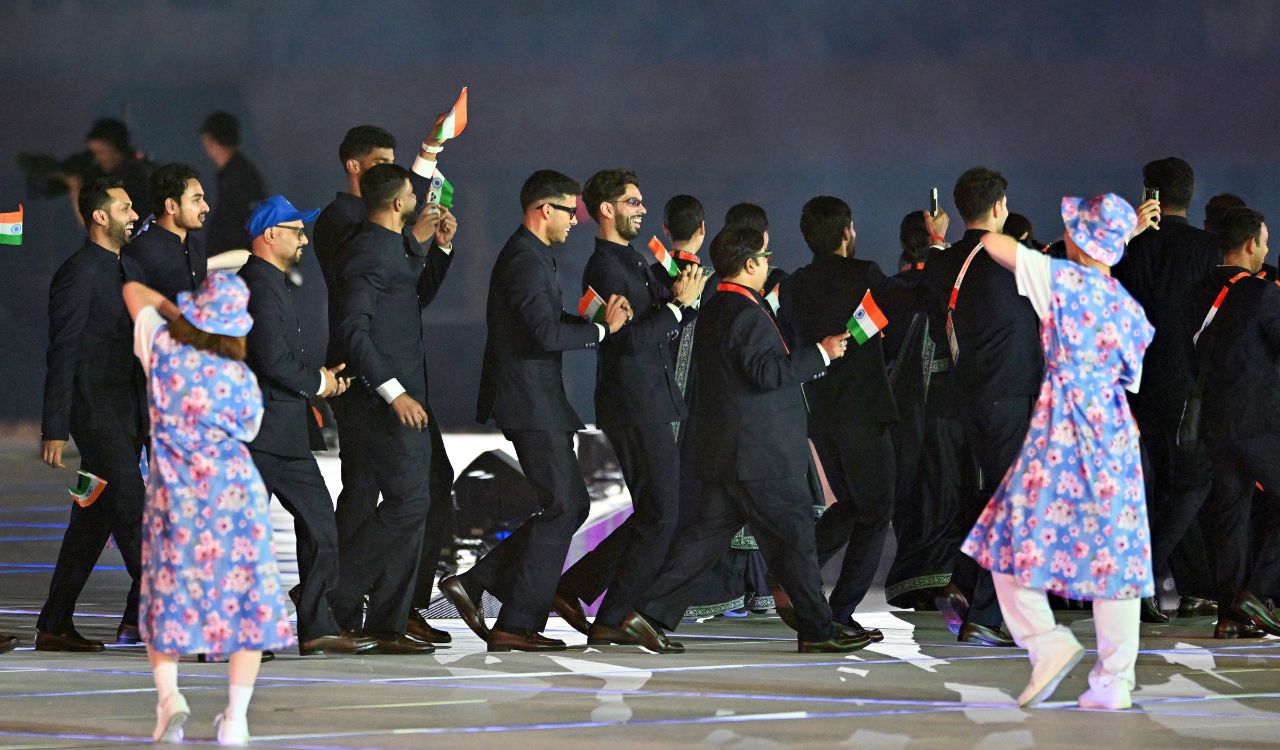
Led by ace shooter Manu Bhaker and kabaddi player Pawan Sehrawat, India entered the Athletes Parade to a round of applause. Dressed in a navy blue saree and bandhgala-style ceremonial jacket, Bhaker was seen waving to the crowd as she entered the arena, leading the 150-strong Indian contingent along with Sehrawat.
The Indian male participants also wore navy blue bandhgala-style ceremonial jackets with matching trousers.
The Olympic Council of Asia’s Refugee Team, comprising two athletes, came just before hosts Japan, who came last according to tradition in the 46-team parade.
The loudest cheers, expectedly, were reserved for Japan, which is fielding the largest contingent at the Games, with more than 900 athletes.
A welcome act titled ‘Awakening of the Space and the Resonating Heart Beat’ set the tone, with Taro Hakase, one of Japan’s most loved violinists and composers, dishing out fanfare-like music befitting the opening of a sporting festival, while lights and lasers enveloped the venue.
As a glittering 10-metre-tall flag rose like a beacon heralding the start of the competition, angel drones with heart-shaped wings floated around the venue, sparkling brightly. The venue was transformed into a world of hearts, reflecting the theme of the opening ceremony, along with a welcome dance by performers.
As Hakase’s violin solo began, 240 citizen dancers, grouped into four different colours, from Nagoya and other parts of Aichi emerged from below the stage. They converged and diverged repeatedly, expressing the interconnectedness and pulse of life in various formations. Finally, the dancers formed the word ‘WELCOME’, conveying hospitality.
After the Japanese flag-raising ceremony and rendition of the host country’s national anthem, the Athletes Parade began.

Related News