Andhra Pradesh’s attempts to draw 1.8 tmc from Nagarjuna Sagar will be foiled, says Uttam
Irrigation Minister N Uttam Kumar Reddy said Andhra Pradesh had not diverted any Krishna water at Nagarjuna Sagar despite attempting to draw 1.8 TMC through a tunnel. He assured that Telangana would protect its water entitlements.
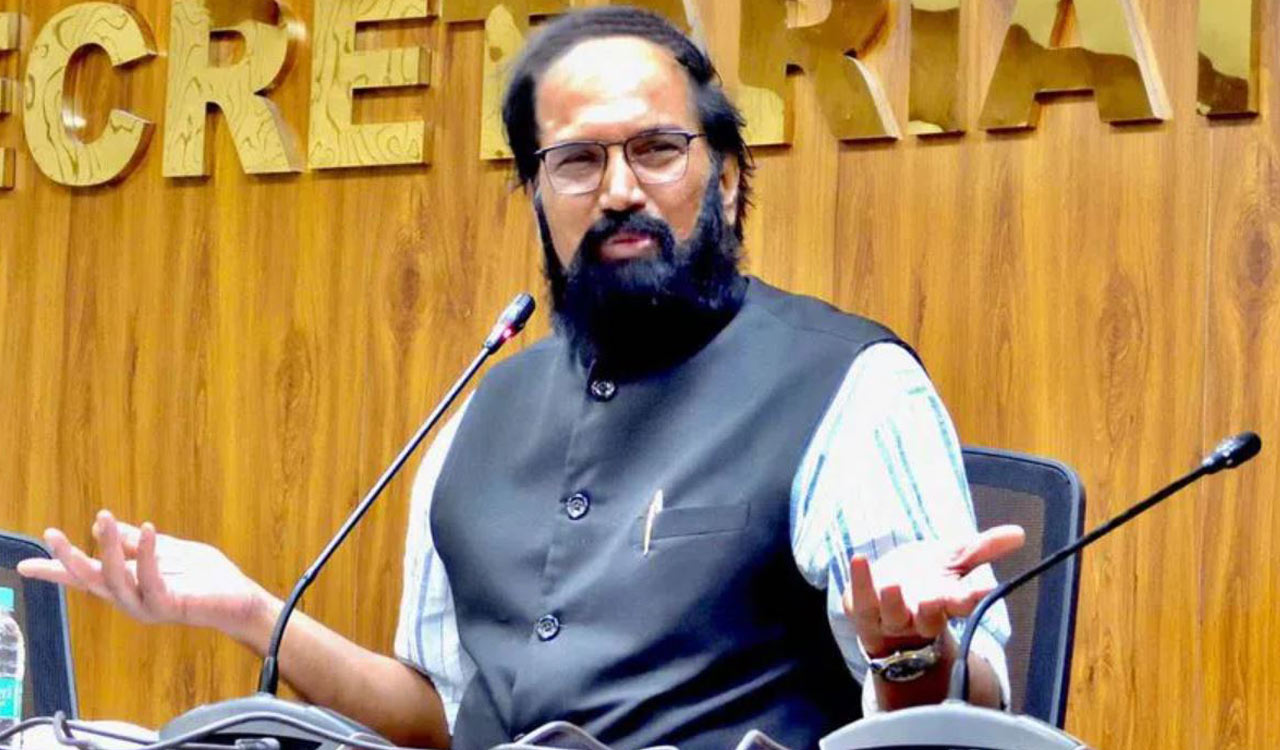


Hyderabad: Admitting that Andhra Pradesh was attempting to draw water from the Krishna river at Nagarjuna Sagar through a tunnel, Irrigation Minister N Uttam Kumar Reddy said that not a single drop of water had been diverted.
Addressing a public meeting at Huzurnagar, the Minister assured people that not a drop of Krishna or Godavari water would be surrendered to Andhra Pradesh.
He stated that the Congress government was committed to protecting Telangana’s water entitlements against any attempts to undermine its interests. “Whatever arguments or pressures may be brought forward, our government is determined to protect Telangana’s water rights,” he asserted.
Referring to Andhra Pradesh’s attempts to draw 1.8 TMC of water from Nagarjuna Sagar in the Krishna basin, the Minister said Telangana had strongly contested the proposals and lodged objections with the Central government and the Krishna River Management Board (KRMB).
He said the State would not allow decisions or unilateral actions that adversely affected its legitimate share and would continue to pursue the matter with determination.
The Minister said Telangana had improved its water utilisation after the Congress government assumed office, resulting in increased irrigation coverage, agricultural activity, paddy production and procurement.
With challenging climatic conditions and the prospect of a difficult summer ahead, Uttam Kumar Reddy said the government was also focused on conserving available water to safeguard drinking water requirements across the State.
He emphasised that irrigation and civil supplies were responsibilities requiring round-the-clock attention, as they directly affected farmers, vulnerable households and the wider public.

Related News